Whenever I start thinking about a new feature for Cybalounge 2, there is a small but important question in the background: does this make the platform better, or does it only make the platform bigger? The difference matters. Bigger systems are not automatically better systems. In software development, and especially in platform development, it is surprisingly easy to confuse growth with progress. A new menu, a new mode, a new backend component, a new configuration option, a new editor, a new service, a new permission layer. Each of these may look useful on its own. But together they can create a system that becomes harder to understand than the problem it was supposed to solve.
This is one reason why simplicity is at the center of my approach to Cybalounge 2. I do not mean simplicity in the sense of being small, weak, or unfinished. I mean simplicity as a deliberate product decision. The goal is not to avoid complexity at all costs, because a virtual world platform is naturally complex in some areas. It needs rendering, movement, avatars, communication, collision detection, user interface, synchronization, content loading, optimization, and many other things. But the question is where complexity is truly necessary and where it is only the result of habit, fear, or premature ambition.
Many platforms become complicated because they try to solve every possible future problem in the first version. They include advanced administration, detailed permissions, powerful editors, plugin systems, databases, dashboards, analytics, identity layers, workflow automation, and complex deployment scenarios before the core experience has proven itself. This can be impressive from an engineering perspective, but it can also make the platform difficult to adopt. A technically powerful system may still fail if small teams cannot operate it, if creators cannot understand it, or if users are overwhelmed before they even enter the world.
Cybalounge 1 was exactly like this. It was huge, powerful, and complicated. And that is why Cybalounge 2 starts from a different point. I want to ask what is necessary to create a convincing, useful, browser-based virtual world experience, and what can wait. This does not mean that advanced features are rejected forever. It means they must earn their place. A feature should not be added only because it is possible, or because another platform has it, or because it sounds good in a feature list. It should be added because it improves the experience for users, creators, operators, or customers in a way that justifies its long-term cost.
The long-term cost is the key. Every feature has a development cost, but that is only the beginning. It also has a maintenance cost. It has a testing cost. It may have a security cost. It may increase the support burden. It may make documentation harder. It may introduce dependencies that need to be updated. It may create additional configuration that someone must understand later. In a platform that should be easy to operate, this matters enormously. A feature that looks small in the code can become expensive over time if it adds hidden operational complexity.
This becomes especially important when I think about the target operating cost. My goal is ambitious: the platform should be operable at around one US dollar or less per user per month. That number is not just a financial target. It is a design constraint. If the platform needs complex backend infrastructure, heavy databases, specialized hosting, constant administration, and expensive scaling from the beginning, that cost target becomes unrealistic. If the system can rely on static content where possible, simple deployment, efficient browser-side logic, and only the backend components that are truly needed, the target becomes much more believable.
Simplicity also helps security and privacy. A smaller backend surface is easier to protect than a large one. Less persistent data means fewer things to secure, fewer things to explain, and fewer things that can go wrong. This does not remove the need for serious security thinking, especially in multi-user environments, but it changes the baseline. Instead of building a complex system and then trying to secure every corner, I prefer to ask whether some corners can be avoided in the first place.
The same principle applies to the creator experience. If a world can be described in a structured JSON file, if assets can be organized in a clear folder structure, if worlds can be built locally and uploaded as static content, then creators gain transparency. They can see what belongs to a world. They can copy it, version it, test it, archive it, and move it. That may sound less glamorous than a huge online editor in the first version, but it may be more useful for many real projects. A simple workflow that creators understand is often more valuable than a powerful workflow they are afraid to touch.
Of course, simplicity always involves trade-offs. Some features will be postponed. Some ideas will be implemented in a more modest way at first. Some automation may be replaced by clear conventions. Some advanced customization may wait until the foundation is stable. This can be frustrating, especially for a developer who enjoys solving difficult technical problems. But a platform is not a collection of engineering achievements. It is a product that must be usable, maintainable, and trustworthy. Sometimes the more mature decision is not to add something yet.
There is also an emotional side to simplicity. Users do not usually admire architecture diagrams. They feel whether a system is clear or confusing. They feel whether a world loads reliably, whether controls make sense, whether the interface stays out of the way, whether they can find the microphone button, whether they can invite someone, whether they understand what is happening. Creators feel whether they can build something without asking the original developer for help every time. Operators feel whether the system can be hosted without constant attention. In all these areas, simplicity is experienced as quality.
This does not mean Cybalounge 2 should remain minimal forever. The platform should grow. It should gain better tools, richer worlds, stronger communication, more atmospheric effects, better onboarding, better accessibility, and eventually low-code or no-code interaction. But growth should be guided. The core should remain understandable. The architecture should not be sacrificed for short-term feature excitement. The user experience should not be buried under options. The operating model should not become heavier than the organizations it is meant to serve.
For me, this is the heart of the KISS principle in this project. Keep it simple does not mean avoid ambition. It means protect ambition from collapsing under its own weight. If virtual worlds are to become useful for education, training, collaboration, senior communities, events, digital twins, and other practical scenarios, they need to be sustainable. They need to be affordable. They need to be approachable. They need to be manageable by real people in real organizations. Simplicity is not the opposite of that vision. It is the discipline that makes the vision possible.
Now available on Amazon!
Discover the Metaverse Beyond the Hype
The Metaverse is no longer a futuristic fantasy, it is rapidly becoming a new layer of human society. But what is it really? Where did it come from? And what might it become over the next decade?
The Metaverse – Past, Present, and Future takes readers on a fascinating journey from the earliest virtual worlds and science-fiction visions to today’s emerging immersive platforms, digital economies, and online communities. Along the way, it explores the technologies powering the Metaverse, the opportunities it creates for education, work, and culture, and the challenges of governance, privacy, inclusion, and sustainability.
Looking beyond today's headlines, the book offers a balanced and inspiring vision of how immersive technologies could transform cities, learning, creativity, and daily life by 2035.
Whether you are a business leader, educator, technologist, policymaker, or simply curious about the future, this book provides the context, insight, and perspective needed to understand one of the most important technological and societal shifts of our time.
The future of the Metaverse is not something we await, it is something we create.
About the Author
Dieter E. Heyne is a Metaverse pioneer and lifelong technologist, born in Munich in 1966. With a master’s degree in applied computer science and over three decades of experience as an IT entrepreneur, software architect, and consultant, he has always been at the frontier of digital innovation. His journey into virtual worlds began in 2007 with Second Life and sparked a deep, ongoing exploration of the Metaverse as a space for education, collaboration, and immersive experiences.
Since 2012, Dieter has been developing and refining a web-based virtual world platform, driven by a vision to make the Metaverse accessible, meaningful, and transformative. As a frequent speaker and thought leader at Metaverse events, he shares his insights on how virtual environments can reshape human interaction, learning, and culture. He is the founder and CEO of Metaverse School GmbH, a company dedicated to promoting Metaverse literacy and helping people and organizations understand the power and promise of these emerging digital realms.
Besides talking and writing non-fiction about the Metaverse and Virtual Worlds, this vast knowledge now went into the creation of The Metaverse Enforcers, an ongoing series of high-tech science fiction novels, showcasing the potential development and dangers of the Metaverse in 2053.
About Metaverse School GmbH
Metaverse School GmbH was founded in 2017 by Dieter E. Heyne, who continues to lead the company as its CEO. The company emerged from decades of consulting experience in software architecture, project management, quality assurance, information security, and data protection. Building on this strong technological foundation, Metaverse School GmbH is dedicated to promoting the responsible and purposeful use of immersive 3D environments, for education, collaboration, training, and simulation.
A core mission of the company is to raise awareness of the Metaverse’s potential across business, education, and society. In support of this goal, Dieter Heyne regularly speaks at national and international conferences as well as Metaverse-focused events. Through real-world examples and deep expertise, he demonstrates how immersive technologies can already create meaningful value today.
Disclaimer
Some portions of this content were created or refined with the assistance of artificial intelligence (AI) using tools such as OpenAI’s ChatGPT. The ideas, structure, and editorial direction remain the responsibility of the author. While every effort has been made to ensure factual accuracy and original expression, readers are encouraged to approach speculative or future-facing statements with critical thought.
This series does not represent the views of any specific company or platform and is intended to inspire open discussion around the evolving concept of the Metaverse.
For many years, virtual worlds have appeared, disappeared, returned under new names, and then disappeared again from the center of attention. Sometimes they were called virtual worlds. Sometimes they were called social 3D platforms. Sometimes they were called the metaverse. Sometimes they were connected to gaming, sometimes to education, sometimes to remote work, sometimes to digital twins, events, simulations, or online communities.
The terminology changes. The basic idea remains fascinating.
What happens when people do not only look at digital content, but enter it? What happens when a website becomes a place? What happens when learning, communication, collaboration, exploration, storytelling, and simulation take place inside a shared spatial environment?
These questions have interested me for a long time. They are also the reason why, after 14 years, I started developing a new web-based virtual world platform, currently under the working title Cybalounge 2,or CL2 in short.
I am not starting this project because I believe that I know everything about virtual worlds. Quite the opposite. One of the most interesting aspects of building such a platform is that every decision raises new questions. How simple can the architecture be? How much visual quality is necessary? How much realism is useful? How much interaction is enough? How much backend infrastructure is really needed? How do we create a space that is technically manageable, pleasant to use, and still powerful enough for real use cases?
This article series is about that journey.
It is not meant to be a coding tutorial. I will not use it to present clever snippets, complex algorithms, or technical tricks. There are many places where those things can be discussed in detail, and of course they are important when building the actual software. But for this series, I want to focus on something different: the motivation behind the platform, the design decisions, the trade-offs, the guiding principles, and the attempt to keep the whole system as simple as possible without making the experience feel cheap or limited.
The central question behind Cybalounge 2 is simple:
Can we build a useful, immersive, multi-user virtual world platform that remains lightweight enough to operate, maintain, and understand?
This question matters because many virtual world projects fail not because the idea is bad, but because the system around the idea becomes too heavy. The platform becomes expensive to host. The backend becomes difficult to maintain. The content pipeline becomes too complicated for normal creators. The hardware requirements become too high. The onboarding becomes confusing. The user interface becomes overloaded. Security and privacy become afterthoughts. And at some point, the promise of the virtual world is buried under operational complexity.
I wanted to try a different approach.
The vision for Cybalounge 2 is not to build the most technically advanced 3D environment possible. It is not to compete with full game engines. It is not to reproduce every feature that large commercial platforms offer. Instead, the goal is to explore how far we can get with a deliberately lean architecture: browser-based access, static content wherever possible, simple deployment, understandable world descriptions, reusable components, and a backend that does only what is truly necessary.
The operating cost target is ambitious but important:equal to or less than one US dollar per user per month.
This number is not only a financial target. It is a design constraint. And design constraints are powerful.
If a virtual world platform can only be operated economically with large budgets, large teams, and complex infrastructure, then many meaningful use cases will never happen. Small schools will hesitate. Community projects will hesitate. Training providers will hesitate. Senior initiatives will hesitate. Small and medium-sized companies will hesitate. Municipal or cultural projects will hesitate. Even when the value of immersive environments is clear, the operational burden can become a barrier.
A low-cost platform changes the equation. It makes experimentation easier. It lowers risk. It allows smaller organizations to test ideas without committing to heavy infrastructure. It gives creators more freedom because the platform itself does not constantly demand attention, administration, and budget.
This is why simplicity is not a technical preference for this project. It is a product strategy.
The simpler the system is, the easier it is to host. The easier it is to host, the easier it is to adopt. The easier it is to adopt, the more likely it is that virtual worlds will be used for practical, everyday purposes instead of remaining impressive demonstrations.
Of course, simplicity does not mean that everything is easy.
A virtual world platform still has to solve many hard problems. It needs to render spaces. It needs avatars. It needs movement, controls, collision detection, communication, synchronization, user interface elements, environmental effects, content loading, optimization, and eventually building tools and scripting. It needs to consider privacy, security, accessibility, moderation, onboarding, and performance. It needs to feel stable and trustworthy. It needs to work on real devices, not only on development machines.
But the challenge is to solve these problems without turning every solution into a new layer of unnecessary complexity.
For example, when thinking about backend architecture, the traditional instinct might be to create a database-driven system for everything: worlds, objects, users, sessions, permissions, content, configuration, logs, and interaction states. That may be necessary for some platforms. But is it necessary for every world? Is it necessary for the first version? Is it necessary for educational rooms, static exhibitions, guided training spaces, or small team environments?
Maybe not.
What if a world could largely be described in a structured JSON file? What if assets could be uploaded as static content? What if the platform could separate world content from core application logic? What if hosting a world could become closer to hosting a website than operating a complex online game backend?
This does not solve every problem. But it changes the starting point.
The same thinking applies to the user experience. A virtual world does not become better simply because more interface elements are visible. In fact, too much interface can destroy the feeling of presence. So the question becomes: what should be visible all the time, and what should only appear when needed? How can we design an interface on demand? How can we help first-time users without overwhelming experienced users? How can we support different levels of technical confidence?
These questions are especially important because I do not see Cybalounge 2 only as a tool for highly technical users. I see it as a platform that should become useful for educators, trainers, businesses, communities, and creators who may not want to think like software developers every time they build or update a world.
That is also why creator experience matters so much.
A virtual world platform is not only used by the people entering the world. It is also used by the people building, maintaining, and improving those worlds. If the creator workflow is painful, the platform will not scale in practice. If every small change requires deep technical knowledge, the platform remains dependent on specialists. If worlds cannot be copied, tested, optimized, uploaded, versioned, and moved in a predictable way, then the long-term value suffers.
So this series will look at Cybalounge 2 from several perspectives at once: as a developer, as a product designer, as someone interested in immersive learning and collaboration, and as someone who believes that virtual worlds need to become more practical if they are to become more widely used.
The articles will follow the development journey in broad steps. We will begin with the vision and the design principles. Then we will look at architecture, the browser-first approach, and the idea of keeping the server side as light as possible. After that, we will move into worlds, avatars, controls, collision detection, interface design, onboarding, communication, synchronization, atmosphere, creator workflows, building tools, scripting, safety, and future directions such as avatar creation, machinima, and AI-supported world building.
The goal is not to present Cybalounge 2 as a finished perfect answer. It is not finished, and it is certainly not perfect. The goal is to document a development path: what I am trying, why I am trying it, where I simplify, where I accept trade-offs, and where the platform may evolve over time.
Perhaps the most important motivation behind the project is this:
I still believe that virtual worlds matter.
Not because they are fashionable. Not because a buzzword says so. Not because every organization needs a “metaverse strategy”. But because shared spatial environments can create forms of presence, orientation, memory, and interaction that ordinary web pages and video calls often cannot provide.
A well-designed virtual world can make remote learning feel less abstract. It can make collaboration more spatial. It can make digital twins more understandable. It can make onboarding more engaging. It can help communities meet in places that feel like places. It can turn information into experience.
But for that to happen, virtual worlds must become easier to create, easier to enter, easier to operate, easier to trust, and easier to maintain.
That is the path I want to explore with Cybalounge 2.
Not as someone claiming to have all the answers, but as someone convinced that a fresh, lightweight, web-based approach is worth trying.
And that is what this series is about: the making of a virtual world platform that tries to stay simple enough to be practical, but powerful enough to matter.
Now available on Amazon!
Discover the Metaverse Beyond the Hype
The Metaverse is no longer a futuristic fantasy, it is rapidly becoming a new layer of human society. But what is it really? Where did it come from? And what might it become over the next decade?
The Metaverse – Past, Present, and Future takes readers on a fascinating journey from the earliest virtual worlds and science-fiction visions to today’s emerging immersive platforms, digital economies, and online communities. Along the way, it explores the technologies powering the Metaverse, the opportunities it creates for education, work, and culture, and the challenges of governance, privacy, inclusion, and sustainability.
Looking beyond today's headlines, the book offers a balanced and inspiring vision of how immersive technologies could transform cities, learning, creativity, and daily life by 2035.
Whether you are a business leader, educator, technologist, policymaker, or simply curious about the future, this book provides the context, insight, and perspective needed to understand one of the most important technological and societal shifts of our time.
The future of the Metaverse is not something we await, it is something we create.
About the Author
Dieter E. Heyne is a Metaverse pioneer and lifelong technologist, born in Munich in 1966. With a master’s degree in applied computer science and over three decades of experience as an IT entrepreneur, software architect, and consultant, he has always been at the frontier of digital innovation. His journey into virtual worlds began in 2007 with Second Life and sparked a deep, ongoing exploration of the Metaverse as a space for education, collaboration, and immersive experiences.
Since 2012, Dieter has been developing and refining a web-based virtual world platform, driven by a vision to make the Metaverse accessible, meaningful, and transformative. As a frequent speaker and thought leader at Metaverse events, he shares his insights on how virtual environments can reshape human interaction, learning, and culture. He is the founder and CEO of Metaverse School GmbH, a company dedicated to promoting Metaverse literacy and helping people and organizations understand the power and promise of these emerging digital realms.
About Metaverse School GmbH
Metaverse School GmbH was founded in 2017 by Dieter E. Heyne, who continues to lead the company as its CEO. The company emerged from decades of consulting experience in software architecture, project management, quality assurance, information security, and data protection. Building on this strong technological foundation, Metaverse School GmbH is dedicated to promoting the responsible and purposeful use of immersive 3D environments, for education, collaboration, training, and simulation.
A core mission of the company is to raise awareness of the Metaverse’s potential across business, education, and society. In support of this goal, Dieter Heyne regularly speaks at national and international conferences as well as Metaverse-focused events. Through real-world examples and deep expertise, he demonstrates how immersive technologies can already create meaningful value today.
Disclaimer
Some portions of this content were created or refined with the assistance of artificial intelligence (AI) using tools such as OpenAI’s ChatGPT. The ideas, structure, and editorial direction remain the responsibility of the author. While every effort has been made to ensure factual accuracy and original expression, readers are encouraged to approach speculative or future-facing statements with critical thought.
This series does not represent the views of any specific company or platform and is intended to inspire open discussion around the evolving concept of the Metaverse.
There is a sentence I have heard many times over the last couple of years: “The Metaverse is dead.”
I understand why people say it.
The word ‘Metaverse’ was overused. It was inflated by corporate presentations, speculative investment decks, NFT fever, headset marketing, and unrealistic promises of a near-future internet where everyone would spend their working and social lives inside immersive 3D spaces. Then came the hangover. Some platforms disappeared. Others reduced their ambitions. Budgets were cut. The media moved on to the next big story: generative AI.
But I do not believe the Metaverse is dead.
I believe the Metaverse has entered a more honest phase.
The Metaverse of 2026 is not the simple, unified, headset-first vision that many companies tried to sell a few years ago. It is fragmented, uneven, sometimes disappointing, but also quietly alive. It exists in creator platforms, social VR communities, virtual economies, digital twins, immersive learning environments, game worlds, events, simulations, and persistent online places where people meet not just to consume content, but to do things together.
And perhaps that is the healthier definition.
The Metaverse was never supposed to be only a high-end technology stack. It was never supposed to be just VR headsets, corporate campuses, photorealistic avatars, blockchain ownership, or branded virtual showrooms. At its best, it is a human environment: a place people can build, extend, inhabit, and shape together.
That distinction matters more in 2026 than ever.
A market after the fever
The current state of the Metaverse is contradictory.
On the one hand, some of the best-known social VR and virtual world projects have either shut down, changed direction, or reduced their original ambitions. Microsoft shut down AltspaceVR in March 2023 and shifted focus toward Microsoft Mesh and workplace-oriented immersive experiences (Road to VR). Mozilla ended support for Mozilla Hubs on May 31, 2024, although the codebase continues under the Hubs Foundation (Mozilla Support). Meta discontinued Horizon Workrooms as a standalone app on February 16, 2026, deleting associated Workrooms data after that date (Meta). Rec Room, one of the better-known cross-platform social creation worlds, announced that it would close on June 1, 2026, despite reporting that it had reached more than 150 million players and creators over its lifetime (Rec Room).
Spatial is another useful example, although it should be described carefully. The company is not shutting down entirely. Instead, Spatial announced that, effective July 27, 2026, it will sunset its Free and Pro subscription tiers and discontinue 3D World hosting for those Creator platform users. Enterprise customers, according to Spatial, are not affected. The reason given was not a lack of imagination or a simple rejection of immersive worlds, but economics: the cost of hosting and scaling open multiplayer 3D environments had grown significantly, and Spatial said that revised pricing models, tiered hosting, or partnerships would still have pushed costs to a level that independent creators and small studios could not reasonably absorb. This makes Spatial’s decision especially relevant for the wider Metaverse discussion. It shows that creator-driven virtual worlds are not only a design challenge, but also an infrastructure and sustainability challenge. If a platform depends on persistent hosting, multiplayer access, asset storage, moderation, and user support, the business model must be as carefully designed as the world itself (A Note to Our Creator Community — Spatial).
These are not small signals. They show that running a persistent, social, creator-driven world is difficult. It is not enough to have a strong idea, a beautiful demo, or even a passionate early community. These platforms need sustainable economics, strong moderation, reliable infrastructure, accessible creation tools, and a clear reason for people to return again and again.
On the other hand, it would be wrong to conclude that immersive worlds have failed. Roblox remains a massive user-generated 3D platform, and its creator economy continues to be significant. Roblox reported that creators earned more than $1 billion globally through DevEx from March 2024 to March 2025 (Roblox). Fortnite’s creator ecosystem, especially through Creative and UEFN, has become another important model for large-scale participatory 3D content, with Epic distributing a portion of eligible revenue through engagement payouts (Epic Games Developers). VRChat continues to show that social presence, identity, performance, avatar culture, and community-led creation can still attract a serious audience; Steam data in 2026 shows tens of thousands of concurrent VRChat users even before counting non-Steam access (Steam Charts). Resonite, while much smaller and more technically demanding, is interesting because it represents a highly creator-focused branch of social VR, with in-world building and scripting at its core (Road to VR).
So the story is not “the Metaverse failed.”
The story is that some Metaverse strategies failed.
The distinction is important.
AI has changed the conversation
The strongest trend in 2026 is not VR. It is AI.
That may sound strange in an article about the Metaverse, but it may actually be the key to the next phase. Generative AI changes who can build, how fast they can build, and what kind of worlds can be created by small teams or even individuals.
Roblox has introduced Cube 3D, a generative AI system designed to create 3D models and environments directly from text, with future support for image inputs (Roblox). This points toward a very different creator workflow. Instead of every virtual object requiring traditional 3D modeling skills, AI can become a co-creator: a sketching partner, prototyping tool, asset generator, scripting assistant, and world-building accelerator.
NVIDIA’s Omniverse has also shifted the discussion toward “physical AI,” industrial digital twins, robotics simulation, and physically grounded virtual environments (NVIDIA). This is a very different kind of Metaverse from the consumer social VR fantasy. It is less about dancing avatars and more about factories, logistics, manufacturing, robotics, engineering, and training. But it is still part of the wider immersive computing landscape.
Apple’s Vision Pro and visionOS have helped push the language toward “spatial computing,” with spatial widgets, more expressive Personas, shared spatial experiences, and enterprise APIs for spatial applications (Apple). Whether or not high-end headsets become mass-market devices soon, spatial computing has influenced how the industry thinks about blending digital content with physical space.
This is why I believe the next Metaverse will not be built by hardware alone.
It will be built by the combination of AI-assisted creation, accessible virtual world platforms, persistent communities, spatial interfaces, and practical use cases.
AI may lower the barrier to entry. But that does not automatically solve the deeper problem.
A world that is easy to generate is not automatically a world worth visiting.
Why some platforms struggle
The failures and shutdowns of recent years should not make us cynical. They should make us more precise.
Many Metaverse projects struggled because they were designed around technology first and human behavior second.
They assumed that people would adopt headsets because the experience was impressive. They assumed that presence alone would justify friction. They assumed that corporate backing could replace organic community growth. They assumed that “immersive” automatically meant “better.”
But people are practical.
They ask simple questions: Why should I go there? Who is waiting for me? What can I do there that I cannot do more easily somewhere else? Can I build something? Can I belong? Can I return tomorrow and find continuity?
This is where many projects failed.
They offered spaces, but not enough purpose. They offered avatars, but not enough identity. They offered events, but not enough community before and after the event. They offered tools, but not enough creative ownership. They offered impressive technology, but not enough human reason.
There were also operational problems. Persistent virtual worlds are expensive to run. Moderation is hard. Safety is hard. Identity management is hard. Creator economies are hard. Cross-platform access is hard. Performance optimization is hard. Community management is hard. And once a platform has real users, every technical decision becomes social.
A virtual world is not just software.
It is a living system.
That is why mature platforms are so interesting.
The Second Life lesson
Second Life is still one of the most important examples in this conversation.
Not because it is the newest. It is not.
Not because it is the most technologically fashionable. It is not.
But because it has survived.
Launched in 2003, Second Life has outlived several waves of Metaverse hype. It has seen brands arrive and leave, journalists discover and rediscover it, competitors promise to replace it, and new technologies claim to make it obsolete. Yet it is still there: a user-created virtual world with communities, places, events, economies, identities, and stories.
Linden Lab’s current mobile work is especially interesting because Second Life Mobile is now available free for everyone, with thousands of user-created places described on the official mobile page (secondlife.com). The platform also still has a meaningful creator economy. GamesBeat reported that Linden Lab had spent $1.3 billion building Second Life since 2003 and had paid $1.1 billion to creators (GamesBeat).
Second Life’s age may actually be one of its strengths.
It has accumulated culture. It has habits. It has residents rather than just users. It has a memory. It has communities that were not created for a quarterly product launch. And it has creators who understand that the value of a virtual world is not only in the graphics engine, but in what people do with it.
Of course, Second Life also has challenges. Any mature platform does. It has technical legacy, onboarding friction, a learning curve, and cultural complexity. But it proves something crucial: people will stay in a virtual world when they feel that it belongs to them.
That is a lesson newer platforms should take seriously.
New does not always mean better
When people ask about new Metaverse platforms in 2026, I think we need to be honest. There are interesting developments, but there is no single new platform that has clearly replaced the old dream.
Instead, the field has split.
Roblox and Fortnite show the power of mass-market creator ecosystems. VRChat shows the strength of avatar identity, social presence, and community-driven culture. Resonite shows what highly capable in-world creation can look like for a smaller but serious creator audience. Second Life shows the durability of mature user ownership and world-building. Industrial digital twin platforms show the enterprise value of simulation. Spatial computing shows how immersive interaction may move beyond the headset-only model.
This fragmented landscape may disappoint people who wanted one universal Metaverse.
But perhaps fragmentation is not a failure.
Perhaps it is a sign that the Metaverse is becoming less of a product category and more of a design pattern.
A virtual world for teenagers creating games is not the same as a virtual simulation for factory planning. A social VR club is not the same as an immersive classroom. A digital twin of a city is not the same as a fantasy roleplay region. A corporate training space is not the same as a creator marketplace.
They should not all look the same.
The question is not: Which platform wins?
The better question is: Which human need are we designing for?
The way forward: less spectacle, more usefulness
For me, the future of the Metaverse depends on a shift in priorities.
We need fewer technology-first projects and more human-first environments.
That means starting with people, not devices. It means asking what users actually need: learning, belonging, collaboration, creativity, confidence, social contact, practice, exploration, expression, or shared decision-making. Then we choose the technology that supports that need.
Sometimes that technology will be VR.
Sometimes it will be a browser-based 3D world.
Sometimes it will be a desktop client.
Sometimes it will be mobile.
Sometimes it will be a simple multiplayer environment with voice, chat, objects, and shared tasks.
And sometimes the most powerful element will not be technology at all. It will be the scenario, the facilitation, the community rules, the story, the onboarding, the rituals, the shared goals, and the imagination of the participants.
This is especially important for education, training, senior communities, SME collaboration, public participation, and cultural projects. These use cases do not always need photorealism. They do not always need expensive headsets. They do not always need blockchain ownership or AI-generated everything.
They need reliability.
They need low barriers.
They need understandable interfaces.
They need moderation and trust.
They need operating costs that make sense after the pilot project is over.
They need people who maintain the environment, not just people who launch it.
This is where I see real opportunity.
The Metaverse should be built by humans for humans
One of the biggest mistakes of the last Metaverse hype cycle was the idea that the future would be delivered from the top down.
A large company would build the platform. Users would arrive. Brands would rent spaces. Work would move there. Entertainment would move there. Education would move there. Somehow, the new internet would be centrally designed and globally adopted.
But virtual worlds rarely work that way.
The strongest ones grow from participation.
People need the ability to shape the world. They need to create objects, rooms, rituals, events, businesses, performances, and stories. They need to bring their own culture. They need to feel that they are not merely entering someone else’s product, but helping to build a shared place.
This is why creator tools matter.
It is also why governance matters.
If the Metaverse is to become meaningful, it cannot be only a collection of high-end environments controlled by a few corporations. It should include spaces that can be planned, built, extended, and maintained by communities, educators, SMEs, artists, local organizations, developers, and users themselves.
That does not mean every platform must be open source. It does mean we should care about portability, interoperability, content ownership, export options, moderation tools, transparent rules, and economic fairness.
A virtual world without agency is just a 3D website.
A virtual world with agency can become a place.
Simpler may be stronger
There is a temptation in this field to always chase the next technical milestone: better graphics, better avatars, better AI, better physics, better headsets, better tracking, better rendering.
All of that is valuable.
But I increasingly believe that the most important Metaverse projects of the next few years may be simpler than expected.
They may be browser-accessible.
They may run on normal laptops.
They may support mobile access.
They may use stylized graphics rather than photorealism.
They may focus on small groups instead of massive concurrency.
They may prioritize building tools over visual perfection.
They may use AI to assist creators, not replace them.
They may be designed for low operating and maintenance costs from the beginning.
This is not a step backward. It may be a realistic path forward for many use cases.
A virtual world that ten people can maintain and one thousand people can use creatively is more valuable than a spectacular demo that disappears when the funding round ends.
A platform that allows teachers, trainers, small businesses, museums, communities, and local organizers to build meaningful spaces may have more long-term impact than another glossy corporate showroom.
Imagination can be more important than technology.
Because imagination gives people a reason to enter.
Technology only opens the door.
A more optimistic view
So where does that leave us in 2026?
The Metaverse is no longer the shiny promise it was during the hype years. Good. That promise was too simple.
What remains is more interesting.
We have learned that headsets alone do not create adoption. We have learned that corporate investment alone does not create community. We have learned that virtual presence must be useful, social, creative, or emotionally meaningful. We have learned that platforms need sustainable economics. We have learned that people care less about the word “Metaverse” than about what they can actually do together.
And we have also learned that virtual worlds do not disappear just because hype cycles end.
Some close. Some evolve. Some quietly grow. Some survive for decades.
The next phase should be less about claiming ownership of “the Metaverse” and more about building good virtual places.
Places where people can learn by doing.
Places where remote teams can make decisions faster.
Places where seniors can find companionship.
Places where creators can earn.
Places where students can experiment.
Places where communities can gather.
Places where imagination is not locked behind expensive hardware or corporate permission.
That, to me, is still a future worth working on.
Not because the Metaverse must become the next internet.
But because human beings have always built shared spaces for meaning, cooperation, play, learning, trade, art, and belonging.
Sometimes those spaces are physical.
Sometimes they are digital.
And sometimes, if we design them well, they can become something in between: not an escape from the human world, but an extension of it.
Coming Next Week
I am starting a new 24-part LinkedIn article series: The Making of a Virtual World Platform.
The series follows my development journey behind Cybalounge 2, a lightweight browser-based virtual world platform for learning, work, and community. It is not a coding tutorial and not a collection of technical tricks. Instead, it looks at the decisions behind the platform: why simplicity matters, why browser-first access lowers barriers, why operating costs must stay manageable, and why creator experience is just as important as user experience.
Across the series, I will explore architecture, avatars, controls, collision detection, communication, onboarding, accessibility, atmosphere, world building, low-code interaction, moderation, performance, and future ideas such as AI, an Avatar Studio, and Machinima production.
The central question is simple:
Can virtual worlds become practical again if we make them easier to enter, easier to build, easier to trust, and easier to operate?
Now available on Amazon!
Discover the Metaverse Beyond the Hype
The Metaverse is no longer a futuristic fantasy, it is rapidly becoming a new layer of human society. But what is it really? Where did it come from? And what might it become over the next decade?
The Metaverse – Past, Present, and Future takes readers on a fascinating journey from the earliest virtual worlds and science-fiction visions to today’s emerging immersive platforms, digital economies, and online communities. Along the way, it explores the technologies powering the Metaverse, the opportunities it creates for education, work, and culture, and the challenges of governance, privacy, inclusion, and sustainability.
Looking beyond today's headlines, the book offers a balanced and inspiring vision of how immersive technologies could transform cities, learning, creativity, and daily life by 2035.
Whether you are a business leader, educator, technologist, policymaker, or simply curious about the future, this book provides the context, insight, and perspective needed to understand one of the most important technological and societal shifts of our time.
The future of the Metaverse is not something we await, it is something we create.
About the Author
Dieter E. Heyne is a Metaverse pioneer and lifelong technologist, born in Munich in 1966. With a master’s degree in applied computer science and over three decades of experience as an IT entrepreneur, software architect, and consultant, he has always been at the frontier of digital innovation. His journey into virtual worlds began in 2007 with Second Life and sparked a deep, ongoing exploration of the Metaverse as a space for education, collaboration, and immersive experiences.
Since 2012, Dieter has been developing and refining a web-based virtual world platform, driven by a vision to make the Metaverse accessible, meaningful, and transformative. As a frequent speaker and thought leader at Metaverse events, he shares his insights on how virtual environments can reshape human interaction, learning, and culture. He is the founder and CEO of Metaverse School GmbH, a company dedicated to promoting Metaverse literacy and helping people and organizations understand the power and promise of these emerging digital realms.
About Metaverse School GmbH
Metaverse School GmbH was founded in 2017 by Dieter E. Heyne, who continues to lead the company as its CEO. The company emerged from decades of consulting experience in software architecture, project management, quality assurance, information security, and data protection. Building on this strong technological foundation, Metaverse School GmbH is dedicated to promoting the responsible and purposeful use of immersive 3D environments, for education, collaboration, training, and simulation.
A core mission of the company is to raise awareness of the Metaverse’s potential across business, education, and society. In support of this goal, Dieter Heyne regularly speaks at national and international conferences as well as Metaverse-focused events. Through real-world examples and deep expertise, he demonstrates how immersive technologies can already create meaningful value today.
Disclaimer
Some portions of this content were created or refined with the assistance of artificial intelligence (AI) using tools such as OpenAI’s ChatGPT. The ideas, structure, and editorial direction remain the responsibility of the author. While every effort has been made to ensure factual accuracy and original expression, readers are encouraged to approach speculative or future-facing statements with critical thought.
This series does not represent the views of any specific company or platform and is intended to inspire open discussion around the evolving concept of the Metaverse.
The Metaverse is no longer a futuristic fantasy, it is rapidly becoming a new layer of human society. But what is it really? Where did it come from? And what might it become over the next decade?
The Metaverse – Past, Present, and Future takes readers on a fascinating journey from the earliest virtual worlds and science-fiction visions to today’s emerging immersive platforms, digital economies, and online communities. Along the way, it explores the technologies powering the Metaverse, the opportunities it creates for education, work, and culture, and the challenges of governance, privacy, inclusion, and sustainability.
Looking beyond today's headlines, the book offers a balanced and inspiring vision of how immersive technologies could transform cities, learning, creativity, and daily life by 2035.
Whether you are a business leader, educator, technologist, policymaker, or simply curious about the future, this book provides the context, insight, and perspective needed to understand one of the most important technological and societal shifts of our time.
The future of the Metaverse is not something we await, it is something we create.
The Metaverse: Past, Present, and Future How It All Began
When people hear the word Metaverse today, they often think of buzzwords, crypto scandals, or overpromising tech demos. But the story started long before blockchains, NFTs, or VR headsets went mainstream. The idea of shared digital worlds emerged from science fiction: Neal Stephenson’s Snow Crash and Ernest Cline’s Ready Player One painted visions of vast, persistent virtual spaces where people could live a second, fully realized life. Those stories inspired a generation of developers to attempt something bold: turning fiction into reality.
The first serious attempt at a Metaverse-like experience was Second Life, launched in 2003. Unlike traditional games, it had no levels, no bosses, no win condition. It was a world, an open, user-driven platform where people could build homes, run shops, make art galleries, or host concerts. Crucially, it allowed people to earn real money by selling virtual goods and services. For a while, the media was fascinated. Articles celebrated the first “virtual millionaires,” companies opened virtual offices, and universities held lectures in-world. It truly felt like a glimpse of the future.
But the early Metaverse faced strong headwinds. Technically, Second Life was demanding: it needed powerful hardware, fast internet, and patience with laggy, sometimes unstable servers. Culturally, it confused people. There was no clear “goal,” and many new users simply didn’t know what to do after logging in. Add to that the stigma created by sensationalist media focusing on fringe uses, adult content, odd communities, or get-rich-quick stories, and a gap opened between the dream and reality.
Still, those early experiments were enormously valuable. They showed that people would form meaningful relationships and communities in digital spaces. They revealed how important user-generated content and virtual economies could become. And they exposed the technical and social challenges of building a world where everyone can create, not just consume. The first era of the Metaverse didn’t conquer the mainstream, but it laid down essential lessons, and planted a seed that never fully died.
Hype, Crash, and the Quiet Decade
As the 2000s progressed, the first big Metaverse wave crested. Second Life stood in the spotlight as the flagship of a new digital age. Media outlets ran excited stories about brands opening virtual showrooms, politicians holding events in-world, and people earning full-time incomes from selling digital clothing or renting out virtual land. For a moment, it seemed obvious that this was “the next internet.” But under the surface, serious cracks were beginning to show.
The first problem was expectation vs. reality. The dream of everyone becoming a virtual entrepreneur quickly collided with the fact that only a tiny fraction of users had the skills, time, and luck to make significant money. Most people came in, wandered around, and left without understanding what they were supposed to do. The world was open-ended, which is powerful but also intimidating. Without clear guidance or purpose, many casual users bounced off the experience. The Metaverse was inspiring, but not yet welcoming.
The second problem was technical friction. Hardware requirements were high. Dial-up was gone, but broadband was far from universal or fast. Lag, texture loading issues, and frequent crashes made the world feel unstable. For enthusiasts, these were minor annoyances. For mainstream users, they were deal breakers. At the same time, each region could support only a limited number of avatars before performance collapsed, making large events awkward and frustrating.
As the initial hype faded, so did the headlines. Many corporate islands were abandoned. Universities quietly decommissioned their virtual campuses. The public moved on to simpler, more accessible platforms: social media, YouTube, and later mobile apps. To many observers, this first “Metaverse” had failed.
But the story didn’t end there. The 2010s were a quiet decade of experimentation. Projects like OpenSim, Kitely, and later VRChat continued to explore what persistent virtual spaces could be. Open-source initiatives tried to decentralize world hosting. Game-like platforms such as Minecraft and Roblox carried the spirit of user-generated worlds into more accessible, playful forms. The Metaverse idea slipped out of the mainstream narrative, but it did not disappear. Instead, it matured in the background, waiting for new technology, fresh context, and a second chance.
The Second Boom: VR, Web3, and the Pandemic
The Metaverse’s second big moment arrived suddenly. Around 2020, three forces collided: significant improvements in consumer VR, the rapid rise of Web3 and NFTs, and a global pandemic that pushed billions of people into remote life almost overnight. Video calls replaced offices, online platforms replaced classrooms, and digital social spaces became emotional lifelines. In this environment, the idea of the Metaverse didn’t just sound futuristic, it sounded necessary.
This time, the hype had new characters. Standalone VR headsets like the Quest 2 made immersive 3D worlds more accessible than ever, without cables or gaming PCs. Blockchain projects promised provable digital ownership, and NFTs turned digital art, avatars, and virtual land into tradable assets. Startups announced “Metaverse-ready” virtual worlds. Meanwhile, a major social media giant rebranded itself around the Metaverse concept and invested billions into building VR-based platforms. The message was clear: this was supposed to be the next big thing.
For a brief period, it worked, at least on the surface. Virtual land prices soared. Brand activations appeared in virtual worlds. NFT collections with Metaverse tie-ins sold for astonishing sums. Media and investors rushed in, sensing another gold rush. But once again, beneath the glitter was an uncomfortable truth: the experience for ordinary users wasn’t compelling enough.
Many Web3-based worlds were technically impressive but socially empty, vast grids of expensive parcels with little to do. Access often required crypto wallets, complex onboarding, or niche knowledge that filtered out the average person. NFTs were sold as keys to a new digital lifestyle, but in practice often functioned more as speculative tokens than as meaningful parts of lived virtual experiences. VR platforms struggled to retain users beyond the novelty phase, and daily active user numbers never matched the lofty narratives.
Then the cracks widened: crypto markets crashed, NFT volumes fell, and mainstream interest cooled sharply. The Metaverse, which had just been declared “the future of the internet,” was suddenly mocked as a fad that never delivered. Yet once again, the situation was more nuanced. Under the noise, important lessons were learned: hype without usability doesn’t last, speculation without real value destroys trust, and technology without community is just infrastructure, not a world.
The second boom ended much like the first, with disappointment at the surface, and quietly growing insight underneath.
Lessons Learned and Where We Stand Today
After two major hype waves and two equally visible cool-downs, it would be easy to dismiss the Metaverse as a failed experiment. But that would mean ignoring the most valuable outcome of the past twenty years: clarity. Each cycle exposed different weaknesses, technical, economic, and cultural and those failures now form a kind of blueprint for what not to do next. Instead of a shiny destiny, the Metaverse has become a serious design challenge.
One of the clearest lessons is that technology alone is never enough. High-end graphics, VR headsets, and blockchain rails are important, but they don’t automatically create meaning. People don’t stay in digital worlds because the rendering engine is impressive; they stay because they feel a sense of belonging, purpose, or creativity. That means we must treat technology as the foundation, not the goal: necessary, but always in service of human experience.
Another lesson concerns economy and trust. Speculation-driven models, whether based on virtual land or NFTs, can generate short-term excitement but also deep long-term damage. When users feel used, misled, or exploited, they don’t come back. A sustainable Metaverse economy must be rooted in real value: services, experiences, learning, collaboration, and tools that genuinely help people. Payments, ownership, and governance must be secure, transparent, and understandable, not mysterious black boxes.
We’ve also learned the importance of interoperability and openness. Closed platforms with rigid rules, fragile identities, and locked-in assets feel more like theme parks than worlds. The internet as we know it thrives on shared protocols and the freedom to move between sites, services, and devices. The Metaverse will need similar principles: portable avatars and identities, reusable assets, and open standards so that no single company can dictate the rules of reality.
Today, the Metaverse is in a post-hype rebuilding phase. Many big marketing promises have faded into the background, but the work continues, often in quieter, more thoughtful forms. There are teams building web-based virtual worlds instead of heavy clients, focusing on accessibility across devices. There are communities experimenting with governance, shared ownership, and co-creation instead of top-down content drops. We’re beginning to see the Metaverse less as a product launch and more as an ecosystem that will take years to mature.
This moment, less noisy, more reflective, is an opportunity. We finally have enough history to see patterns, enough scars to respect the difficulty, and enough surviving projects to prove that the idea itself still has life. The question is no longer “Can we build a Metaverse?” but “Can we build one that deserves to exist?”
A Hopeful Vision: The Metaverse We Could Build
If we strip away the hype, the scams, and the buzzwords, what remains is still a powerful idea: a network of shared virtual spaces where people can meet, learn, create, and work together in ways the physical world can’t always offer. The future Metaverse doesn’t need to be a glossy sci-fi fantasy. It can be something quieter and more profound: an extension of our reality, designed intentionally around people instead of speculation. That begins with a simple but radical shift in perspective: the Metaverse is a place to live and build in, not a product to be sold.
In this future vision, the Metaverse is multi-layered and device-agnostic. You can join from a laptop, a phone, a VR headset, or maybe one day AR glasses. VR becomes one mode of access, great for deep immersion, but not a gatekeeping requirement. The experience adapts to your hardware and your comfort level, instead of demanding that you adapt to it. Accessibility and inclusion are not “nice to have” features but core design principles, opening the doors to seniors, people with disabilities, low-end devices, and users from all regions and backgrounds.
Creation sits at the heart of this world. Every user, not just a small elite of highly skilled developers, can become a builder. Intuitive tools, AI-assisted content creation, and powerful but approachable scripting environments allow people to design their own landscapes, interactions, and stories. A teacher might build an interactive history simulation; a small team might prototype a cooperative game; an artist might create a virtual exhibition that visitors can walk through. The slogan could be: Imagine – Create – Share. Platforms that embrace this ethos will feel less like products and more like ecosystems of creativity.
Communities become the real “killer app.” The longest-living digital worlds are not the prettiest, but the ones where friendships form and projects grow over years. The future Metaverse leans into that, offering strong tools for group formation, community moderation, events, and shared governance. Gaming, too, evolves in this context: instead of trying to compete with AAA titles, the Metaverse focuses on casual, social games that strengthen bonds rather than chasing graphical perfection. The value lies not in beating a level, but in laughing with friends while trying.
And beneath it all, a reliable, human-centered economy supports sustainable activity. People can earn from services, classes, consulting, performances, design work, and interactive experiences. Payments are secure, transparent, and understandable. Ownership of digital assets, whether blockchain-based or not, is clear and enforceable, but not speculative by design. The goal is not to create a casino, but a working digital society where energy flows into creating value, not just flipping tokens.
Writing the Next Chapter Together
After looking back at two decades of experiments, hype cycles, and quiet progress, one conclusion feels inescapable: the Metaverse is neither a guaranteed destiny nor a failed idea. It’s a work in progress. We’ve seen what doesn’t work, overcomplicated interfaces, exclusionary hardware, speculation-driven economies, and worlds without purpose. We’ve also seen what does work: strong communities, user creativity, meaningful use cases in education and collaboration, and platforms that treat their users as partners rather than customers to be monetized. The past wasn’t a mistake; it was a laboratory. The real question now is what we do with what we’ve learned.
Today’s Metaverse efforts exist in a more mature context. We understand better that technology is a prerequisite, not the point. We know that interoperability and openness are key if we want to avoid fragmented islands of experience. We’ve realized that sustainable digital economies must be rooted in real value, services, learning, collaboration, and creativity, not in the illusion of endlessly rising land or token prices. And we are starting to see that the most important metric is not “peak users during a hype spike,” but long-term communities that actually enjoy spending time together in these spaces.
For my part, I remain optimistic, cautiously, but genuinely. I’m working on a web-based virtual world platform not because I believe I have all the answers, but precisely because I don’t. The goal is not to build the Metaverse, but to help create an open, accessible foundation that others can build on. I hope to connect with like-minded developers, designers, educators, and world-builders who share a simple belief: that the Metaverse should be centered on its future inhabitants and creators, not just its investors and owners. If we can assemble a community of people willing to experiment, share, and improve together, the platform can evolve in ways no single person could plan.
In the end, the Metaverse will live or die by the same forces that shape any society: the values we embed, the tools we provide, and the behavior we reward. We have the chance to design virtual spaces that encourage curiosity, cooperation, and empathy rather than division and exploitation. We can create environments where diversity is a strength, where learning is playful, and where work feels more like contribution than obligation. That won’t happen by accident, and it won’t happen overnight, but it can happen.
The Metaverse is not dead. It’s unfinished. And that might be the most hopeful state of all, because it means there is still room, and need, for builders, thinkers, and dreamers. If these articles have sparked ideas or questions in you, then perhaps you are one of the people this future is waiting for. The next chapter will not be written by marketing campaigns alone. It will be written by us.
Coming soon: Season 2 of the Metaverse Series - Compelling Use Cases
Season 2 is almost here, and it’s all about doing, not dazzling.
In Season 1 we asked what the metaverse could become. In Season 2, launching in just a few weeks, we’ll show what it’s already good for. Think of it as a field guide to the moments when a simple, browser-based space, no headset required, beats a flat page or a video call. We’ll focus on practical, human outcomes: faster decisions, clearer learning, warmer communities, and fewer costly surprises.
Why now? Because the hype cycle is over, but the problems remain. Teams still stall in meetings. Cities still surprise residents. Shoppers still hesitate on big purchases. Seniors still feel alone. Projects still change late. The metaverse won’t fix these by itself, but small, well-designed rooms can. When the place fits the job, people understand faster and act sooner.
This season we’ll keep the pattern simple: one room, one promise, one measurable result. You’ll see spaces that open in seconds on ordinary devices, with calm design and clear controls. You’ll hear about hosts who set the tone and rituals that land outcomes (timers, “decision shelves,” quick follow-ups). And you’ll notice a throughline we never drop: trust by design. Progressive identity when it matters, gentle safety tools, privacy by default, and plain rules at the door.
Expect stories from the field, brief, honest, and useful. A training room that cuts ramp-up time. A neighborhood twin that reduces “why didn’t anyone tell us?” moments. A product studio that turns doubt into confidence. An event hub that stays alive after the keynote. A heritage room that makes history feel close without turning it into a theme park. A health-in-presence space where practice finally happens in context. We won’t chase spectacle; we’ll share plays you can copy. We’ll also spotlight the people who make these spaces work, the hosts, world builders, accessibility auditors, and safety stewards, and show how to package their work into fair, repeatable gigs. And we’ll close the season by connecting design to delivery: how lightweight project rooms help teams see the same thing, decide sooner, and hand buildings over without mysteries.
If you’re skeptical, good. Season 2 is for builders, educators, organizers, and leaders who are tired of demos and ready for outcomes. Each article will include the guidelines for a 45–60 day pilot you can run with a small team and a short KPI list you can explain in one breath. Start small. Measure what matters. Publish what you learned.
Follow, like, repost, and share with colleagues who wrestle with any of the problems above, and mark your calendar. In a few weeks we’ll open the first door. Until then, here’s our north star: build places where people can act, not pages where they get lost. See you in Season 2.
Dieter E. Heyne is a Metaverse pioneer and lifelong technologist, born in Munich in 1966. With a master’s degree in applied computer science and over three decades of experience as an IT entrepreneur, software architect, and consultant, he has always been at the frontier of digital innovation. His journey into virtual worlds began in 2007 with Second Life and sparked a deep, ongoing exploration of the Metaverse as a space for education, collaboration, and immersive experiences.
Since 2012, Dieter has been developing and refining a web-based virtual world platform, driven by a vision to make the Metaverse accessible, meaningful, and transformative. As a frequent speaker and thought leader at Metaverse events, he shares his insights on how virtual environments can reshape human interaction, learning, and culture. He is the founder and CEO of Metaverse School GmbH, a company dedicated to promoting Metaverse literacy and helping people and organizations understand the power and promise of these emerging digital realms.
About Metaverse School GmbH
Metaverse School GmbH was founded in 2017 by Dieter E. Heyne, who continues to lead the company as its CEO. The company emerged from decades of consulting experience in software architecture, project management, quality assurance, information security, and data protection. Building on this strong technological foundation, Metaverse School GmbH is dedicated to promoting the responsible and purposeful use of immersive 3D environments—for education, collaboration, training, and simulation.
A core mission of the company is to raise awareness of the Metaverse’s potential across business, education, and society. In support of this goal, Dieter Heyne regularly speaks at national and international conferences as well as Metaverse-focused events. Through real-world examples and deep expertise, he demonstrates how immersive technologies can already create meaningful value today.
Disclaimer
Some portions of this content were created or refined with the assistance of artificial intelligence (AI) using tools such as OpenAI’s ChatGPT. The ideas, structure, and editorial direction remain the responsibility of the author. While every effort has been made to ensure factual accuracy and original expression, readers are encouraged to approach speculative or future-facing statements with critical thought.
This series does not represent the views of any specific company or platform and is intended to inspire open discussion around the evolving concept of the Metaverse.
A Reliable Metaverse Economy – Beyond Land, NFTs, and Hype
As the vision of the Metaverse begins to solidify into a functioning digital reality, one of the most critical components to its sustainability and legitimacy will be the creation of a trustworthy, robust economy. Past attempts at monetization within virtual worlds have often relied heavily on speculative practices such as virtual land sales, volatile NFTs, or micro-commerce in cosmetic goods, many of which have led to disappointment, user mistrust, and ultimately, stagnation.
The Promise and Pitfalls of Early Metaverse Commerce
The early years of Metaverse monetization were defined by hype. Virtual land speculation ballooned out of proportion, NFTs promised value but often delivered scams, and the market became saturated with microtransactions for purely aesthetic items. While these generated headlines and brief spikes of interest, they failed to establish long-term, credible economic ecosystems.
For the Metaverse economy to thrive, it must move beyond these unstable foundations and toward meaningful value exchange.
Real Commerce in a Virtual World
The goal is not to replicate the physical economy in a 3D format, but to create new models of commerce that are native to the Metaverse as well as make sense within it. This includes:
Service economies Educators, entertainers, designers, developers, and consultants can offer real services within virtual environments.
Product innovation Creators can design and sell digital tools, interactive experiences, or hybrid physical/virtual products.
Custom commissions Art, avatars, architecture, and code can all be commissioned and exchanged directly between users.
Payroll & contracting Pay guides, moderators, teachers, DJs, and venue staff, be it salary, hourly, or per-event, with invoices, VAT notes, and payouts via SEPA/cards or compliant stablecoins.
Usage-based licensing Metered fees for 3D assets, shaders, NPC logic, or music with royalties flowing automatically when content is used.
Venue leasing & ticketing Rent stages, classrooms, booths; sell tickets with time-bound access and automatic revenue splits to hosts and performers.
Bounties & grants Community treasuries fund features, events, moderation, or accessibility upgrades; milestone-based release.
Insurance & escrow Event-cancellation cover; buyer/seller escrow for commissions (avatars, worlds, code) with in-world dispute workflows.
Compute & AI services Pay-per-use for simulation time, voice AI, or crowd capacity; predictable costs for organizers.
Public services & digital twins Permits, booth fees, or training vouchers for city/campus worlds with receipts and audits.
Crucially, these exchanges should be backed by a stable currency model, whether through traditional payment methods or carefully regulated crypto, and reinforced by secure transaction mechanisms.
Real commerce turns worlds from “places to hang out” into places to work, learn, and build. When people can earn, hire, rent, insure, and invest inside the space where value is created, incentives align: creators keep improving venues and tools, hosts moderate better, and members show up reliably because time translates into income or outcomes. Commerce anchors identity and reputation. Clients review teachers, studios vouch for contractors, and credentials travel across worlds,reducing spam and low-effort churn. It also unlocks sustainability: instead of ad-driven engagement, communities fund themselves through tickets, subscriptions, and royalties that reward the folks delivering value.
For organizations, in-world payments collapse friction: discovery, trial, purchase, and onboarding happen in one continuous interaction, with receipts, VAT, and access control applied immediately to the right avatars. Finally, real commerce creates legitimacy and portability. If a DJ, tutor, or museum can be paid anywhere and bring their assets, reviews, and certifications along, network lock-in fades and healthy competition drives better experiences. In short, commerce isn’t a bolt-on shop; it’s the operating system for trust, accountability, and growth, making the Metaverse a viable economy rather than just another social feed.
Slow Growth, Steady Shift
It’s unrealistic to expect that the Metaverse will suddenly replace existing online commerce. Instead, we must anticipate a gradual, steady migration:
From 2D storefronts to immersive shopping experiences
From static web pages to interactive service environments
From isolated creators to global virtual freelancers
The Metaverse won’t replace online commerce overnight; it will absorb it, piece by piece. First, brands and creators add “try-before-you-buy” rooms alongside 2D storefronts, turning product pages into immersive showrooms. Next, static help centers evolve into interactive service environments where tutors, consultants, and support teams work in real time.
Creator economies expand from isolated channels to global virtual freelancing, with commissions, classes, and events delivered inside the spaces where value is created. Payments, receipts, and access rights travel with the user’s interoperable identity and wallet, so tickets unlock doors, subscriptions open studios, and payroll reaches in-world staff, securely and with auditability.
Adoption grows where the advantages are clear: better conversion through presence, lower churn via community, and faster onboarding through hands-on trials. The total volume of e-commerce may not spike, but its composition will: a steadily rising share shifts to experience-driven transactions as users spend more time in worlds that feel practical, social, and worth returning to.
The total volume of online commerce may not skyrocket overnight, but a growing share will slowly begin to favor immersive, experience-driven transactions as users spend more time in the Metaverse.
Security and Trust: The Cornerstones of a Digital Economy
No economic model can thrive without trust. That means platforms must guarantee:
Secure payment systems
Anti-fraud protections
Clear dispute resolution processes
Transparent tax and ownership policies
Users and businesses alike must feel safe engaging in transactions, whether that’s a 5-euro avatar outfit or a 5,000-euro training simulation.
Good news: the pieces already exist. What’s needed is tight integration inside the Metaverse. Payments should ride on battle-tested rails (cards, SEPA, instant transfers, compliant stablecoins) via providers that bring PCI, PSD2/strong customer authentication, fraud scoring, and chargeback handling. Identity and access rely on verifiable credentials (age, business status, VAT ID, KYC result) presented from a user-controlled wallet; platforms verify signatures, check revocation, and log consent. For safety at scale, combine escrow for commissions, dispute workflows (evidence capture, timelines, mediation/arbitration), and audit trails that anchor receipts, ownership changes, and license terms to the transaction. Tax engines compute VAT/GST and issue invoices automatically; ownership registries (on- or off-chain) prevent double-selling and support resale with royalties. All of this should be invisible to the user: one tap to pay, instant access, clear refund rules.
Cross-border reality adds complexity: two avatars standing together may be subject to different laws. The fix is jurisdiction-aware commerce. Each transaction evaluates policy from both sides; buyer location, seller domicile, product type (e.g., training, ticket, digital asset), and age/export rules. The marketplace applies the stricter applicable standard (KYC level, age gate, refund window), blocks prohibited trades, and calculates the correct taxes (e.g., EU place-of-consumption). Data handling respects local privacy law (e.g., GDPR) with minimization and purpose-bound logs. Users see plain-language terms (“who protects me, which law applies, how to complain”) before purchase. In short: integrate proven rails, add verifiable identity, and enforce jurisdictional policy per transaction, so trust is designed in, not bolted on.
Rethinking Business Models
Simply porting existing e-commerce models into a virtual space is unlikely to succeed. The Metaverse demands new ideas:
Subscription-based access to themed virtual worlds or services
Bounties & grants: Community treasuries fund features, events, moderation, or accessibility upgrades
Insurance & escrow: Event-cancellation cover; buyer/seller escrow for commissions
Compute & AI services: Pay-per-use for simulation time, voice AI, or crowd capacity
Public services & digital twins: Permits, booth fees, or training vouchers for city/campus worlds
In short, the Metaverse economy must be designed from the ground up to match the context and expectations of the new medium.
Conclusion: A Sustainable Economic Future
To create a thriving Metaverse, we must establish a credible, human-centric economy built on real value exchange. It will grow slowly, shaped by user needs, evolving technology, and creative business models. But if designed correctly, with transparency, inclusivity, and utility at its core, it may ultimately become one of the most important economies of the digital age.
Because in the end, people don’t just want to explore a world, they want to live, work, and prosper in it.
Join the Conversation
If this article sparked your curiosity or passion for the future of the Metaverse, I warmly invite you to join an open discussion in a virtual world setting. Let’s meet face-to-face (or avatar-to-avatar) to exchange ideas, share visions, and connect with others who believe in building something better. The next live meetup will take place on the 30th of January at 9 p.m. (UTC+2) in our Metaverse Meeting Point. Whether you’re a developer, creator, thinker, or explorer, your perspective matters. Come help shape the next chapter of the Metaverse!
About the Author
Dieter E. Heyne is a Metaverse pioneer and lifelong technologist, born in Munich in 1966. With a master’s degree in applied computer science and over three decades of experience as an IT entrepreneur, software architect, and consultant, he has always been at the frontier of digital innovation. His journey into virtual worlds began in 2007 with Second Life and sparked a deep, ongoing exploration of the Metaverse as a space for education, collaboration, and immersive experiences.
Since 2012, Dieter has been developing and refining a web-based virtual world platform, driven by a vision to make the Metaverse accessible, meaningful, and transformative. As a frequent speaker and thought leader at Metaverse events, he shares his insights on how virtual environments can reshape human interaction, learning, and culture. He is the founder and CEO of Metaverse School GmbH, a company dedicated to promoting Metaverse literacy and helping people and organizations understand the power and promise of these emerging digital realms.
About Metaverse School GmbH
Metaverse School GmbH was founded in 2017 by Dieter E. Heyne, who continues to lead the company as its CEO. The company emerged from decades of consulting experience in software architecture, project management, quality assurance, information security, and data protection. Building on this strong technological foundation, Metaverse School GmbH is dedicated to promoting the responsible and purposeful use of immersive 3D environments—for education, collaboration, training, and simulation.
A core mission of the company is to raise awareness of the Metaverse’s potential across business, education, and society. In support of this goal, Dieter Heyne regularly speaks at national and international conferences as well as Metaverse-focused events. Through real-world examples and deep expertise, he demonstrates how immersive technologies can already create meaningful value today.
Disclaimer Some portions of this content were created or refined with the assistance of artificial intelligence (AI) using tools such as OpenAI’s ChatGPT. The ideas, structure, and editorial direction remain the responsibility of the author. While every effort has been made to ensure factual accuracy and original expression, readers are encouraged to approach speculative or future-facing statements with critical thought.
This series does not represent the views of any specific company or platform and is intended to inspire open discussion around the evolving concept of the Metaverse.
 METAVERSE BLOG
  Whenever I start thinking about a new feature for Cybalounge 2, there is a small but important question in the background: does this make the platform better, or does it only make the platform bigger? The difference matters. Bigger systems are not automatically better systems. In software development, and especially in platform development, it is surprisingly easy to confuse growth with progress. A new menu, a new mode, a new backend component, a new configuration option, a new editor, a new service, a new permission layer. Each of these may look useful on its own. But together they can create a system that becomes harder to understand than the problem it was supposed to solve.
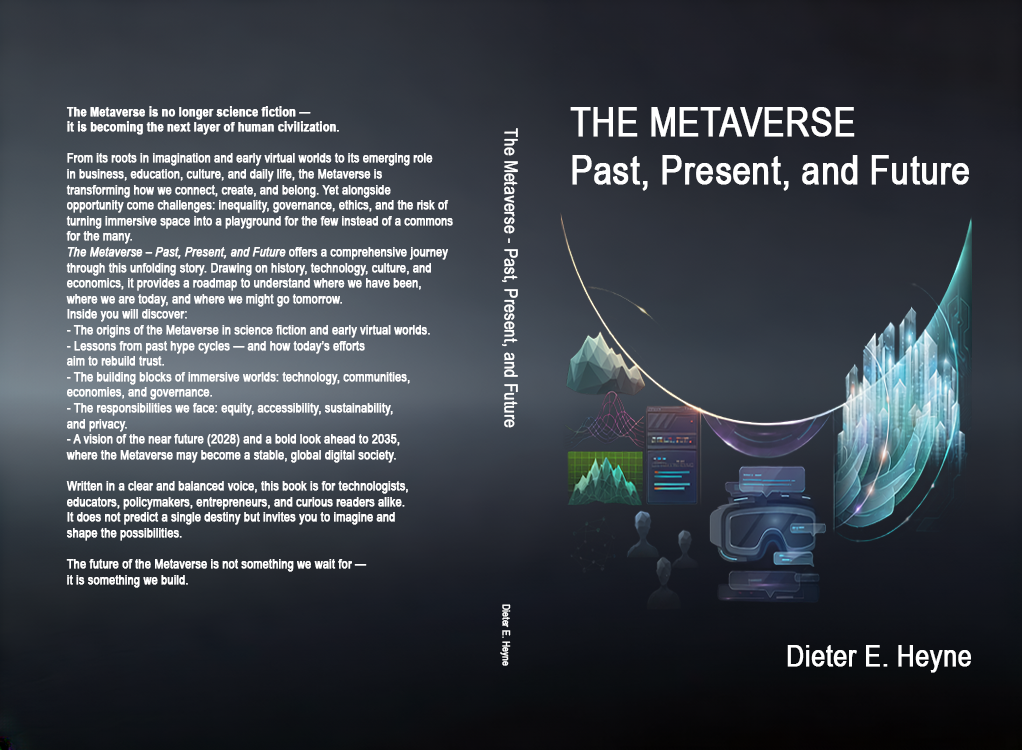
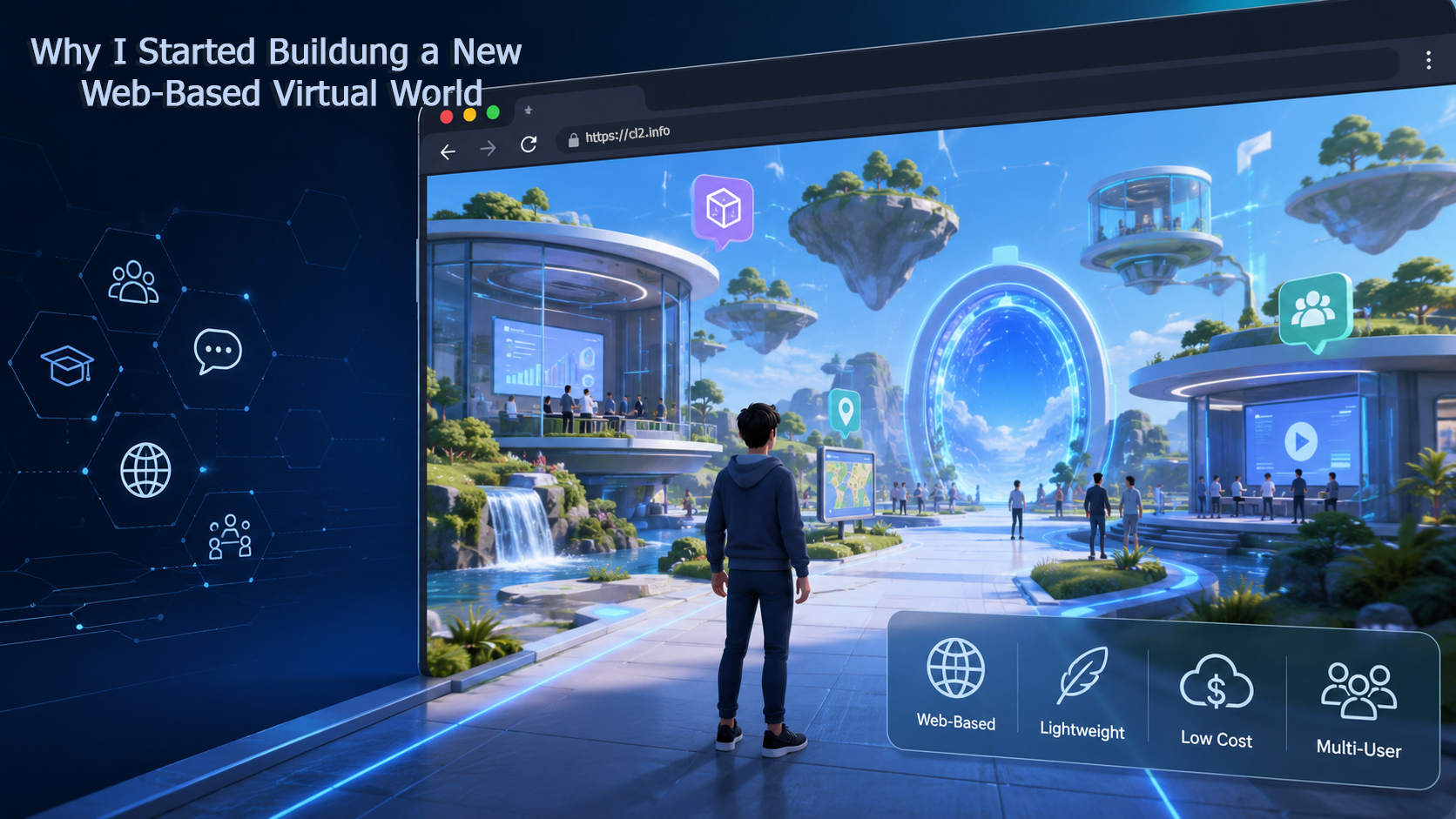


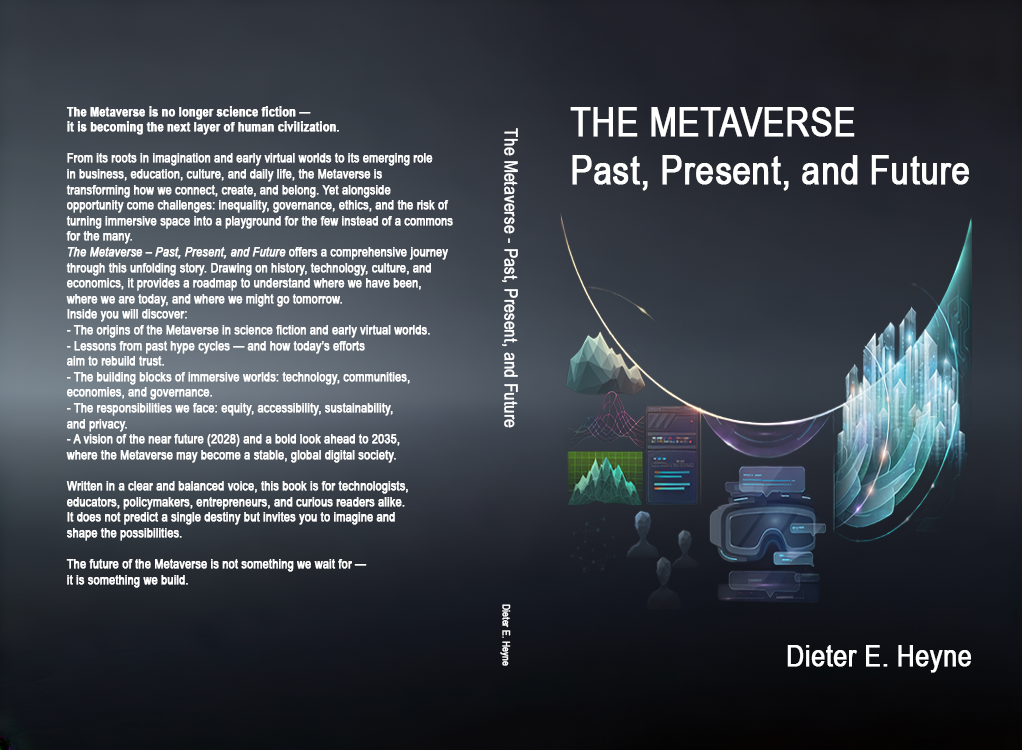
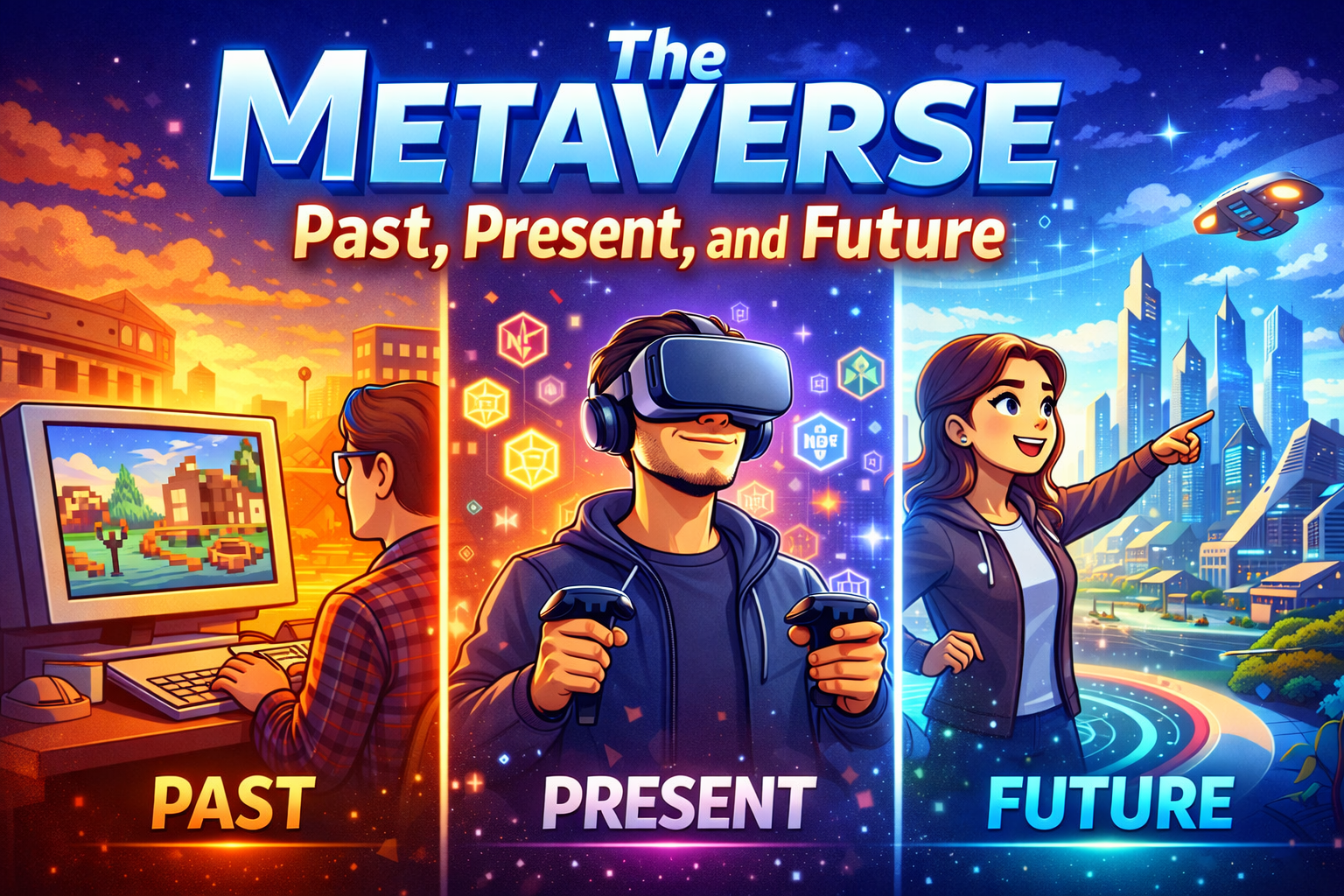
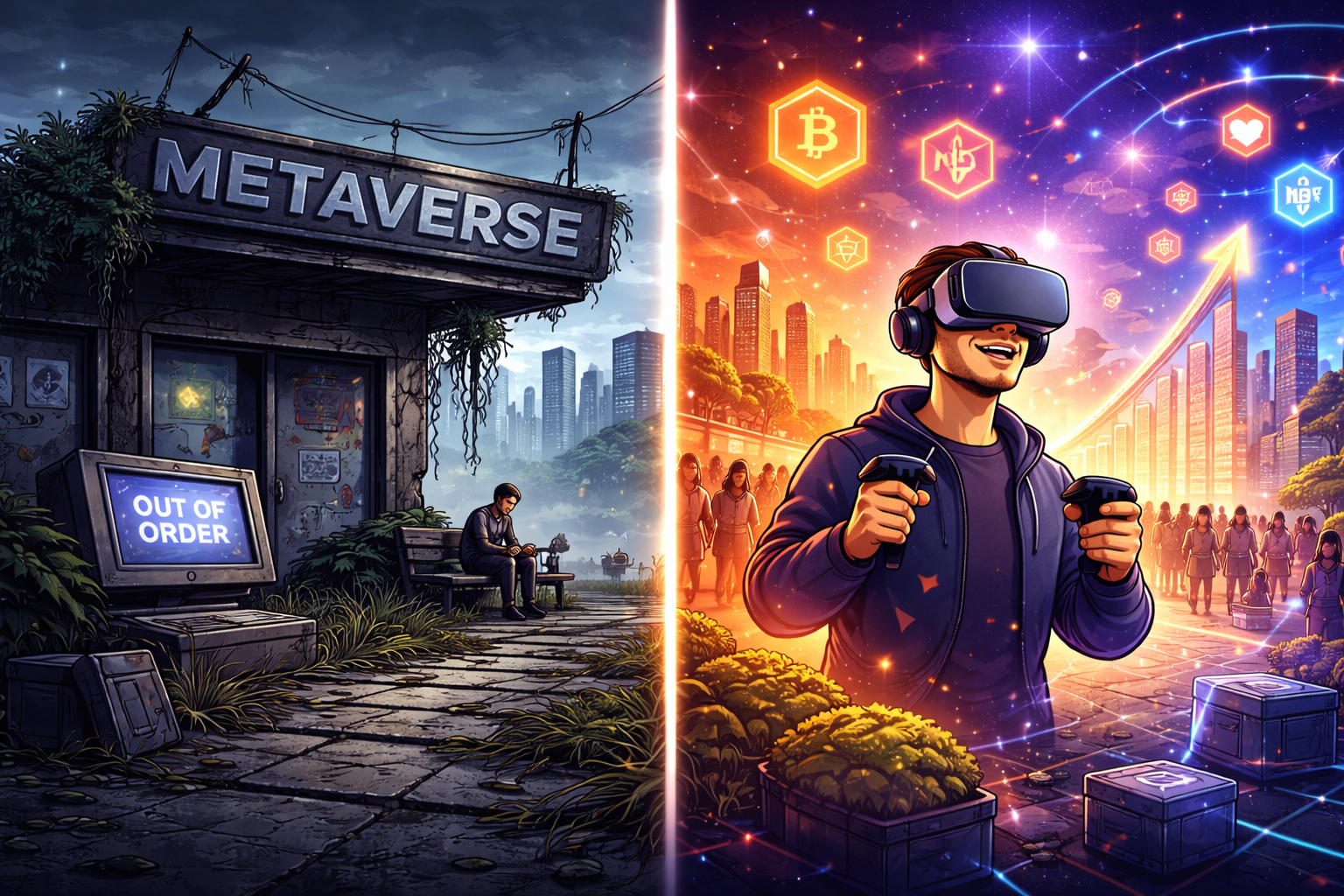
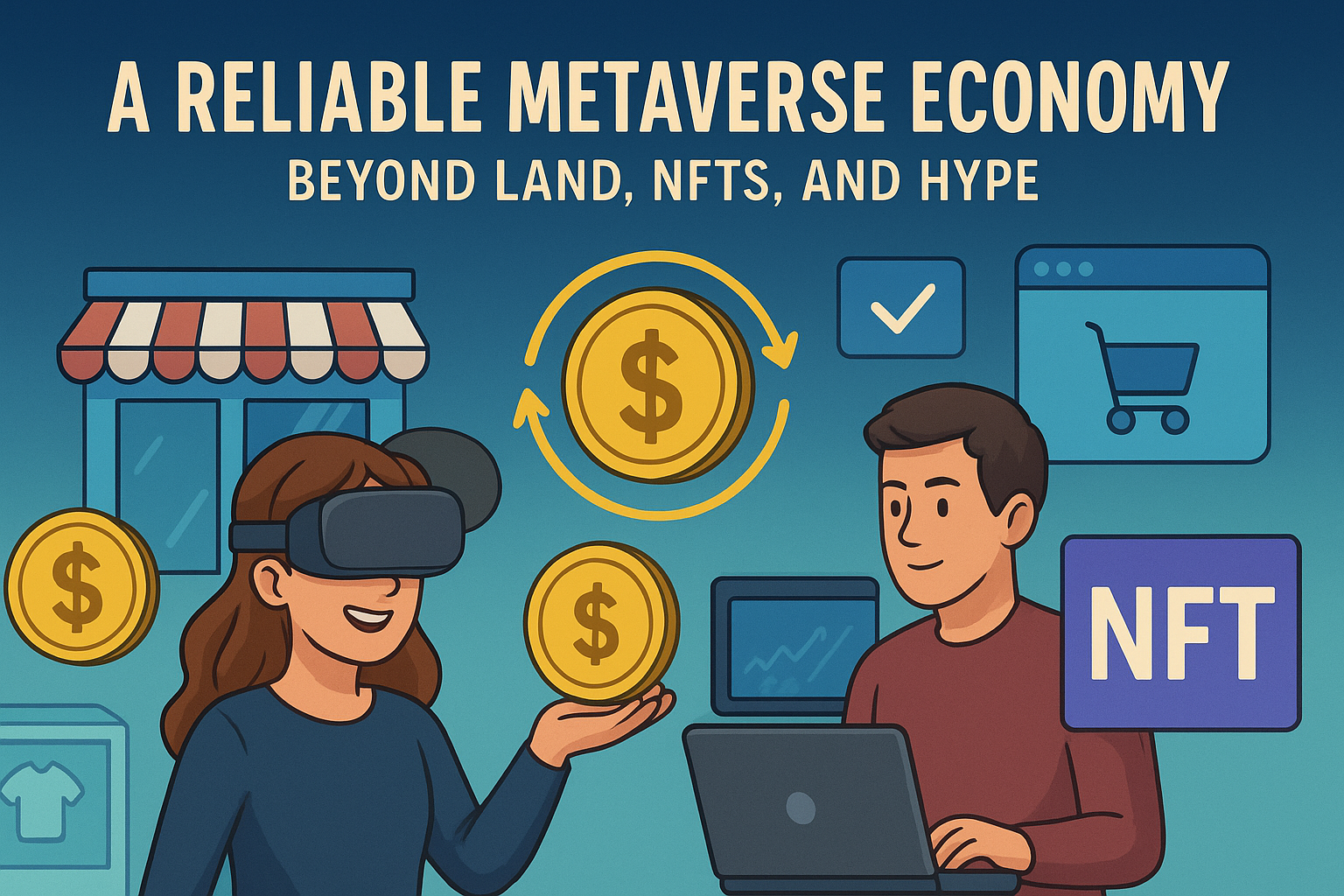
.png)