 METAVERSE BLOG
 Chapter 08: What Is a World?
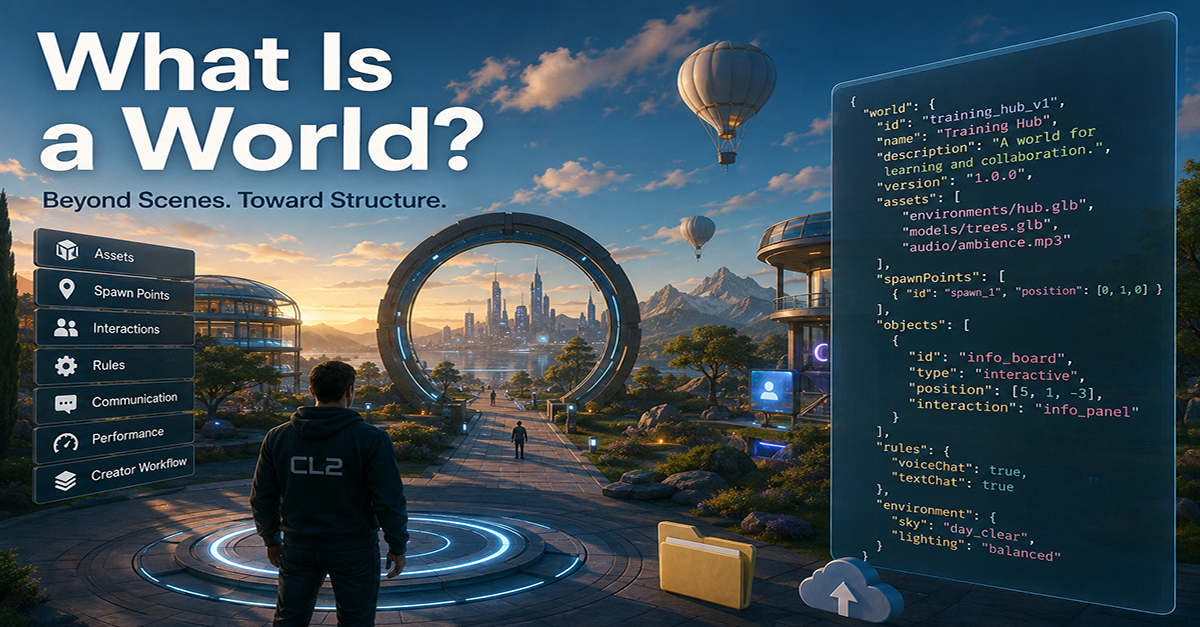
At first glance, the question "What is a world?" seems almost unnecessary. In a virtual world platform, a world is the place users enter. It is the environment they see, the space they move through, and the setting in which they meet others. But for a platform developer, the question is more complicated. A world is not only what appears on the screen. It is also a structure of assets, settings, objects, rules, conventions, and dependencies. If that structure is unclear, the world may look impressive but become difficult to maintain.
This is one of the reasons why Cybalounge 2 treats a world as more than a 3D scene. A scene is a rendering concept. It contains objects, lights, cameras, and materials. A world is a product concept. It includes the scene, but also the intention behind it, the configuration that defines it, the assets it needs, the spawn points where users enter, the rules that govern interaction, the communication context, the performance budget, and the creator workflow. A world should be something that can be understood, copied, tested, published, updated, and archived.
Without this discipline, virtual worlds can become chaotic very quickly. A few models are added here, a script is attached there, lights are changed, textures are replaced, an interaction depends on a hidden object name, a door works only if another file is present, and nobody remembers why an invisible helper object exists. This may work during development, but it becomes fragile over time. The creator may understand it today, but will they understand it six months later? Can another person maintain it? Can it be moved to another server? Can it be optimized without breaking something?
The answer depends on whether the world has a clear structure. In Cybalounge 2, the idea is to describe the world through a structured file, preferably in a form that remains readable and portable. JSON is a practical starting point. It can define which assets are loaded, where objects are placed, how the environment behaves, which sky or water settings are used, which avatars are available, where users start, and how certain objects participate in interaction. JSON is not a complete creator tool by itself, but it creates a transparent foundation.
This foundation supports the server-light philosophy. If a world can be represented as a collection of static assets and a structured description, it does not need to be hidden inside a complex backend. It can be hosted like web content. It can be versioned like a project. It can be backed up as files. It can be tested locally before publication. This is important for low operating costs, but also for creator confidence. Creators should know what belongs to their world.
A structured world description also creates a bridge between technical and non-technical workflows. At first, such a file may be edited by developers or technically confident creators. Later, tools can generate it. A visual builder, a low-code interaction editor, or an AI-assisted world creation system could all produce or modify the same underlying structure. This is one reason why descriptions matter. They separate the platform runtime from the authoring experience. The same world structure can be created by different tools over time.
Of course, this approach requires conventions. If every world description is written differently, structure becomes illusion. The platform needs consistent naming, clear asset references, predictable units, object roles, behavior definitions, and validation. Creators need guidance. They need to know how large models should be built and optimized, how objects are positioned, how interactions are named, how audio is referenced, how lighting is configured, and how world versions are managed. Structure does not eliminate documentation. It makes documentation possible.
This is also where the creator experience begins. A creator-friendly platform is not only one with a nice editor. It is one where the underlying logic is understandable. If something goes wrong, the creator should have a chance to find it. If a model is missing, the reference should be clear. If performance is poor, the world structure should help identify heavy assets. If an object is interactive, its role should not be hidden in an obscure script. The more visible the world structure is, the more independent creators can become.
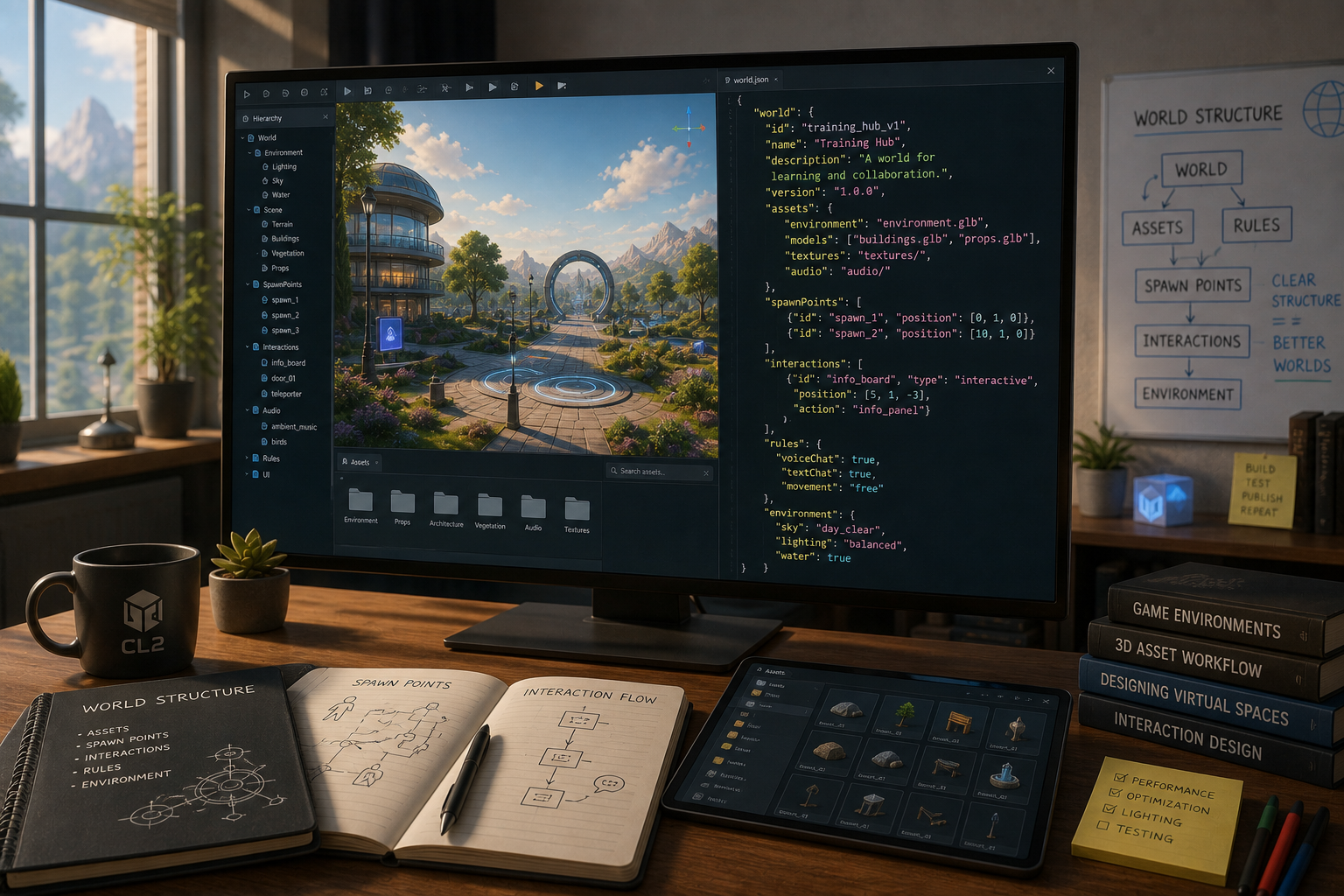
Thinking of worlds as product artifacts also changes how updates are handled. A world may have versions. It may have a development copy and a published copy. It may need a backup before a major change. It may need to be restored after an error. It may need to be moved from a local machine to a test server and then to production. These are not glamorous topics, but they are essential for real use. A beautiful world that cannot be maintained is not a sustainable product.
This perspective also helps with use cases. A training world is not just a 3D room; it is a learning environment with goals, paths, communication needs, and possibly assessment points. A digital twin is not just a model; it is a representation of something real, with scale, orientation, and context. A senior community space is not just a scene; it is a place where users need comfort, clarity, and easy navigation. A world structure should be flexible enough to support different intentions without becoming unmanageable.
There is a trade-off. A structured approach can feel slower at the beginning. It requires discipline before the platform has all the tools that will later make creation easier. It may be tempting to place objects manually, patch behavior directly, or solve problems with quick custom code. Sometimes that is necessary during exploration. But if the goal is a platform, not a one-off demo, structure must win. The world must survive beyond the moment of creation.
For CL2, a world should therefore be more than a scene. It should be a manageable product artifact. It should be visible enough for creators to understand, structured enough for tools to support, portable enough to move, and disciplined enough to maintain. This may sound less exciting than talking about visual effects or avatars, but it is one of the foundations that makes practical virtual worlds possible.
Now available on Amazon!
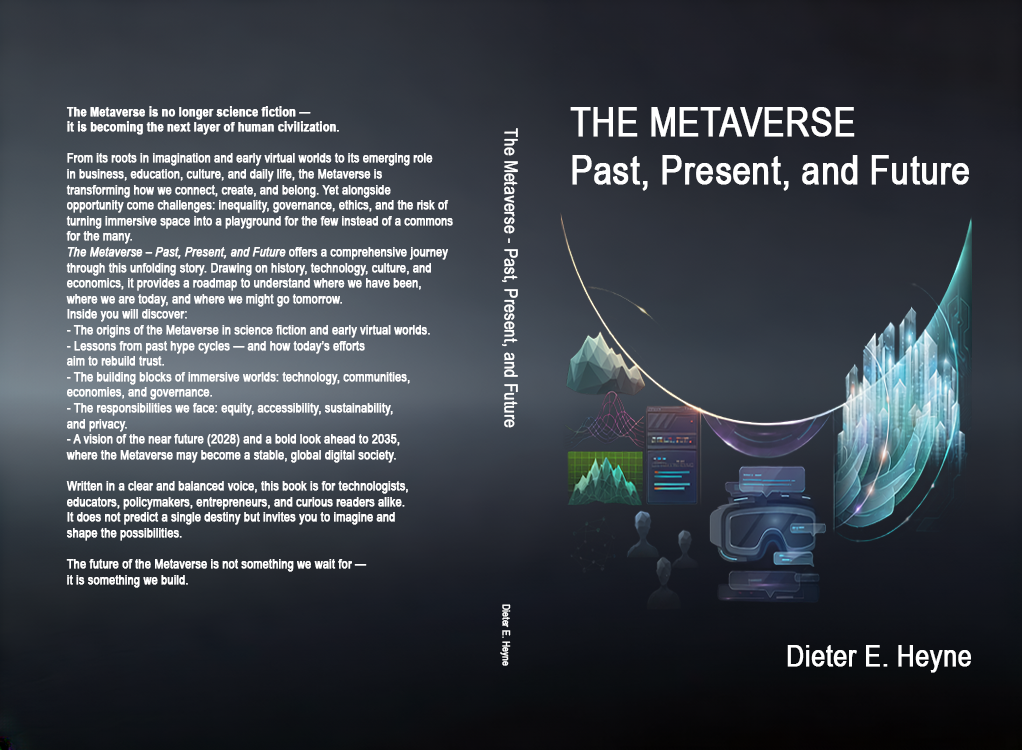
Discover the Metaverse Beyond the Hype
The Metaverse is no longer a futuristic fantasy, it is rapidly becoming a new layer of human society. But what is it really? Where did it come from? And what might it become over the next decade?
The Metaverse – Past, Present, and Future takes readers on a fascinating journey from the earliest virtual worlds and science-fiction visions to today’s emerging immersive platforms, digital economies, and online communities. Along the way, it explores the technologies powering the Metaverse, the opportunities it creates for education, work, and culture, and the challenges of governance, privacy, inclusion, and sustainability.
Looking beyond today's headlines, the book offers a balanced and inspiring vision of how immersive technologies could transform cities, learning, creativity, and daily life by 2035.
Whether you are a business leader, educator, technologist, policymaker, or simply curious about the future, this book provides the context, insight, and perspective needed to understand one of the most important technological and societal shifts of our time.
The future of the Metaverse is not something we await, it is something we create.
About the Author
Dieter E. Heyne is a Metaverse pioneer and lifelong technologist, born in Munich in 1966. With a master’s degree in applied computer science and over three decades of experience as an IT entrepreneur, software architect, and consultant, he has always been at the frontier of digital innovation. His journey into virtual worlds began in 2007 with Second Life and sparked a deep, ongoing exploration of the Metaverse as a space for education, collaboration, and immersive experiences.
Since 2012, Dieter has been developing and refining a web-based virtual world platform, driven by a vision to make the Metaverse accessible, meaningful, and transformative. As a frequent speaker and thought leader at Metaverse events, he shares his insights on how virtual environments can reshape human interaction, learning, and culture. He is the founder and CEO of Metaverse School GmbH, a company dedicated to promoting Metaverse literacy and helping people and organizations understand the power and promise of these emerging digital realms.
Besides talking and writing non-fiction about the Metaverse and Virtual Worlds, this vast knowledge now went into the creation of The Metaverse Enforcers, an ongoing series of high-tech science fiction novels, showcasing the potential development and dangers of the Metaverse in 2053.
About Metaverse School GmbH
Metaverse School GmbH was founded in 2017 by Dieter E. Heyne, who continues to lead the company as its CEO. The company emerged from decades of consulting experience in software architecture, project management, quality assurance, information security, and data protection. Building on this strong technological foundation, Metaverse School GmbH is dedicated to promoting the responsible and purposeful use of immersive 3D environments, for education, collaboration, training, and simulation.
A core mission of the company is to raise awareness of the Metaverse’s potential across business, education, and society. In support of this goal, Dieter Heyne regularly speaks at national and international conferences as well as Metaverse-focused events. Through real-world examples and deep expertise, he demonstrates how immersive technologies can already create meaningful value today.
Disclaimer
Some portions of this content were created or refined with the assistance of artificial intelligence (AI) using tools such as OpenAI’s ChatGPT. The ideas, structure, and editorial direction remain the responsibility of the author. While every effort has been made to ensure factual accuracy and original expression, readers are encouraged to approach speculative or future-facing statements with critical thought.
This series does not represent the views of any specific company or platform and is intended to inspire open discussion around the evolving concept of the Metaverse.
#Metaverse #VirtualWorlds #FutureOfTech #DigitalCommunity #CybaLounge #CL2