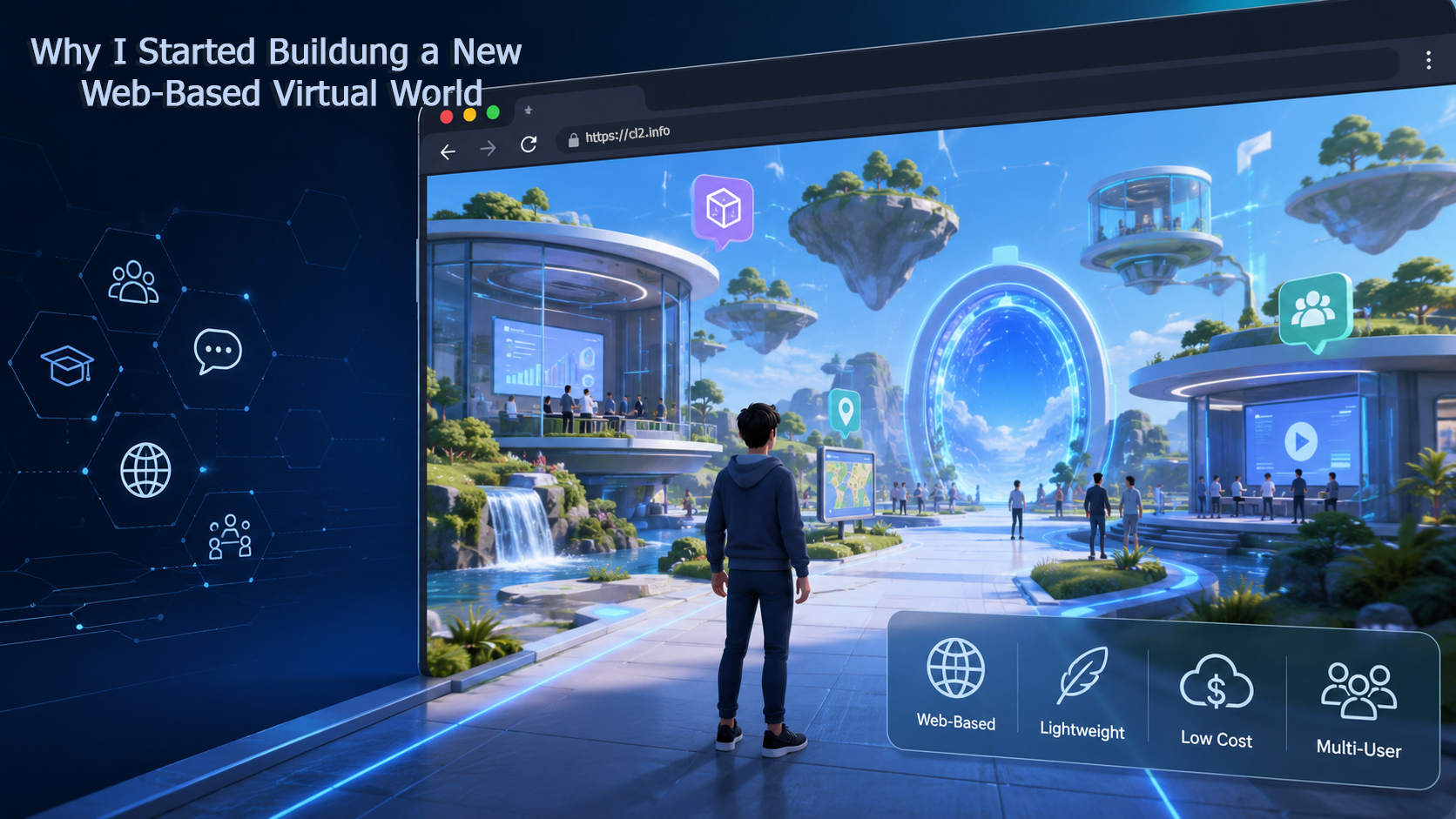
A virtual world can be beautifully designed, technically impressive, and full of meaningful possibilities. But if users cannot enter it easily, most of that value remains theoretical. This is one of the reasons why Cybalounge 2 is being built with a browser-first mindset. The browser is not only a runtime environment. It is an access strategy. It is the difference between "please install this first" and "open this link". For many real-world use cases, that difference is decisive.
Every additional step before entry creates friction. A download creates friction. Installation creates friction. Administrator permissions create friction. A plugin creates friction. A large update creates friction. A device requirement creates friction. A registration process creates friction. In some markets, users tolerate this. Gamers may install large clients. Professionals may install specialized tools if the value is clear. But in schools, training sessions, community projects, public sector environments, senior initiatives, and many business contexts, friction reduces participation. The easier the entry, the broader the audience.
The browser has become the most familiar digital doorway we have. People understand links. They understand opening a page. They may not understand graphics settings, runtime dependencies, or application permissions, but they understand a URL. That familiarity matters. If a teacher wants to invite learners into a virtual training environment, a link is easier than an installation guide. If a company wants to test an onboarding world, a browser-based entry is easier than coordinating software deployment. If a senior community wants to meet in a virtual space, the technical threshold must be as low as possible.
This does not mean the browser is an easy choice from a development perspective. Web-based 3D applications must live within real constraints. Performance varies between devices. Browsers differ. Memory is limited. Mobile behavior can be unpredictable. Access to hardware is controlled for good security reasons. Audio must often be unlocked through user interaction. Video, microphone, fullscreen, pointer lock, gamepad input, and WebXR each have their own details. A browser-first platform must accept these limits and work with them rather than pretend they do not exist.
There is also a temptation to compare browser-based worlds directly with high-end game engines. That comparison can be misleading. A native game engine can often offer deeper rendering control, more predictable performance, and more powerful tooling. But CL2 is not trying to become a game engine replacement. It is trying to become a practical virtual world platform. The relevant question is not whether the browser can match every high-end engine feature. The relevant question is whether the browser can deliver enough immersion, presence, communication, and interaction for meaningful use cases with much lower access friction.
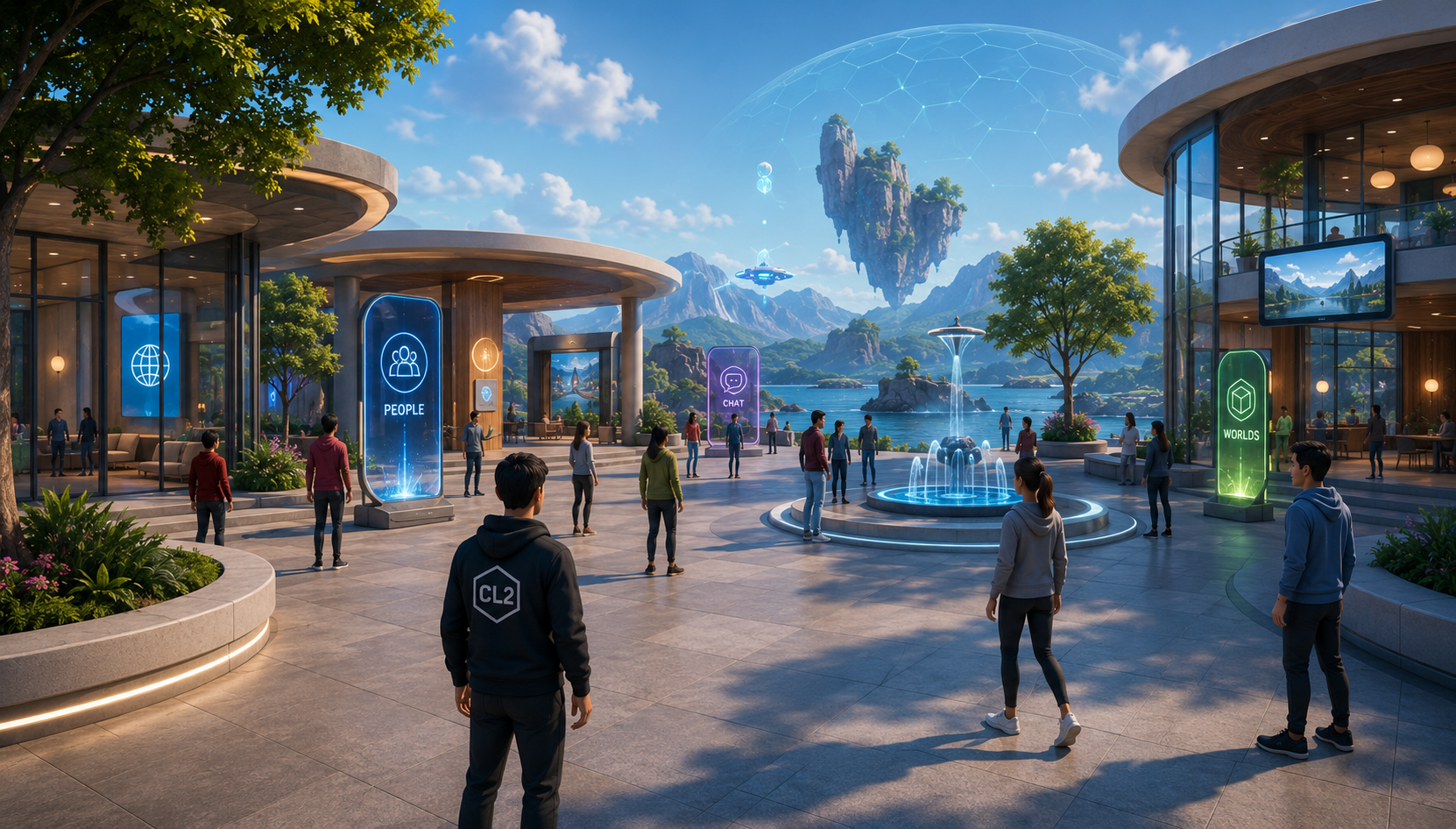
For many scenarios, the answer is yes. A browser-based world can support spatial exploration, avatars, communication, basic interaction, environmental atmosphere, learning spaces, meeting areas, showcases, exhibitions, training rooms, and simple simulations. It can be deployed through normal web infrastructure. It can be updated centrally. It can be tested quickly. It can be shared with a link. This does not solve every problem, but it makes experimentation much easier. And experimentation is important because many organizations still need to discover what virtual worlds can do for them.
The browser-first approach also supports the operating cost goal. If the client does much of the rendering and interaction locally, and if worlds can be served as static content where possible, the backend can remain light. This matters when the target is one US dollar or less per user per month. A platform that requires heavy cloud infrastructure for every world, every object, and every interaction will struggle to reach that target. A platform that uses the browser effectively has a better chance of remaining affordable.
There is an important psychological aspect as well. A browser-based virtual world feels less like a separate universe that demands commitment and more like an extension of the web. This can make it less intimidating. Users can enter, try, leave, return, and share. For first-time users, especially those without a gaming background, this lowers the emotional barrier. They do not feel they are installing a complex system. They are visiting a place.
Of course, browser-first does not mean browser-only in every future scenario. There may be cases where optional VR support, specialized devices, or deeper integrations make sense. But optional is the key word. The default path should remain accessible. A platform that requires VR hardware before it becomes useful excludes many potential users. A platform that works on a normal desktop browser and can later extend into VR has a much broader base. For practical adoption, the simplest entry path should not be treated as a secondary version.
This also affects design decisions inside the platform. Controls must work with keyboard and mouse. Interfaces must be readable on common screens. Performance must be acceptable on normal devices. Asset sizes must be reasonable. World builders must understand that not every user has a high-end machine. Browser-first design therefore becomes a discipline that keeps the platform grounded. It constantly reminds the developer that the real target is not the ideal test setup, but the diverse reality of user devices.
For education and training, this grounding is essential. A virtual classroom that only works for half the learners is not a solution. A business onboarding world that requires IT support before every session is not practical. A senior community space that begins with installation problems may lose the very people it is meant to support. Browser-first access does not guarantee success, but it removes one of the largest adoption barriers before the experience begins.
In the end, the browser-first decision reflects a broader belief: the value of a virtual world starts at the entrance. The platform can have beautiful visuals, clever architecture, and rich interaction, but none of that matters if people do not get in. The best virtual world is not necessarily the one with the most features. It is the one people can actually enter, understand, and use. For Cybalounge 2, that means starting with the browser as the doorway.
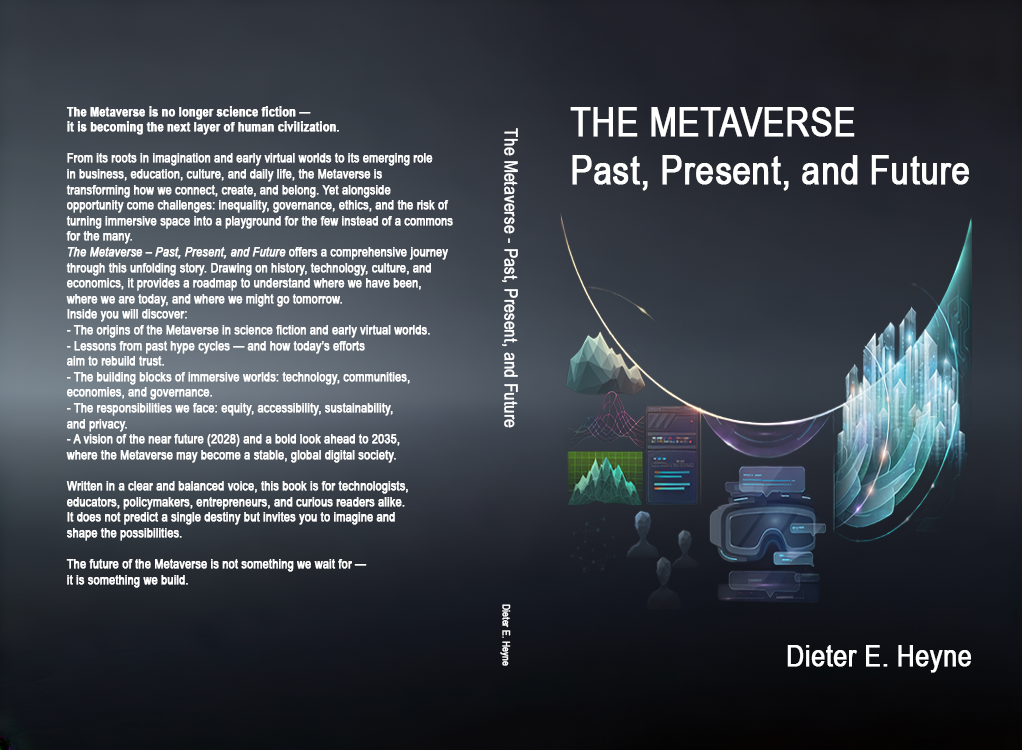
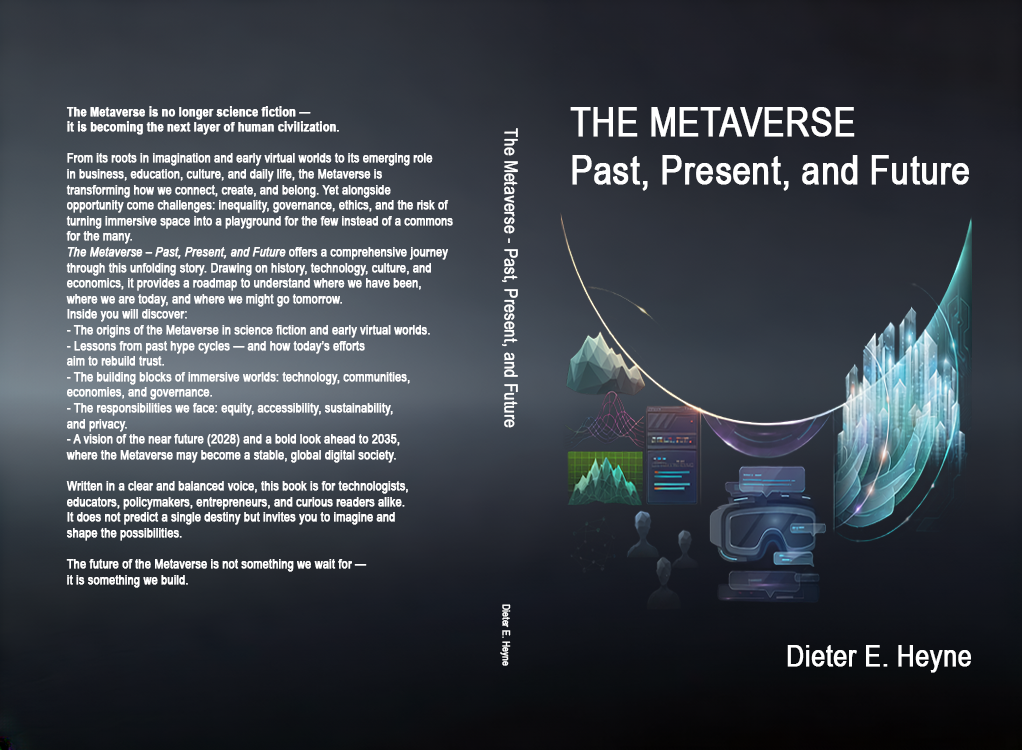
Now available on Amazon!
Discover the Metaverse Beyond the Hype
The Metaverse is no longer a futuristic fantasy, it is rapidly becoming a new layer of human society. But what is it really? Where did it come from? And what might it become over the next decade?
The Metaverse – Past, Present, and Future takes readers on a fascinating journey from the earliest virtual worlds and science-fiction visions to today’s emerging immersive platforms, digital economies, and online communities. Along the way, it explores the technologies powering the Metaverse, the opportunities it creates for education, work, and culture, and the challenges of governance, privacy, inclusion, and sustainability.
Looking beyond today's headlines, the book offers a balanced and inspiring vision of how immersive technologies could transform cities, learning, creativity, and daily life by 2035.
Whether you are a business leader, educator, technologist, policymaker, or simply curious about the future, this book provides the context, insight, and perspective needed to understand one of the most important technological and societal shifts of our time.
The future of the Metaverse is not something we await, it is something we create.
About the Author
Dieter E. Heyne is a Metaverse pioneer and lifelong technologist, born in Munich in 1966. With a master’s degree in applied computer science and over three decades of experience as an IT entrepreneur, software architect, and consultant, he has always been at the frontier of digital innovation. His journey into virtual worlds began in 2007 with Second Life and sparked a deep, ongoing exploration of the Metaverse as a space for education, collaboration, and immersive experiences.
Since 2012, Dieter has been developing and refining a web-based virtual world platform, driven by a vision to make the Metaverse accessible, meaningful, and transformative. As a frequent speaker and thought leader at Metaverse events, he shares his insights on how virtual environments can reshape human interaction, learning, and culture. He is the founder and CEO of Metaverse School GmbH, a company dedicated to promoting Metaverse literacy and helping people and organizations understand the power and promise of these emerging digital realms.
Besides talking and writing non-fiction about the Metaverse and Virtual Worlds, this vast knowledge now went into the creation of The Metaverse Enforcers, an ongoing series of high-tech science fiction novels, showcasing the potential development and dangers of the Metaverse in 2053.
About Metaverse School GmbH
Metaverse School GmbH was founded in 2017 by Dieter E. Heyne, who continues to lead the company as its CEO. The company emerged from decades of consulting experience in software architecture, project management, quality assurance, information security, and data protection. Building on this strong technological foundation, Metaverse School GmbH is dedicated to promoting the responsible and purposeful use of immersive 3D environments, for education, collaboration, training, and simulation.
A core mission of the company is to raise awareness of the Metaverse’s potential across business, education, and society. In support of this goal, Dieter Heyne regularly speaks at national and international conferences as well as Metaverse-focused events. Through real-world examples and deep expertise, he demonstrates how immersive technologies can already create meaningful value today.
Disclaimer
Some portions of this content were created or refined with the assistance of artificial intelligence (AI) using tools such as OpenAI’s ChatGPT. The ideas, structure, and editorial direction remain the responsibility of the author. While every effort has been made to ensure factual accuracy and original expression, readers are encouraged to approach speculative or future-facing statements with critical thought.
This series does not represent the views of any specific company or platform and is intended to inspire open discussion around the evolving concept of the Metaverse.
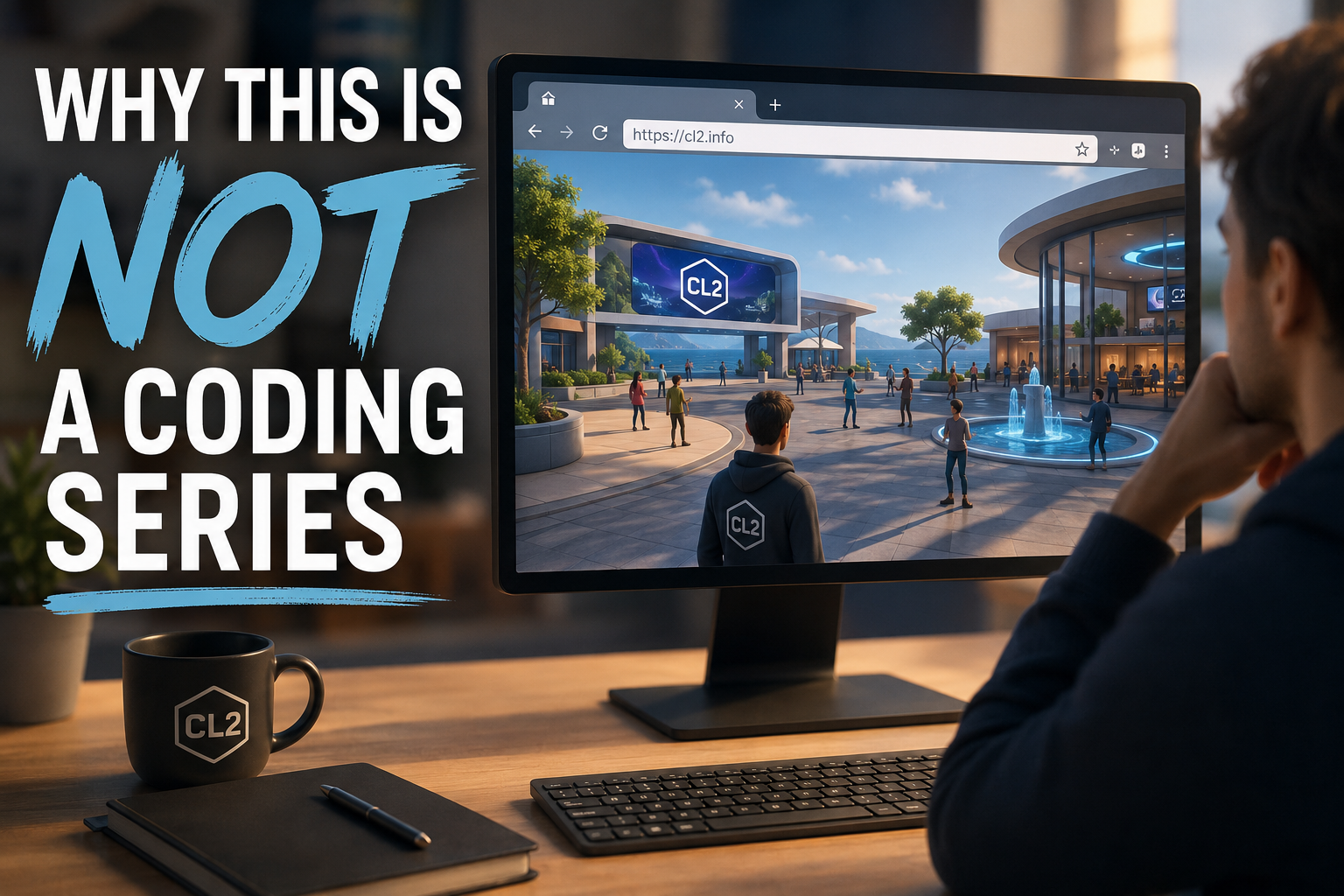
There is a natural expectation that a developer writing about a software project will eventually show code. It is almost part of the ritual. A problem is introduced, a short explanation follows, and then comes the code sample. Sometimes that is exactly the right format. If the goal is to teach a specific API, explain an algorithm, or demonstrate an implementation pattern, code is essential. But for this series about the making of Cybalounge 2, I want to choose a different focus. I want to write about the platform from a developer's point of view without turning the series into a developer manual.
That decision is intentional. CL2 is a web-based virtual world platform, and of course the implementation matters. It uses browser technologies, JavaScript, Three.js, Vite, GLTF/GLB workflows, communication components, synchronization, collision detection, user interface layers, and many smaller utility classes. Many of these areas could easily become separate technical tutorials. But the goal of this series is not to explain how to reproduce each function. The goal is to explain why the platform is shaped the way it is.
In my experience, the most important software decisions often happen before the code becomes visible. Should the platform be browser-first? Should the backend be lightweight? Should worlds be described as static content? Should the creator workflow start locally? Should the first avatar system be simple or highly customizable? Should communication be built from scratch or integrated through an existing solution? Should visual effects aim for maximum realism or believable atmosphere? These questions are not solved by code snippets. They are solved by priorities, constraints, and trade-offs.
This is especially important because the intended audience for this series is not limited to software developers. I want the articles to be useful for people with business, technical, educational, and strategic backgrounds. Some readers may understand JavaScript in detail. Others may not. Some may be responsible for training, digital learning, community building, customer experience, or digital transformation. For them, the interesting question may not be how a collision algorithm works internally. The interesting question may be why collision detection matters for trust, orientation, and the feeling that a virtual space behaves consistently.
A code-centered article often explains a local solution. A decision-centered article can explain the shape of a product. That distinction matters for Cybalounge 2 because the platform is not an isolated technical experiment. It is meant to become a practical tool for creating and operating virtual worlds with low complexity and low operating costs. When the target is one US dollar or less per user per month, architecture becomes business strategy. When the users include educators, companies, communities, and potentially seniors, interface design becomes adoption strategy. When the worlds are meant to be created and maintained by others, creator experience becomes platform strategy.
None of this means that code is unimportant. It means that code is not always the best way to communicate the essence of a platform. Code can even distract from the central point. If I show a function, readers may focus on syntax, naming, edge cases, or personal preferences. That can be valuable in the right context, but it can also narrow the conversation too early. I would rather use this series to discuss the underlying choices: what problem the function exists to solve, why the solution is deliberately simple, what has been postponed, and what the user or creator gains from that decision.
Another reason to avoid code in this series is longevity. Code ages quickly. APIs change. Libraries evolve. Browser behavior shifts. Patterns that look elegant today may be replaced tomorrow. The principles behind the platform should last longer. Keeping the backend light, minimizing unnecessary data collection, designing for onboarding, treating performance as product quality, and building worlds as manageable artifacts are ideas that remain relevant even if individual implementation details change.
There is also a publishing reason. I see these LinkedIn articles as the foundation for a future book. A book filled with code samples can become outdated very quickly, especially in a field connected to browser technology and real-time 3D. A book about principles, product decisions, trade-offs, and lessons learned can remain useful for a longer time. It can still be technical in spirit, but it does not need to be tied to one exact version of a library or framework.
For CL2, this distinction is important because the project itself is not an attempt to demonstrate technical superiority. I am not building it to prove that I know every possible solution to every problem in virtual worlds. I am building it to explore a fresh, practical approach. That means some decisions are experiments. Some will change. Some will be validated. Some will be replaced. Writing only about code could make the project appear more certain than it really is. Writing about motivation and trade-offs allows the journey to remain honest.
This also changes the kind of questions the series can ask. Instead of asking, "How do we implement feature X?" we can ask, "Does feature X belong in the core platform?" Instead of asking, "Which data structure is fastest?" we can ask, "How much performance does this use case really need?" Instead of asking, "Can we build a complex editor?" we can ask, "What is the simplest creator workflow that still gives people real control?" These questions are not less technical. They are more strategic.
The series will still discuss technology. It would be impossible not to. But technology will appear as part of a broader conversation. JavaScript, Three.js, Vite, Jitsi, JSON, GLTF, browser APIs, collision systems, audio, sky, water, and visual effects will all be mentioned where they matter. The difference is that they will not be presented as isolated tricks. They will be presented as choices serving a platform vision: useful virtual worlds, accessible through the browser, with low operating costs and manageable complexity.
In the end, the most important part of development is often not the code itself, but the decisions that make the code necessary. Code turns decisions into reality. But if the decisions are unclear, the code can become a pile of solutions looking for problems. This series is about the thinking before and around the implementation. It is about why Cybalounge 2 is being built in this way, what I hope to achieve, and how a deliberately simple platform might make virtual worlds more practical for real organizations and real people.
Now available on Amazon!
Discover the Metaverse Beyond the Hype
The Metaverse is no longer a futuristic fantasy, it is rapidly becoming a new layer of human society. But what is it really? Where did it come from? And what might it become over the next decade?
The Metaverse – Past, Present, and Future takes readers on a fascinating journey from the earliest virtual worlds and science-fiction visions to today’s emerging immersive platforms, digital economies, and online communities. Along the way, it explores the technologies powering the Metaverse, the opportunities it creates for education, work, and culture, and the challenges of governance, privacy, inclusion, and sustainability.
Looking beyond today's headlines, the book offers a balanced and inspiring vision of how immersive technologies could transform cities, learning, creativity, and daily life by 2035.
Whether you are a business leader, educator, technologist, policymaker, or simply curious about the future, this book provides the context, insight, and perspective needed to understand one of the most important technological and societal shifts of our time.
The future of the Metaverse is not something we await, it is something we create.
About the Author
Dieter E. Heyne is a Metaverse pioneer and lifelong technologist, born in Munich in 1966. With a master’s degree in applied computer science and over three decades of experience as an IT entrepreneur, software architect, and consultant, he has always been at the frontier of digital innovation. His journey into virtual worlds began in 2007 with Second Life and sparked a deep, ongoing exploration of the Metaverse as a space for education, collaboration, and immersive experiences.
Since 2012, Dieter has been developing and refining a web-based virtual world platform, driven by a vision to make the Metaverse accessible, meaningful, and transformative. As a frequent speaker and thought leader at Metaverse events, he shares his insights on how virtual environments can reshape human interaction, learning, and culture. He is the founder and CEO of Metaverse School GmbH, a company dedicated to promoting Metaverse literacy and helping people and organizations understand the power and promise of these emerging digital realms.
Besides talking and writing non-fiction about the Metaverse and Virtual Worlds, this vast knowledge now went into the creation of The Metaverse Enforcers, an ongoing series of high-tech science fiction novels, showcasing the potential development and dangers of the Metaverse in 2053.
About Metaverse School GmbH
Metaverse School GmbH was founded in 2017 by Dieter E. Heyne, who continues to lead the company as its CEO. The company emerged from decades of consulting experience in software architecture, project management, quality assurance, information security, and data protection. Building on this strong technological foundation, Metaverse School GmbH is dedicated to promoting the responsible and purposeful use of immersive 3D environments, for education, collaboration, training, and simulation.
A core mission of the company is to raise awareness of the Metaverse’s potential across business, education, and society. In support of this goal, Dieter Heyne regularly speaks at national and international conferences as well as Metaverse-focused events. Through real-world examples and deep expertise, he demonstrates how immersive technologies can already create meaningful value today.
Disclaimer
Some portions of this content were created or refined with the assistance of artificial intelligence (AI) using tools such as OpenAI’s ChatGPT. The ideas, structure, and editorial direction remain the responsibility of the author. While every effort has been made to ensure factual accuracy and original expression, readers are encouraged to approach speculative or future-facing statements with critical thought.
This series does not represent the views of any specific company or platform and is intended to inspire open discussion around the evolving concept of the Metaverse.
Whenever I start thinking about a new feature for Cybalounge 2, there is a small but important question in the background: does this make the platform better, or does it only make the platform bigger? The difference matters. Bigger systems are not automatically better systems. In software development, and especially in platform development, it is surprisingly easy to confuse growth with progress. A new menu, a new mode, a new backend component, a new configuration option, a new editor, a new service, a new permission layer. Each of these may look useful on its own. But together they can create a system that becomes harder to understand than the problem it was supposed to solve.
This is one reason why simplicity is at the center of my approach to Cybalounge 2. I do not mean simplicity in the sense of being small, weak, or unfinished. I mean simplicity as a deliberate product decision. The goal is not to avoid complexity at all costs, because a virtual world platform is naturally complex in some areas. It needs rendering, movement, avatars, communication, collision detection, user interface, synchronization, content loading, optimization, and many other things. But the question is where complexity is truly necessary and where it is only the result of habit, fear, or premature ambition.
Many platforms become complicated because they try to solve every possible future problem in the first version. They include advanced administration, detailed permissions, powerful editors, plugin systems, databases, dashboards, analytics, identity layers, workflow automation, and complex deployment scenarios before the core experience has proven itself. This can be impressive from an engineering perspective, but it can also make the platform difficult to adopt. A technically powerful system may still fail if small teams cannot operate it, if creators cannot understand it, or if users are overwhelmed before they even enter the world.
Cybalounge 1 was exactly like this. It was huge, powerful, and complicated. And that is why Cybalounge 2 starts from a different point. I want to ask what is necessary to create a convincing, useful, browser-based virtual world experience, and what can wait. This does not mean that advanced features are rejected forever. It means they must earn their place. A feature should not be added only because it is possible, or because another platform has it, or because it sounds good in a feature list. It should be added because it improves the experience for users, creators, operators, or customers in a way that justifies its long-term cost.
The long-term cost is the key. Every feature has a development cost, but that is only the beginning. It also has a maintenance cost. It has a testing cost. It may have a security cost. It may increase the support burden. It may make documentation harder. It may introduce dependencies that need to be updated. It may create additional configuration that someone must understand later. In a platform that should be easy to operate, this matters enormously. A feature that looks small in the code can become expensive over time if it adds hidden operational complexity.
This becomes especially important when I think about the target operating cost. My goal is ambitious: the platform should be operable at around one US dollar or less per user per month. That number is not just a financial target. It is a design constraint. If the platform needs complex backend infrastructure, heavy databases, specialized hosting, constant administration, and expensive scaling from the beginning, that cost target becomes unrealistic. If the system can rely on static content where possible, simple deployment, efficient browser-side logic, and only the backend components that are truly needed, the target becomes much more believable.
Simplicity also helps security and privacy. A smaller backend surface is easier to protect than a large one. Less persistent data means fewer things to secure, fewer things to explain, and fewer things that can go wrong. This does not remove the need for serious security thinking, especially in multi-user environments, but it changes the baseline. Instead of building a complex system and then trying to secure every corner, I prefer to ask whether some corners can be avoided in the first place.
The same principle applies to the creator experience. If a world can be described in a structured JSON file, if assets can be organized in a clear folder structure, if worlds can be built locally and uploaded as static content, then creators gain transparency. They can see what belongs to a world. They can copy it, version it, test it, archive it, and move it. That may sound less glamorous than a huge online editor in the first version, but it may be more useful for many real projects. A simple workflow that creators understand is often more valuable than a powerful workflow they are afraid to touch.
Of course, simplicity always involves trade-offs. Some features will be postponed. Some ideas will be implemented in a more modest way at first. Some automation may be replaced by clear conventions. Some advanced customization may wait until the foundation is stable. This can be frustrating, especially for a developer who enjoys solving difficult technical problems. But a platform is not a collection of engineering achievements. It is a product that must be usable, maintainable, and trustworthy. Sometimes the more mature decision is not to add something yet.
There is also an emotional side to simplicity. Users do not usually admire architecture diagrams. They feel whether a system is clear or confusing. They feel whether a world loads reliably, whether controls make sense, whether the interface stays out of the way, whether they can find the microphone button, whether they can invite someone, whether they understand what is happening. Creators feel whether they can build something without asking the original developer for help every time. Operators feel whether the system can be hosted without constant attention. In all these areas, simplicity is experienced as quality.
This does not mean Cybalounge 2 should remain minimal forever. The platform should grow. It should gain better tools, richer worlds, stronger communication, more atmospheric effects, better onboarding, better accessibility, and eventually low-code or no-code interaction. But growth should be guided. The core should remain understandable. The architecture should not be sacrificed for short-term feature excitement. The user experience should not be buried under options. The operating model should not become heavier than the organizations it is meant to serve.
For me, this is the heart of the KISS principle in this project. Keep it simple does not mean avoid ambition. It means protect ambition from collapsing under its own weight. If virtual worlds are to become useful for education, training, collaboration, senior communities, events, digital twins, and other practical scenarios, they need to be sustainable. They need to be affordable. They need to be approachable. They need to be manageable by real people in real organizations. Simplicity is not the opposite of that vision. It is the discipline that makes the vision possible.
Now available on Amazon!
Discover the Metaverse Beyond the Hype
The Metaverse is no longer a futuristic fantasy, it is rapidly becoming a new layer of human society. But what is it really? Where did it come from? And what might it become over the next decade?
The Metaverse – Past, Present, and Future takes readers on a fascinating journey from the earliest virtual worlds and science-fiction visions to today’s emerging immersive platforms, digital economies, and online communities. Along the way, it explores the technologies powering the Metaverse, the opportunities it creates for education, work, and culture, and the challenges of governance, privacy, inclusion, and sustainability.
Looking beyond today's headlines, the book offers a balanced and inspiring vision of how immersive technologies could transform cities, learning, creativity, and daily life by 2035.
Whether you are a business leader, educator, technologist, policymaker, or simply curious about the future, this book provides the context, insight, and perspective needed to understand one of the most important technological and societal shifts of our time.
The future of the Metaverse is not something we await, it is something we create.
About the Author
Dieter E. Heyne is a Metaverse pioneer and lifelong technologist, born in Munich in 1966. With a master’s degree in applied computer science and over three decades of experience as an IT entrepreneur, software architect, and consultant, he has always been at the frontier of digital innovation. His journey into virtual worlds began in 2007 with Second Life and sparked a deep, ongoing exploration of the Metaverse as a space for education, collaboration, and immersive experiences.
Since 2012, Dieter has been developing and refining a web-based virtual world platform, driven by a vision to make the Metaverse accessible, meaningful, and transformative. As a frequent speaker and thought leader at Metaverse events, he shares his insights on how virtual environments can reshape human interaction, learning, and culture. He is the founder and CEO of Metaverse School GmbH, a company dedicated to promoting Metaverse literacy and helping people and organizations understand the power and promise of these emerging digital realms.
Besides talking and writing non-fiction about the Metaverse and Virtual Worlds, this vast knowledge now went into the creation of The Metaverse Enforcers, an ongoing series of high-tech science fiction novels, showcasing the potential development and dangers of the Metaverse in 2053.
About Metaverse School GmbH
Metaverse School GmbH was founded in 2017 by Dieter E. Heyne, who continues to lead the company as its CEO. The company emerged from decades of consulting experience in software architecture, project management, quality assurance, information security, and data protection. Building on this strong technological foundation, Metaverse School GmbH is dedicated to promoting the responsible and purposeful use of immersive 3D environments, for education, collaboration, training, and simulation.
A core mission of the company is to raise awareness of the Metaverse’s potential across business, education, and society. In support of this goal, Dieter Heyne regularly speaks at national and international conferences as well as Metaverse-focused events. Through real-world examples and deep expertise, he demonstrates how immersive technologies can already create meaningful value today.
Disclaimer
Some portions of this content were created or refined with the assistance of artificial intelligence (AI) using tools such as OpenAI’s ChatGPT. The ideas, structure, and editorial direction remain the responsibility of the author. While every effort has been made to ensure factual accuracy and original expression, readers are encouraged to approach speculative or future-facing statements with critical thought.
This series does not represent the views of any specific company or platform and is intended to inspire open discussion around the evolving concept of the Metaverse.
For many years, virtual worlds have appeared, disappeared, returned under new names, and then disappeared again from the center of attention. Sometimes they were called virtual worlds. Sometimes they were called social 3D platforms. Sometimes they were called the metaverse. Sometimes they were connected to gaming, sometimes to education, sometimes to remote work, sometimes to digital twins, events, simulations, or online communities.
The terminology changes. The basic idea remains fascinating.
What happens when people do not only look at digital content, but enter it? What happens when a website becomes a place? What happens when learning, communication, collaboration, exploration, storytelling, and simulation take place inside a shared spatial environment?
These questions have interested me for a long time. They are also the reason why, after 14 years, I started developing a new web-based virtual world platform, currently under the working title Cybalounge 2,or CL2 in short.
I am not starting this project because I believe that I know everything about virtual worlds. Quite the opposite. One of the most interesting aspects of building such a platform is that every decision raises new questions. How simple can the architecture be? How much visual quality is necessary? How much realism is useful? How much interaction is enough? How much backend infrastructure is really needed? How do we create a space that is technically manageable, pleasant to use, and still powerful enough for real use cases?
This article series is about that journey.
It is not meant to be a coding tutorial. I will not use it to present clever snippets, complex algorithms, or technical tricks. There are many places where those things can be discussed in detail, and of course they are important when building the actual software. But for this series, I want to focus on something different: the motivation behind the platform, the design decisions, the trade-offs, the guiding principles, and the attempt to keep the whole system as simple as possible without making the experience feel cheap or limited.
The central question behind Cybalounge 2 is simple:
Can we build a useful, immersive, multi-user virtual world platform that remains lightweight enough to operate, maintain, and understand?
This question matters because many virtual world projects fail not because the idea is bad, but because the system around the idea becomes too heavy. The platform becomes expensive to host. The backend becomes difficult to maintain. The content pipeline becomes too complicated for normal creators. The hardware requirements become too high. The onboarding becomes confusing. The user interface becomes overloaded. Security and privacy become afterthoughts. And at some point, the promise of the virtual world is buried under operational complexity.
I wanted to try a different approach.
The vision for Cybalounge 2 is not to build the most technically advanced 3D environment possible. It is not to compete with full game engines. It is not to reproduce every feature that large commercial platforms offer. Instead, the goal is to explore how far we can get with a deliberately lean architecture: browser-based access, static content wherever possible, simple deployment, understandable world descriptions, reusable components, and a backend that does only what is truly necessary.
The operating cost target is ambitious but important:equal to or less than one US dollar per user per month.
This number is not only a financial target. It is a design constraint. And design constraints are powerful.
If a virtual world platform can only be operated economically with large budgets, large teams, and complex infrastructure, then many meaningful use cases will never happen. Small schools will hesitate. Community projects will hesitate. Training providers will hesitate. Senior initiatives will hesitate. Small and medium-sized companies will hesitate. Municipal or cultural projects will hesitate. Even when the value of immersive environments is clear, the operational burden can become a barrier.
A low-cost platform changes the equation. It makes experimentation easier. It lowers risk. It allows smaller organizations to test ideas without committing to heavy infrastructure. It gives creators more freedom because the platform itself does not constantly demand attention, administration, and budget.
This is why simplicity is not a technical preference for this project. It is a product strategy.
The simpler the system is, the easier it is to host. The easier it is to host, the easier it is to adopt. The easier it is to adopt, the more likely it is that virtual worlds will be used for practical, everyday purposes instead of remaining impressive demonstrations.
Of course, simplicity does not mean that everything is easy.
A virtual world platform still has to solve many hard problems. It needs to render spaces. It needs avatars. It needs movement, controls, collision detection, communication, synchronization, user interface elements, environmental effects, content loading, optimization, and eventually building tools and scripting. It needs to consider privacy, security, accessibility, moderation, onboarding, and performance. It needs to feel stable and trustworthy. It needs to work on real devices, not only on development machines.
But the challenge is to solve these problems without turning every solution into a new layer of unnecessary complexity.
For example, when thinking about backend architecture, the traditional instinct might be to create a database-driven system for everything: worlds, objects, users, sessions, permissions, content, configuration, logs, and interaction states. That may be necessary for some platforms. But is it necessary for every world? Is it necessary for the first version? Is it necessary for educational rooms, static exhibitions, guided training spaces, or small team environments?
Maybe not.
What if a world could largely be described in a structured JSON file? What if assets could be uploaded as static content? What if the platform could separate world content from core application logic? What if hosting a world could become closer to hosting a website than operating a complex online game backend?
This does not solve every problem. But it changes the starting point.
The same thinking applies to the user experience. A virtual world does not become better simply because more interface elements are visible. In fact, too much interface can destroy the feeling of presence. So the question becomes: what should be visible all the time, and what should only appear when needed? How can we design an interface on demand? How can we help first-time users without overwhelming experienced users? How can we support different levels of technical confidence?
These questions are especially important because I do not see Cybalounge 2 only as a tool for highly technical users. I see it as a platform that should become useful for educators, trainers, businesses, communities, and creators who may not want to think like software developers every time they build or update a world.
That is also why creator experience matters so much.
A virtual world platform is not only used by the people entering the world. It is also used by the people building, maintaining, and improving those worlds. If the creator workflow is painful, the platform will not scale in practice. If every small change requires deep technical knowledge, the platform remains dependent on specialists. If worlds cannot be copied, tested, optimized, uploaded, versioned, and moved in a predictable way, then the long-term value suffers.
So this series will look at Cybalounge 2 from several perspectives at once: as a developer, as a product designer, as someone interested in immersive learning and collaboration, and as someone who believes that virtual worlds need to become more practical if they are to become more widely used.
The articles will follow the development journey in broad steps. We will begin with the vision and the design principles. Then we will look at architecture, the browser-first approach, and the idea of keeping the server side as light as possible. After that, we will move into worlds, avatars, controls, collision detection, interface design, onboarding, communication, synchronization, atmosphere, creator workflows, building tools, scripting, safety, and future directions such as avatar creation, machinima, and AI-supported world building.
The goal is not to present Cybalounge 2 as a finished perfect answer. It is not finished, and it is certainly not perfect. The goal is to document a development path: what I am trying, why I am trying it, where I simplify, where I accept trade-offs, and where the platform may evolve over time.
Perhaps the most important motivation behind the project is this:
I still believe that virtual worlds matter.
Not because they are fashionable. Not because a buzzword says so. Not because every organization needs a “metaverse strategy”. But because shared spatial environments can create forms of presence, orientation, memory, and interaction that ordinary web pages and video calls often cannot provide.
A well-designed virtual world can make remote learning feel less abstract. It can make collaboration more spatial. It can make digital twins more understandable. It can make onboarding more engaging. It can help communities meet in places that feel like places. It can turn information into experience.
But for that to happen, virtual worlds must become easier to create, easier to enter, easier to operate, easier to trust, and easier to maintain.
That is the path I want to explore with Cybalounge 2.
Not as someone claiming to have all the answers, but as someone convinced that a fresh, lightweight, web-based approach is worth trying.
And that is what this series is about: the making of a virtual world platform that tries to stay simple enough to be practical, but powerful enough to matter.
Now available on Amazon!
Discover the Metaverse Beyond the Hype
The Metaverse is no longer a futuristic fantasy, it is rapidly becoming a new layer of human society. But what is it really? Where did it come from? And what might it become over the next decade?
The Metaverse – Past, Present, and Future takes readers on a fascinating journey from the earliest virtual worlds and science-fiction visions to today’s emerging immersive platforms, digital economies, and online communities. Along the way, it explores the technologies powering the Metaverse, the opportunities it creates for education, work, and culture, and the challenges of governance, privacy, inclusion, and sustainability.
Looking beyond today's headlines, the book offers a balanced and inspiring vision of how immersive technologies could transform cities, learning, creativity, and daily life by 2035.
Whether you are a business leader, educator, technologist, policymaker, or simply curious about the future, this book provides the context, insight, and perspective needed to understand one of the most important technological and societal shifts of our time.
The future of the Metaverse is not something we await, it is something we create.
About the Author
Dieter E. Heyne is a Metaverse pioneer and lifelong technologist, born in Munich in 1966. With a master’s degree in applied computer science and over three decades of experience as an IT entrepreneur, software architect, and consultant, he has always been at the frontier of digital innovation. His journey into virtual worlds began in 2007 with Second Life and sparked a deep, ongoing exploration of the Metaverse as a space for education, collaboration, and immersive experiences.
Since 2012, Dieter has been developing and refining a web-based virtual world platform, driven by a vision to make the Metaverse accessible, meaningful, and transformative. As a frequent speaker and thought leader at Metaverse events, he shares his insights on how virtual environments can reshape human interaction, learning, and culture. He is the founder and CEO of Metaverse School GmbH, a company dedicated to promoting Metaverse literacy and helping people and organizations understand the power and promise of these emerging digital realms.
About Metaverse School GmbH
Metaverse School GmbH was founded in 2017 by Dieter E. Heyne, who continues to lead the company as its CEO. The company emerged from decades of consulting experience in software architecture, project management, quality assurance, information security, and data protection. Building on this strong technological foundation, Metaverse School GmbH is dedicated to promoting the responsible and purposeful use of immersive 3D environments, for education, collaboration, training, and simulation.
A core mission of the company is to raise awareness of the Metaverse’s potential across business, education, and society. In support of this goal, Dieter Heyne regularly speaks at national and international conferences as well as Metaverse-focused events. Through real-world examples and deep expertise, he demonstrates how immersive technologies can already create meaningful value today.
Disclaimer
Some portions of this content were created or refined with the assistance of artificial intelligence (AI) using tools such as OpenAI’s ChatGPT. The ideas, structure, and editorial direction remain the responsibility of the author. While every effort has been made to ensure factual accuracy and original expression, readers are encouraged to approach speculative or future-facing statements with critical thought.
This series does not represent the views of any specific company or platform and is intended to inspire open discussion around the evolving concept of the Metaverse.
There is a sentence I have heard many times over the last couple of years: “The Metaverse is dead.”
I understand why people say it.
The word ‘Metaverse’ was overused. It was inflated by corporate presentations, speculative investment decks, NFT fever, headset marketing, and unrealistic promises of a near-future internet where everyone would spend their working and social lives inside immersive 3D spaces. Then came the hangover. Some platforms disappeared. Others reduced their ambitions. Budgets were cut. The media moved on to the next big story: generative AI.
But I do not believe the Metaverse is dead.
I believe the Metaverse has entered a more honest phase.
The Metaverse of 2026 is not the simple, unified, headset-first vision that many companies tried to sell a few years ago. It is fragmented, uneven, sometimes disappointing, but also quietly alive. It exists in creator platforms, social VR communities, virtual economies, digital twins, immersive learning environments, game worlds, events, simulations, and persistent online places where people meet not just to consume content, but to do things together.
And perhaps that is the healthier definition.
The Metaverse was never supposed to be only a high-end technology stack. It was never supposed to be just VR headsets, corporate campuses, photorealistic avatars, blockchain ownership, or branded virtual showrooms. At its best, it is a human environment: a place people can build, extend, inhabit, and shape together.
That distinction matters more in 2026 than ever.
A market after the fever
The current state of the Metaverse is contradictory.
On the one hand, some of the best-known social VR and virtual world projects have either shut down, changed direction, or reduced their original ambitions. Microsoft shut down AltspaceVR in March 2023 and shifted focus toward Microsoft Mesh and workplace-oriented immersive experiences (Road to VR). Mozilla ended support for Mozilla Hubs on May 31, 2024, although the codebase continues under the Hubs Foundation (Mozilla Support). Meta discontinued Horizon Workrooms as a standalone app on February 16, 2026, deleting associated Workrooms data after that date (Meta). Rec Room, one of the better-known cross-platform social creation worlds, announced that it would close on June 1, 2026, despite reporting that it had reached more than 150 million players and creators over its lifetime (Rec Room).
Spatial is another useful example, although it should be described carefully. The company is not shutting down entirely. Instead, Spatial announced that, effective July 27, 2026, it will sunset its Free and Pro subscription tiers and discontinue 3D World hosting for those Creator platform users. Enterprise customers, according to Spatial, are not affected. The reason given was not a lack of imagination or a simple rejection of immersive worlds, but economics: the cost of hosting and scaling open multiplayer 3D environments had grown significantly, and Spatial said that revised pricing models, tiered hosting, or partnerships would still have pushed costs to a level that independent creators and small studios could not reasonably absorb. This makes Spatial’s decision especially relevant for the wider Metaverse discussion. It shows that creator-driven virtual worlds are not only a design challenge, but also an infrastructure and sustainability challenge. If a platform depends on persistent hosting, multiplayer access, asset storage, moderation, and user support, the business model must be as carefully designed as the world itself (A Note to Our Creator Community — Spatial).
These are not small signals. They show that running a persistent, social, creator-driven world is difficult. It is not enough to have a strong idea, a beautiful demo, or even a passionate early community. These platforms need sustainable economics, strong moderation, reliable infrastructure, accessible creation tools, and a clear reason for people to return again and again.
On the other hand, it would be wrong to conclude that immersive worlds have failed. Roblox remains a massive user-generated 3D platform, and its creator economy continues to be significant. Roblox reported that creators earned more than $1 billion globally through DevEx from March 2024 to March 2025 (Roblox). Fortnite’s creator ecosystem, especially through Creative and UEFN, has become another important model for large-scale participatory 3D content, with Epic distributing a portion of eligible revenue through engagement payouts (Epic Games Developers). VRChat continues to show that social presence, identity, performance, avatar culture, and community-led creation can still attract a serious audience; Steam data in 2026 shows tens of thousands of concurrent VRChat users even before counting non-Steam access (Steam Charts). Resonite, while much smaller and more technically demanding, is interesting because it represents a highly creator-focused branch of social VR, with in-world building and scripting at its core (Road to VR).
So the story is not “the Metaverse failed.”
The story is that some Metaverse strategies failed.
The distinction is important.
AI has changed the conversation
The strongest trend in 2026 is not VR. It is AI.
That may sound strange in an article about the Metaverse, but it may actually be the key to the next phase. Generative AI changes who can build, how fast they can build, and what kind of worlds can be created by small teams or even individuals.
Roblox has introduced Cube 3D, a generative AI system designed to create 3D models and environments directly from text, with future support for image inputs (Roblox). This points toward a very different creator workflow. Instead of every virtual object requiring traditional 3D modeling skills, AI can become a co-creator: a sketching partner, prototyping tool, asset generator, scripting assistant, and world-building accelerator.
NVIDIA’s Omniverse has also shifted the discussion toward “physical AI,” industrial digital twins, robotics simulation, and physically grounded virtual environments (NVIDIA). This is a very different kind of Metaverse from the consumer social VR fantasy. It is less about dancing avatars and more about factories, logistics, manufacturing, robotics, engineering, and training. But it is still part of the wider immersive computing landscape.
Apple’s Vision Pro and visionOS have helped push the language toward “spatial computing,” with spatial widgets, more expressive Personas, shared spatial experiences, and enterprise APIs for spatial applications (Apple). Whether or not high-end headsets become mass-market devices soon, spatial computing has influenced how the industry thinks about blending digital content with physical space.
This is why I believe the next Metaverse will not be built by hardware alone.
It will be built by the combination of AI-assisted creation, accessible virtual world platforms, persistent communities, spatial interfaces, and practical use cases.
AI may lower the barrier to entry. But that does not automatically solve the deeper problem.
A world that is easy to generate is not automatically a world worth visiting.
Why some platforms struggle
The failures and shutdowns of recent years should not make us cynical. They should make us more precise.
Many Metaverse projects struggled because they were designed around technology first and human behavior second.
They assumed that people would adopt headsets because the experience was impressive. They assumed that presence alone would justify friction. They assumed that corporate backing could replace organic community growth. They assumed that “immersive” automatically meant “better.”
But people are practical.
They ask simple questions: Why should I go there? Who is waiting for me? What can I do there that I cannot do more easily somewhere else? Can I build something? Can I belong? Can I return tomorrow and find continuity?
This is where many projects failed.
They offered spaces, but not enough purpose. They offered avatars, but not enough identity. They offered events, but not enough community before and after the event. They offered tools, but not enough creative ownership. They offered impressive technology, but not enough human reason.
There were also operational problems. Persistent virtual worlds are expensive to run. Moderation is hard. Safety is hard. Identity management is hard. Creator economies are hard. Cross-platform access is hard. Performance optimization is hard. Community management is hard. And once a platform has real users, every technical decision becomes social.
A virtual world is not just software.
It is a living system.
That is why mature platforms are so interesting.
The Second Life lesson
Second Life is still one of the most important examples in this conversation.
Not because it is the newest. It is not.
Not because it is the most technologically fashionable. It is not.
But because it has survived.
Launched in 2003, Second Life has outlived several waves of Metaverse hype. It has seen brands arrive and leave, journalists discover and rediscover it, competitors promise to replace it, and new technologies claim to make it obsolete. Yet it is still there: a user-created virtual world with communities, places, events, economies, identities, and stories.
Linden Lab’s current mobile work is especially interesting because Second Life Mobile is now available free for everyone, with thousands of user-created places described on the official mobile page (secondlife.com). The platform also still has a meaningful creator economy. GamesBeat reported that Linden Lab had spent $1.3 billion building Second Life since 2003 and had paid $1.1 billion to creators (GamesBeat).
Second Life’s age may actually be one of its strengths.
It has accumulated culture. It has habits. It has residents rather than just users. It has a memory. It has communities that were not created for a quarterly product launch. And it has creators who understand that the value of a virtual world is not only in the graphics engine, but in what people do with it.
Of course, Second Life also has challenges. Any mature platform does. It has technical legacy, onboarding friction, a learning curve, and cultural complexity. But it proves something crucial: people will stay in a virtual world when they feel that it belongs to them.
That is a lesson newer platforms should take seriously.
New does not always mean better
When people ask about new Metaverse platforms in 2026, I think we need to be honest. There are interesting developments, but there is no single new platform that has clearly replaced the old dream.
Instead, the field has split.
Roblox and Fortnite show the power of mass-market creator ecosystems. VRChat shows the strength of avatar identity, social presence, and community-driven culture. Resonite shows what highly capable in-world creation can look like for a smaller but serious creator audience. Second Life shows the durability of mature user ownership and world-building. Industrial digital twin platforms show the enterprise value of simulation. Spatial computing shows how immersive interaction may move beyond the headset-only model.
This fragmented landscape may disappoint people who wanted one universal Metaverse.
But perhaps fragmentation is not a failure.
Perhaps it is a sign that the Metaverse is becoming less of a product category and more of a design pattern.
A virtual world for teenagers creating games is not the same as a virtual simulation for factory planning. A social VR club is not the same as an immersive classroom. A digital twin of a city is not the same as a fantasy roleplay region. A corporate training space is not the same as a creator marketplace.
They should not all look the same.
The question is not: Which platform wins?
The better question is: Which human need are we designing for?
The way forward: less spectacle, more usefulness
For me, the future of the Metaverse depends on a shift in priorities.
We need fewer technology-first projects and more human-first environments.
That means starting with people, not devices. It means asking what users actually need: learning, belonging, collaboration, creativity, confidence, social contact, practice, exploration, expression, or shared decision-making. Then we choose the technology that supports that need.
Sometimes that technology will be VR.
Sometimes it will be a browser-based 3D world.
Sometimes it will be a desktop client.
Sometimes it will be mobile.
Sometimes it will be a simple multiplayer environment with voice, chat, objects, and shared tasks.
And sometimes the most powerful element will not be technology at all. It will be the scenario, the facilitation, the community rules, the story, the onboarding, the rituals, the shared goals, and the imagination of the participants.
This is especially important for education, training, senior communities, SME collaboration, public participation, and cultural projects. These use cases do not always need photorealism. They do not always need expensive headsets. They do not always need blockchain ownership or AI-generated everything.
They need reliability.
They need low barriers.
They need understandable interfaces.
They need moderation and trust.
They need operating costs that make sense after the pilot project is over.
They need people who maintain the environment, not just people who launch it.
This is where I see real opportunity.
The Metaverse should be built by humans for humans
One of the biggest mistakes of the last Metaverse hype cycle was the idea that the future would be delivered from the top down.
A large company would build the platform. Users would arrive. Brands would rent spaces. Work would move there. Entertainment would move there. Education would move there. Somehow, the new internet would be centrally designed and globally adopted.
But virtual worlds rarely work that way.
The strongest ones grow from participation.
People need the ability to shape the world. They need to create objects, rooms, rituals, events, businesses, performances, and stories. They need to bring their own culture. They need to feel that they are not merely entering someone else’s product, but helping to build a shared place.
This is why creator tools matter.
It is also why governance matters.
If the Metaverse is to become meaningful, it cannot be only a collection of high-end environments controlled by a few corporations. It should include spaces that can be planned, built, extended, and maintained by communities, educators, SMEs, artists, local organizations, developers, and users themselves.
That does not mean every platform must be open source. It does mean we should care about portability, interoperability, content ownership, export options, moderation tools, transparent rules, and economic fairness.
A virtual world without agency is just a 3D website.
A virtual world with agency can become a place.
Simpler may be stronger
There is a temptation in this field to always chase the next technical milestone: better graphics, better avatars, better AI, better physics, better headsets, better tracking, better rendering.
All of that is valuable.
But I increasingly believe that the most important Metaverse projects of the next few years may be simpler than expected.
They may be browser-accessible.
They may run on normal laptops.
They may support mobile access.
They may use stylized graphics rather than photorealism.
They may focus on small groups instead of massive concurrency.
They may prioritize building tools over visual perfection.
They may use AI to assist creators, not replace them.
They may be designed for low operating and maintenance costs from the beginning.
This is not a step backward. It may be a realistic path forward for many use cases.
A virtual world that ten people can maintain and one thousand people can use creatively is more valuable than a spectacular demo that disappears when the funding round ends.
A platform that allows teachers, trainers, small businesses, museums, communities, and local organizers to build meaningful spaces may have more long-term impact than another glossy corporate showroom.
Imagination can be more important than technology.
Because imagination gives people a reason to enter.
Technology only opens the door.
A more optimistic view
So where does that leave us in 2026?
The Metaverse is no longer the shiny promise it was during the hype years. Good. That promise was too simple.
What remains is more interesting.
We have learned that headsets alone do not create adoption. We have learned that corporate investment alone does not create community. We have learned that virtual presence must be useful, social, creative, or emotionally meaningful. We have learned that platforms need sustainable economics. We have learned that people care less about the word “Metaverse” than about what they can actually do together.
And we have also learned that virtual worlds do not disappear just because hype cycles end.
Some close. Some evolve. Some quietly grow. Some survive for decades.
The next phase should be less about claiming ownership of “the Metaverse” and more about building good virtual places.
Places where people can learn by doing.
Places where remote teams can make decisions faster.
Places where seniors can find companionship.
Places where creators can earn.
Places where students can experiment.
Places where communities can gather.
Places where imagination is not locked behind expensive hardware or corporate permission.
That, to me, is still a future worth working on.
Not because the Metaverse must become the next internet.
But because human beings have always built shared spaces for meaning, cooperation, play, learning, trade, art, and belonging.
Sometimes those spaces are physical.
Sometimes they are digital.
And sometimes, if we design them well, they can become something in between: not an escape from the human world, but an extension of it.
Coming Next Week
I am starting a new 24-part LinkedIn article series: The Making of a Virtual World Platform.
The series follows my development journey behind Cybalounge 2, a lightweight browser-based virtual world platform for learning, work, and community. It is not a coding tutorial and not a collection of technical tricks. Instead, it looks at the decisions behind the platform: why simplicity matters, why browser-first access lowers barriers, why operating costs must stay manageable, and why creator experience is just as important as user experience.
Across the series, I will explore architecture, avatars, controls, collision detection, communication, onboarding, accessibility, atmosphere, world building, low-code interaction, moderation, performance, and future ideas such as AI, an Avatar Studio, and Machinima production.
The central question is simple:
Can virtual worlds become practical again if we make them easier to enter, easier to build, easier to trust, and easier to operate?
Now available on Amazon!
Discover the Metaverse Beyond the Hype
The Metaverse is no longer a futuristic fantasy, it is rapidly becoming a new layer of human society. But what is it really? Where did it come from? And what might it become over the next decade?
The Metaverse – Past, Present, and Future takes readers on a fascinating journey from the earliest virtual worlds and science-fiction visions to today’s emerging immersive platforms, digital economies, and online communities. Along the way, it explores the technologies powering the Metaverse, the opportunities it creates for education, work, and culture, and the challenges of governance, privacy, inclusion, and sustainability.
Looking beyond today's headlines, the book offers a balanced and inspiring vision of how immersive technologies could transform cities, learning, creativity, and daily life by 2035.
Whether you are a business leader, educator, technologist, policymaker, or simply curious about the future, this book provides the context, insight, and perspective needed to understand one of the most important technological and societal shifts of our time.
The future of the Metaverse is not something we await, it is something we create.
About the Author
Dieter E. Heyne is a Metaverse pioneer and lifelong technologist, born in Munich in 1966. With a master’s degree in applied computer science and over three decades of experience as an IT entrepreneur, software architect, and consultant, he has always been at the frontier of digital innovation. His journey into virtual worlds began in 2007 with Second Life and sparked a deep, ongoing exploration of the Metaverse as a space for education, collaboration, and immersive experiences.
Since 2012, Dieter has been developing and refining a web-based virtual world platform, driven by a vision to make the Metaverse accessible, meaningful, and transformative. As a frequent speaker and thought leader at Metaverse events, he shares his insights on how virtual environments can reshape human interaction, learning, and culture. He is the founder and CEO of Metaverse School GmbH, a company dedicated to promoting Metaverse literacy and helping people and organizations understand the power and promise of these emerging digital realms.
About Metaverse School GmbH
Metaverse School GmbH was founded in 2017 by Dieter E. Heyne, who continues to lead the company as its CEO. The company emerged from decades of consulting experience in software architecture, project management, quality assurance, information security, and data protection. Building on this strong technological foundation, Metaverse School GmbH is dedicated to promoting the responsible and purposeful use of immersive 3D environments, for education, collaboration, training, and simulation.
A core mission of the company is to raise awareness of the Metaverse’s potential across business, education, and society. In support of this goal, Dieter Heyne regularly speaks at national and international conferences as well as Metaverse-focused events. Through real-world examples and deep expertise, he demonstrates how immersive technologies can already create meaningful value today.
Disclaimer
Some portions of this content were created or refined with the assistance of artificial intelligence (AI) using tools such as OpenAI’s ChatGPT. The ideas, structure, and editorial direction remain the responsibility of the author. While every effort has been made to ensure factual accuracy and original expression, readers are encouraged to approach speculative or future-facing statements with critical thought.
This series does not represent the views of any specific company or platform and is intended to inspire open discussion around the evolving concept of the Metaverse.
The Metaverse is no longer a futuristic fantasy, it is rapidly becoming a new layer of human society. But what is it really? Where did it come from? And what might it become over the next decade?
The Metaverse – Past, Present, and Future takes readers on a fascinating journey from the earliest virtual worlds and science-fiction visions to today’s emerging immersive platforms, digital economies, and online communities. Along the way, it explores the technologies powering the Metaverse, the opportunities it creates for education, work, and culture, and the challenges of governance, privacy, inclusion, and sustainability.
Looking beyond today's headlines, the book offers a balanced and inspiring vision of how immersive technologies could transform cities, learning, creativity, and daily life by 2035.
Whether you are a business leader, educator, technologist, policymaker, or simply curious about the future, this book provides the context, insight, and perspective needed to understand one of the most important technological and societal shifts of our time.
The future of the Metaverse is not something we await, it is something we create.
 METAVERSE BLOG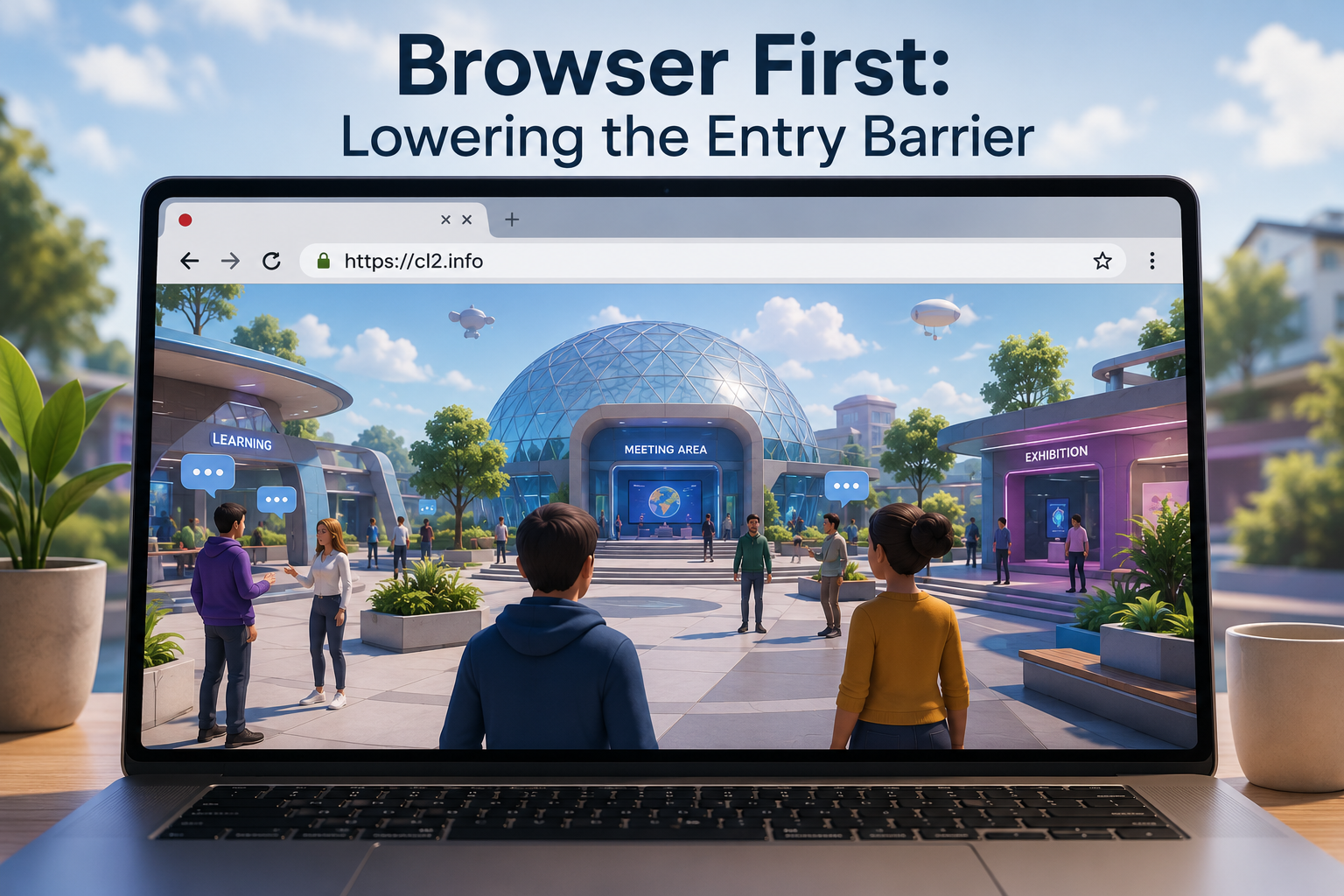

 Whenever I start thinking about a new feature for Cybalounge 2, there is a small but important question in the background: does this make the platform better, or does it only make the platform bigger? The difference matters. Bigger systems are not automatically better systems. In software development, and especially in platform development, it is surprisingly easy to confuse growth with progress. A new menu, a new mode, a new backend component, a new configuration option, a new editor, a new service, a new permission layer. Each of these may look useful on its own. But together they can create a system that becomes harder to understand than the problem it was supposed to solve.