 METAVERSE BLOG
 Chapter 03: Why This Is Not a Coding Series
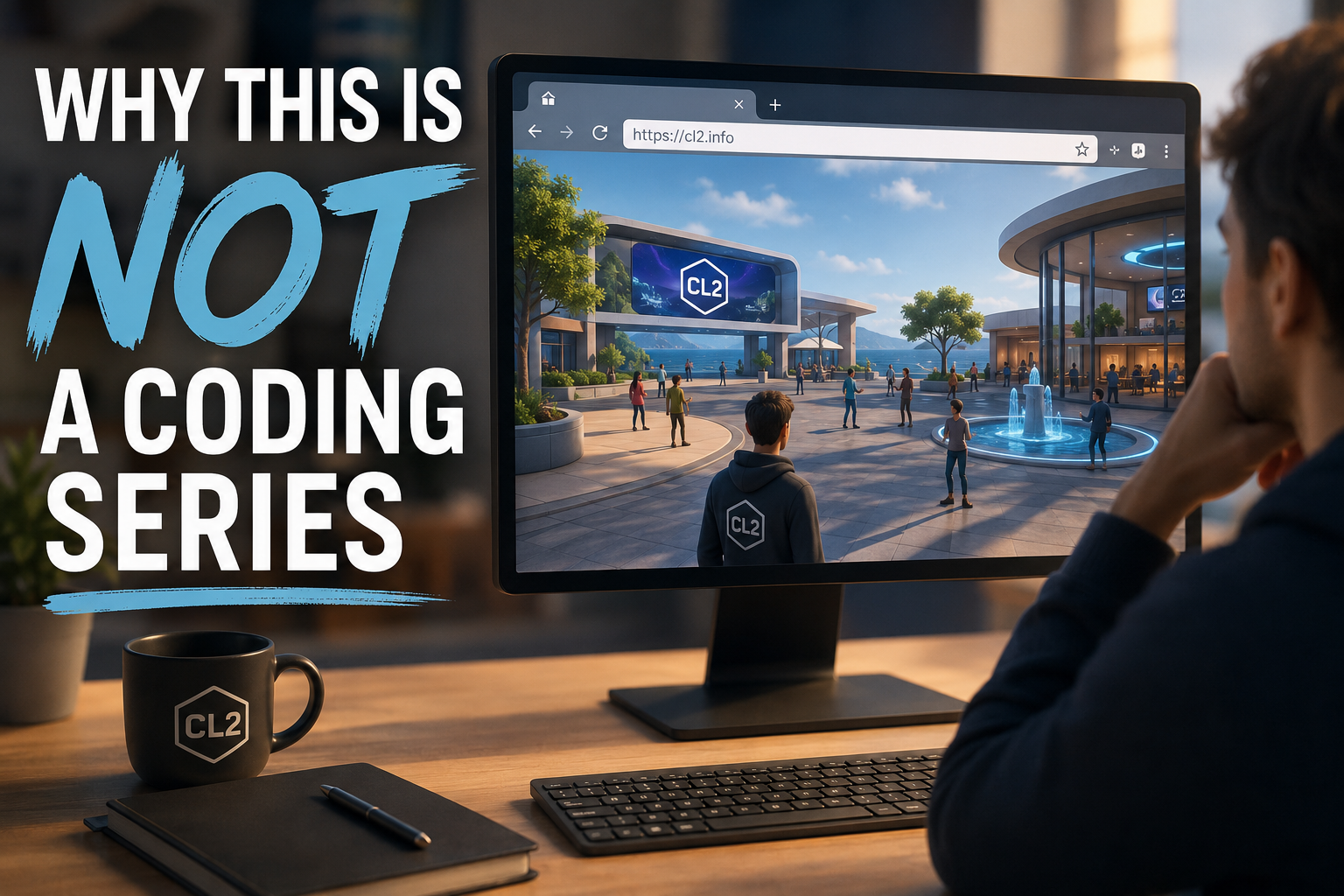
There is a natural expectation that a developer writing about a software project will eventually show code. It is almost part of the ritual. A problem is introduced, a short explanation follows, and then comes the code sample. Sometimes that is exactly the right format. If the goal is to teach a specific API, explain an algorithm, or demonstrate an implementation pattern, code is essential. But for this series about the making of Cybalounge 2, I want to choose a different focus. I want to write about the platform from a developer's point of view without turning the series into a developer manual.
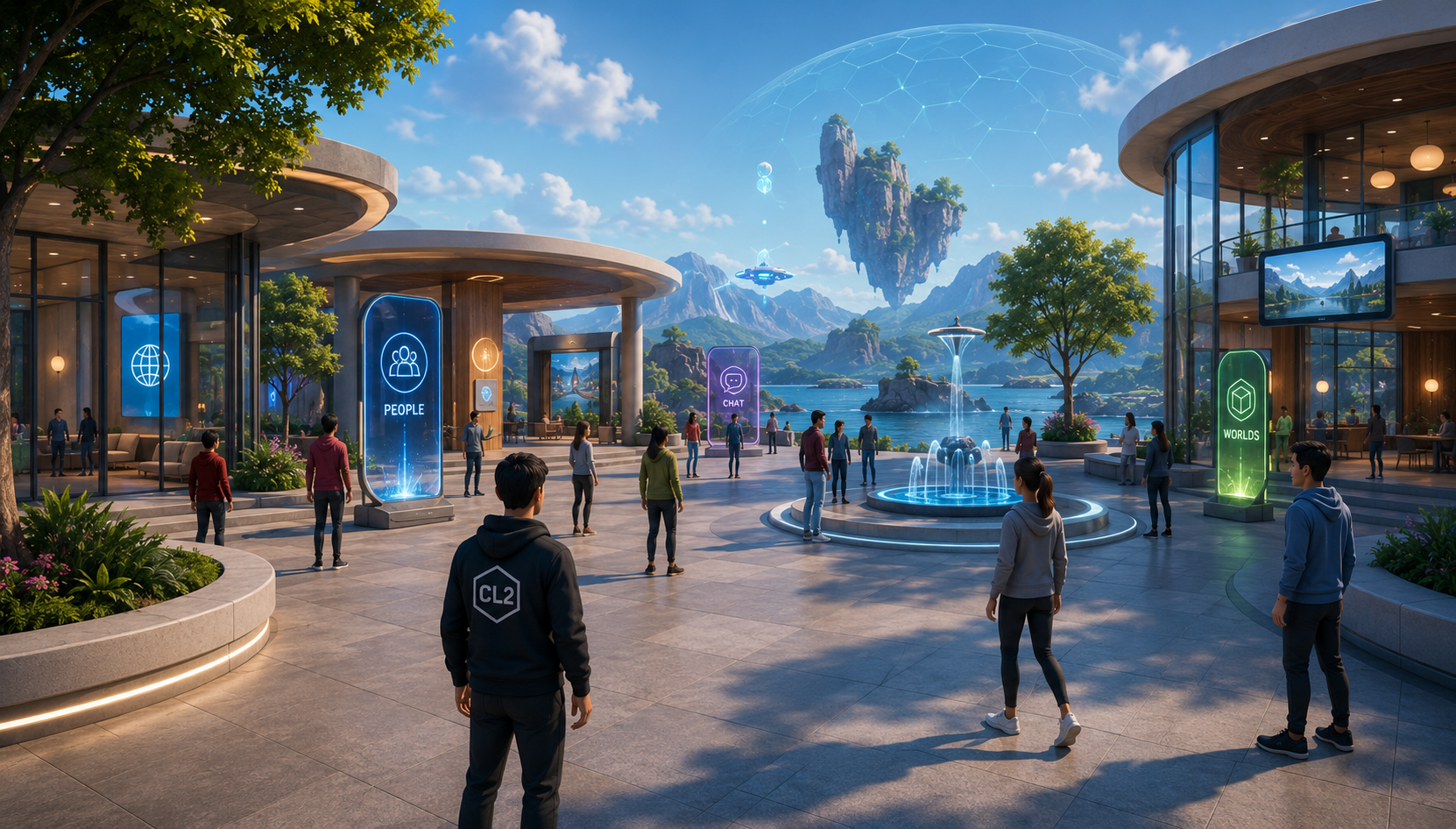
That decision is intentional. CL2 is a web-based virtual world platform, and of course the implementation matters. It uses browser technologies, JavaScript, Three.js, Vite, GLTF/GLB workflows, communication components, synchronization, collision detection, user interface layers, and many smaller utility classes. Many of these areas could easily become separate technical tutorials. But the goal of this series is not to explain how to reproduce each function. The goal is to explain why the platform is shaped the way it is.
In my experience, the most important software decisions often happen before the code becomes visible. Should the platform be browser-first? Should the backend be lightweight? Should worlds be described as static content? Should the creator workflow start locally? Should the first avatar system be simple or highly customizable? Should communication be built from scratch or integrated through an existing solution? Should visual effects aim for maximum realism or believable atmosphere? These questions are not solved by code snippets. They are solved by priorities, constraints, and trade-offs.
This is especially important because the intended audience for this series is not limited to software developers. I want the articles to be useful for people with business, technical, educational, and strategic backgrounds. Some readers may understand JavaScript in detail. Others may not. Some may be responsible for training, digital learning, community building, customer experience, or digital transformation. For them, the interesting question may not be how a collision algorithm works internally. The interesting question may be why collision detection matters for trust, orientation, and the feeling that a virtual space behaves consistently.
A code-centered article often explains a local solution. A decision-centered article can explain the shape of a product. That distinction matters for Cybalounge 2 because the platform is not an isolated technical experiment. It is meant to become a practical tool for creating and operating virtual worlds with low complexity and low operating costs. When the target is one US dollar or less per user per month, architecture becomes business strategy. When the users include educators, companies, communities, and potentially seniors, interface design becomes adoption strategy. When the worlds are meant to be created and maintained by others, creator experience becomes platform strategy.
None of this means that code is unimportant. It means that code is not always the best way to communicate the essence of a platform. Code can even distract from the central point. If I show a function, readers may focus on syntax, naming, edge cases, or personal preferences. That can be valuable in the right context, but it can also narrow the conversation too early. I would rather use this series to discuss the underlying choices: what problem the function exists to solve, why the solution is deliberately simple, what has been postponed, and what the user or creator gains from that decision.
Another reason to avoid code in this series is longevity. Code ages quickly. APIs change. Libraries evolve. Browser behavior shifts. Patterns that look elegant today may be replaced tomorrow. The principles behind the platform should last longer. Keeping the backend light, minimizing unnecessary data collection, designing for onboarding, treating performance as product quality, and building worlds as manageable artifacts are ideas that remain relevant even if individual implementation details change.
There is also a publishing reason. I see these LinkedIn articles as the foundation for a future book. A book filled with code samples can become outdated very quickly, especially in a field connected to browser technology and real-time 3D. A book about principles, product decisions, trade-offs, and lessons learned can remain useful for a longer time. It can still be technical in spirit, but it does not need to be tied to one exact version of a library or framework.
For CL2, this distinction is important because the project itself is not an attempt to demonstrate technical superiority. I am not building it to prove that I know every possible solution to every problem in virtual worlds. I am building it to explore a fresh, practical approach. That means some decisions are experiments. Some will change. Some will be validated. Some will be replaced. Writing only about code could make the project appear more certain than it really is. Writing about motivation and trade-offs allows the journey to remain honest.
This also changes the kind of questions the series can ask. Instead of asking, "How do we implement feature X?" we can ask, "Does feature X belong in the core platform?" Instead of asking, "Which data structure is fastest?" we can ask, "How much performance does this use case really need?" Instead of asking, "Can we build a complex editor?" we can ask, "What is the simplest creator workflow that still gives people real control?" These questions are not less technical. They are more strategic.
The series will still discuss technology. It would be impossible not to. But technology will appear as part of a broader conversation. JavaScript, Three.js, Vite, Jitsi, JSON, GLTF, browser APIs, collision systems, audio, sky, water, and visual effects will all be mentioned where they matter. The difference is that they will not be presented as isolated tricks. They will be presented as choices serving a platform vision: useful virtual worlds, accessible through the browser, with low operating costs and manageable complexity.
In the end, the most important part of development is often not the code itself, but the decisions that make the code necessary. Code turns decisions into reality. But if the decisions are unclear, the code can become a pile of solutions looking for problems. This series is about the thinking before and around the implementation. It is about why Cybalounge 2 is being built in this way, what I hope to achieve, and how a deliberately simple platform might make virtual worlds more practical for real organizations and real people.
Now available on Amazon!
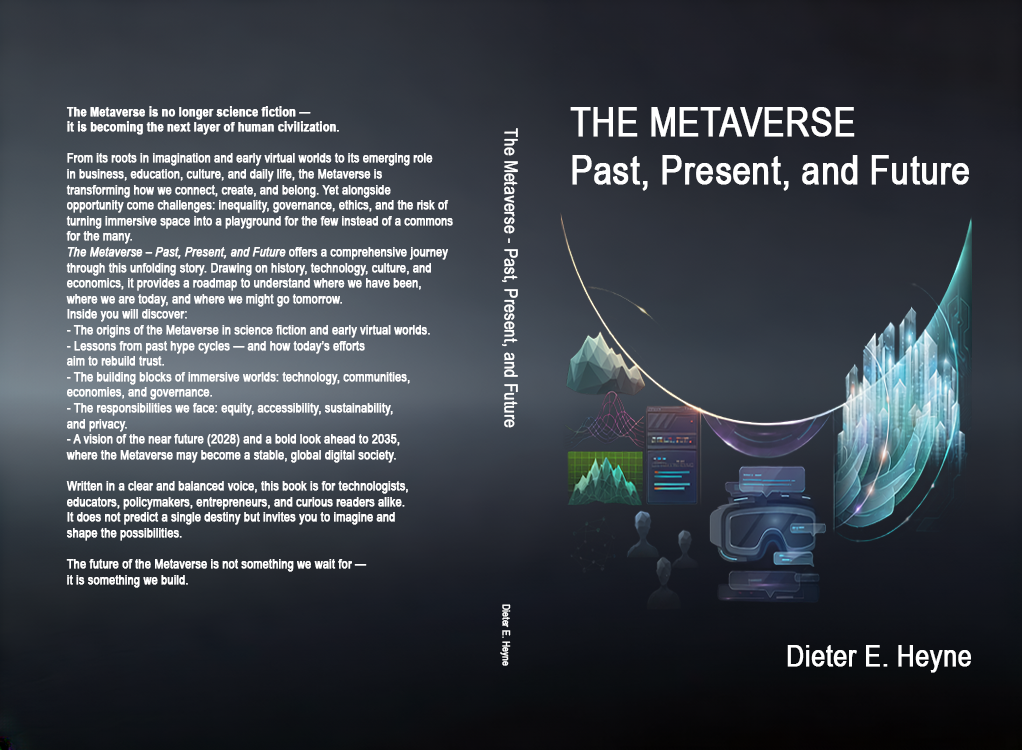
Discover the Metaverse Beyond the Hype
The Metaverse is no longer a futuristic fantasy, it is rapidly becoming a new layer of human society. But what is it really? Where did it come from? And what might it become over the next decade?
The Metaverse – Past, Present, and Future takes readers on a fascinating journey from the earliest virtual worlds and science-fiction visions to today’s emerging immersive platforms, digital economies, and online communities. Along the way, it explores the technologies powering the Metaverse, the opportunities it creates for education, work, and culture, and the challenges of governance, privacy, inclusion, and sustainability.
Looking beyond today's headlines, the book offers a balanced and inspiring vision of how immersive technologies could transform cities, learning, creativity, and daily life by 2035.
Whether you are a business leader, educator, technologist, policymaker, or simply curious about the future, this book provides the context, insight, and perspective needed to understand one of the most important technological and societal shifts of our time.
The future of the Metaverse is not something we await, it is something we create.
About the Author
Dieter E. Heyne is a Metaverse pioneer and lifelong technologist, born in Munich in 1966. With a master’s degree in applied computer science and over three decades of experience as an IT entrepreneur, software architect, and consultant, he has always been at the frontier of digital innovation. His journey into virtual worlds began in 2007 with Second Life and sparked a deep, ongoing exploration of the Metaverse as a space for education, collaboration, and immersive experiences.
Since 2012, Dieter has been developing and refining a web-based virtual world platform, driven by a vision to make the Metaverse accessible, meaningful, and transformative. As a frequent speaker and thought leader at Metaverse events, he shares his insights on how virtual environments can reshape human interaction, learning, and culture. He is the founder and CEO of Metaverse School GmbH, a company dedicated to promoting Metaverse literacy and helping people and organizations understand the power and promise of these emerging digital realms.
Besides talking and writing non-fiction about the Metaverse and Virtual Worlds, this vast knowledge now went into the creation of The Metaverse Enforcers, an ongoing series of high-tech science fiction novels, showcasing the potential development and dangers of the Metaverse in 2053.
About Metaverse School GmbH
Metaverse School GmbH was founded in 2017 by Dieter E. Heyne, who continues to lead the company as its CEO. The company emerged from decades of consulting experience in software architecture, project management, quality assurance, information security, and data protection. Building on this strong technological foundation, Metaverse School GmbH is dedicated to promoting the responsible and purposeful use of immersive 3D environments, for education, collaboration, training, and simulation.
A core mission of the company is to raise awareness of the Metaverse’s potential across business, education, and society. In support of this goal, Dieter Heyne regularly speaks at national and international conferences as well as Metaverse-focused events. Through real-world examples and deep expertise, he demonstrates how immersive technologies can already create meaningful value today.
Disclaimer
Some portions of this content were created or refined with the assistance of artificial intelligence (AI) using tools such as OpenAI’s ChatGPT. The ideas, structure, and editorial direction remain the responsibility of the author. While every effort has been made to ensure factual accuracy and original expression, readers are encouraged to approach speculative or future-facing statements with critical thought.
This series does not represent the views of any specific company or platform and is intended to inspire open discussion around the evolving concept of the Metaverse.
#Metaverse #VirtualWorlds #FutureOfTech #DigitalCommunity #CybaLounge #CL2