 METAVERSE BLOG
Chapter 20: The Creator Experience
A virtual world platform is not only judged by the people who enter its worlds. It is also judged by the people who create them. This second audience is sometimes underestimated. A platform may provide a convincing visitor experience, but if every world requires expert intervention, fragile manual steps or hidden knowledge, growth becomes difficult. The platform remains dependent on its original developers. That may work for prototypes. It does not work for a sustainable ecosystem.
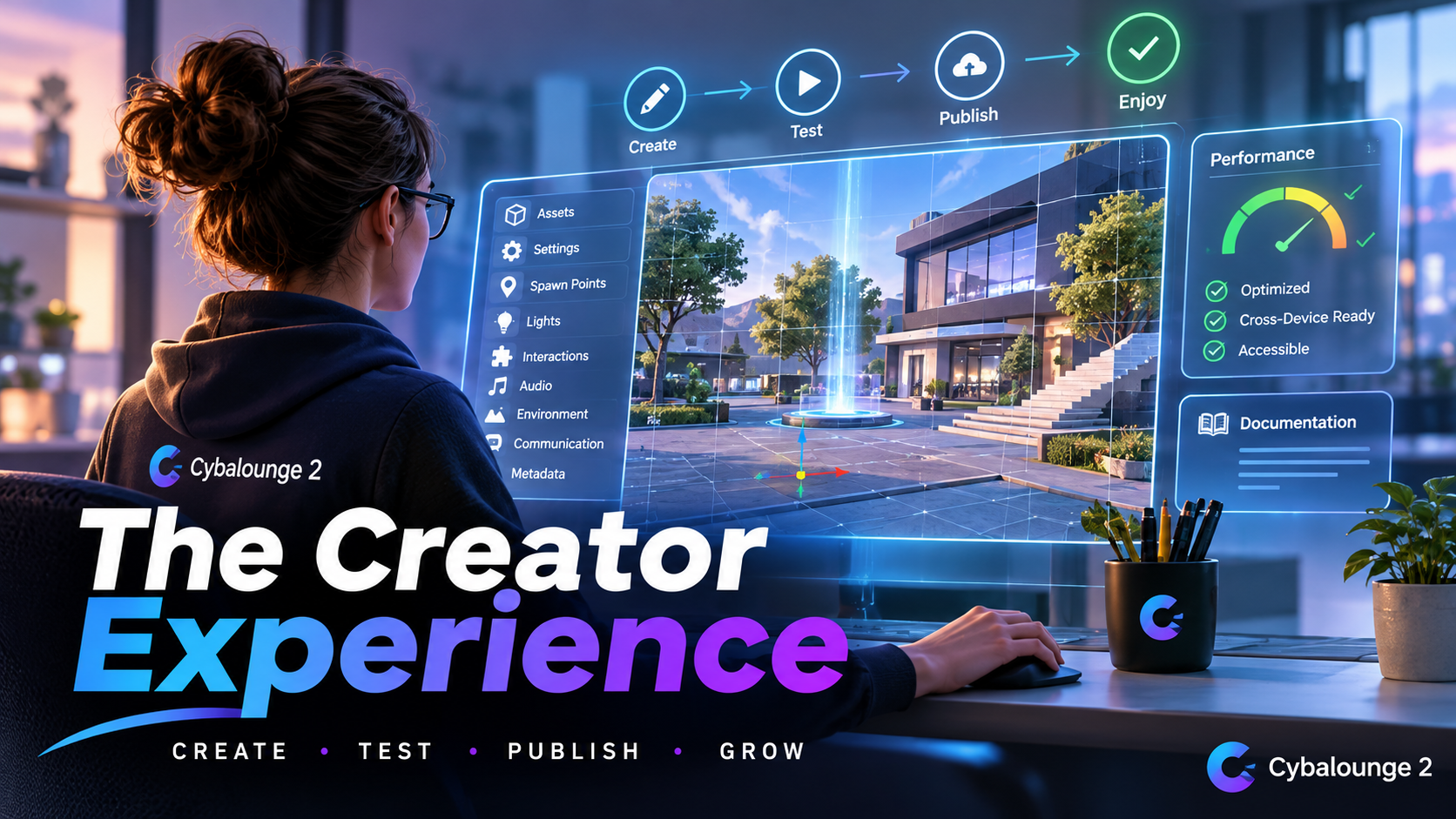
For Cybalounge 2, creator experience is therefore not a later convenience. It is part of the core product idea. The platform should make it possible to create, test, update and maintain worlds in a way that is understandable and repeatable. A creator may be a developer, but could also be an educator, trainer, consultant, designer, agency, museum team, company employee or community organizer. Not all of them will want to think like engine programmers. Not all of them will know how rendering pipelines work. They need a workflow that respects their goals.
This begins with clarity. A creator should understand what a world consists of: assets, models, settings, spawn points, lights, interaction rules, audio, environmental options, communication settings and metadata. If these elements are scattered across hidden systems, the creator becomes dependent on platform specialists. If they are structured clearly, the world becomes manageable. This is one reason why a readable world description, for example in JSON, fits the platform philosophy. It turns the world into something that can be inspected, copied, versioned and discussed.
Repeatability is just as important. A creator should be able to follow the same process each time: prepare assets, define the world, test locally, optimize, upload and verify. Without repeatability, every world becomes a custom project. Custom projects can be exciting, but they are expensive to maintain. A platform intended for practical use needs workflows that can be taught and repeated. The goal is not to remove creativity, but to remove unnecessary uncertainty.
Portability matters because worlds should not feel trapped. A world that exists only inside a complex backend database can become difficult to move, back up or reuse. A world that is structured as content, assets and descriptions is easier to manage. This supports the idea of building locally and publishing simply. It also supports long-term ownership. Creators and organizations should feel that their content is understandable and not locked inside invisible platform machinery.
Forgiveness is another part of creator experience. Mistakes will happen. A model may be too large. A texture may be too heavy. A spawn point may be wrong. A light may be too bright. A JSON entry may be missing. The platform should help creators find and correct problems instead of failing mysteriously. Good error messages, validation tools, preview modes, performance warnings and documentation can turn frustration into learning. A creator-friendly platform does not assume perfection.
The trade-off is structure. Some people hear creator freedom and imagine a system where anything can be done in any way. That can be powerful, but it can also become chaos. If every creator uses different naming conventions, different folder structures, different optimization habits and different interaction patterns, worlds become difficult to support. Freedom without structure increases maintenance cost. For a lightweight platform, conventions are not bureaucracy. They are a way to keep complexity manageable.
Documentation is therefore part of the product, not an afterthought. Creator documentation should not only describe features. It should explain workflows, decisions, best practices and common mistakes. How should models be prepared? What scale should be used? How should textures be managed? What makes a good starting area? How should audio be used? What performance limits should creators respect? What should be tested before publication? These questions are practical, and practical answers help creators succeed.
Creator experience also includes role separation. Visiting a world, moderating a world and building a world are different activities. The platform should not mix all tools into one overwhelming interface. A visitor needs clarity and minimal controls. A host needs communication and moderation tools. A creator needs configuration, testing and building tools. A developer may need extension points. Treating all users as the same creates confusion. Treating roles differently allows complexity to appear only where it belongs.
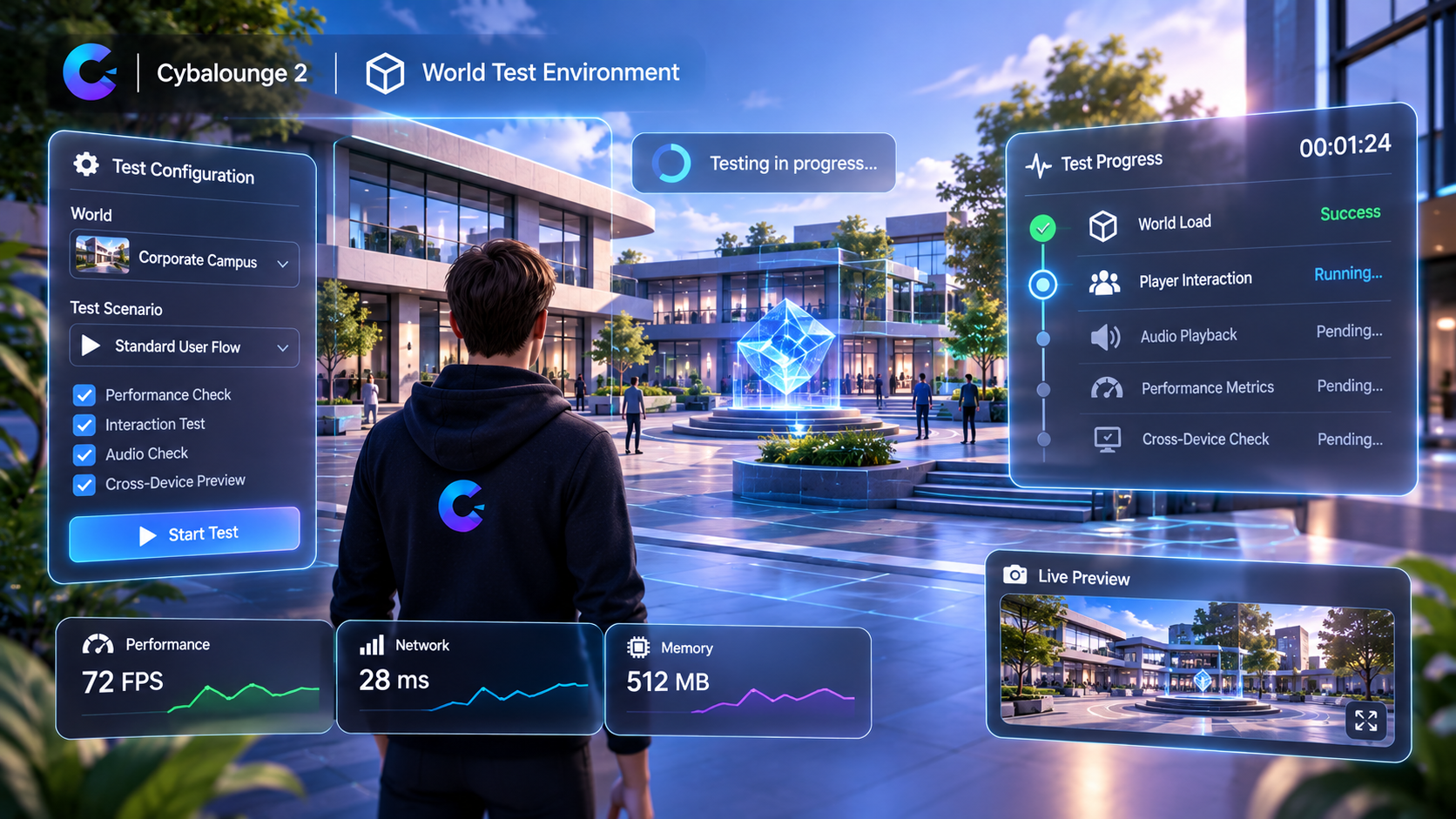
Performance is a major creator topic. Creators often want richer models, more objects, more effects and more detail. Users want smooth experiences. The platform must help creators understand the relationship between content decisions and performance. Optimization should not be a mysterious late-stage process performed only by specialists. It should be part of the creator workflow. If a model is too heavy, the creator should know before users suffer.
This is especially important for educational and business use. These environments often run on ordinary laptops, classroom machines or office devices. A creator may build a visually impressive world on a powerful development computer, only to discover that the target audience cannot use it smoothly. Creator tools should make the target device reality visible. A platform that cares about creators must also protect them from building worlds that fail in practice.
The creator experience also shapes the platform’s business potential. If creating a world always requires custom development, each new customer becomes a service project. If the workflow is understandable, more people can participate. Agencies can create worlds. Educators can adapt spaces. Companies can maintain their own training environments. Communities can update meeting places. This does not eliminate professional services, but it makes the platform more scalable.
Low-code and no-code concepts will eventually become part of this picture. Not every creator wants to write scripts. Many interactions can be described through templates, triggers, actions and visual logic. But low-code tools only work well when the underlying platform model is clear. If worlds are already chaotic, visual tools may simply hide the chaos. A strong creator experience starts with clear structure, then adds friendlier layers on top.
For CL2, the creator experience is closely tied to the goal of low operating and maintenance costs. A world that is easy to build is also easier to support. A world that is easy to understand is easier to debug. A world that is easy to move is easier to host. A creator workflow that encourages good habits reduces future cost. Simplicity is not only for users entering a world; it is also for people keeping the world alive.
A platform can have impressive technology and still fail if creators cannot use it confidently. The long-term success of a virtual world platform depends on the people who build and maintain the places others enter. That is why creator experience is not secondary. It is one of the foundations.
A virtual world platform is only as strong as its creator workflow.
Now available on Amazon!
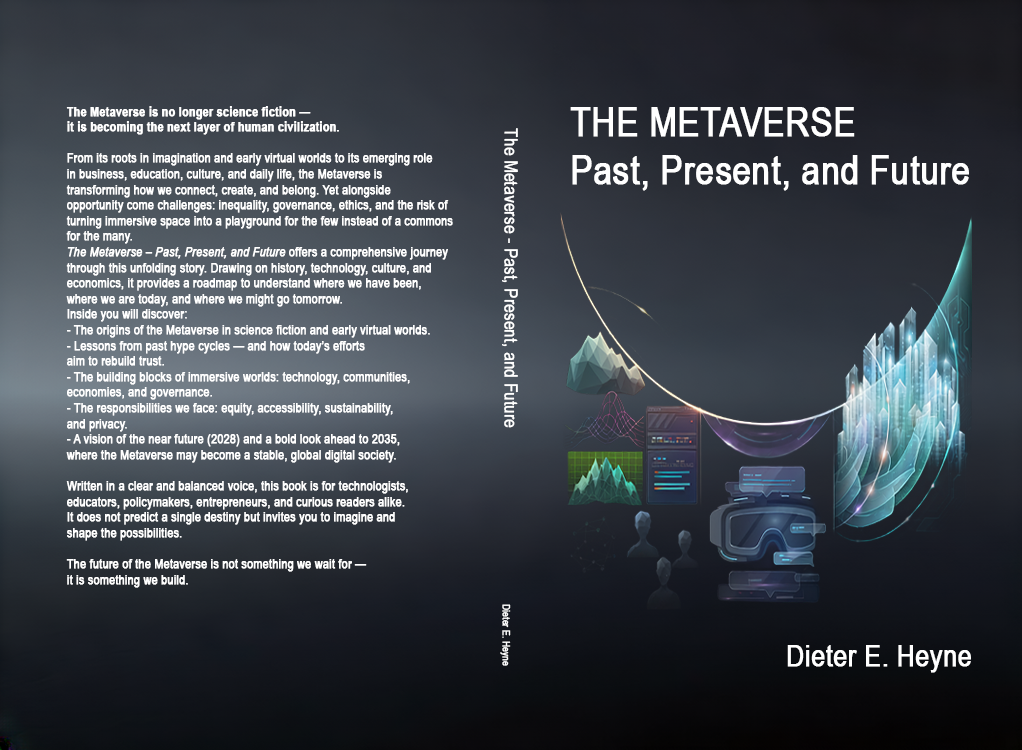
Discover the Metaverse Beyond the Hype
The Metaverse is no longer a futuristic fantasy, it is rapidly becoming a new layer of human society. But what is it really? Where did it come from? And what might it become over the next decade?
The Metaverse – Past, Present, and Future takes readers on a fascinating journey from the earliest virtual worlds and science-fiction visions to today’s emerging immersive platforms, digital economies, and online communities. Along the way, it explores the technologies powering the Metaverse, the opportunities it creates for education, work, and culture, and the challenges of governance, privacy, inclusion, and sustainability.
Looking beyond today's headlines, the book offers a balanced and inspiring vision of how immersive technologies could transform cities, learning, creativity, and daily life by 2035.
Whether you are a business leader, educator, technologist, policymaker, or simply curious about the future, this book provides the context, insight, and perspective needed to understand one of the most important technological and societal shifts of our time.
The future of the Metaverse is not something we await, it is something we create.
About the Author
Dieter E. Heyne is a Metaverse pioneer and lifelong technologist, born in Munich in 1966. With a master’s degree in applied computer science and over three decades of experience as an IT entrepreneur, software architect, and consultant, he has always been at the frontier of digital innovation. His journey into virtual worlds began in 2007 with Second Life and sparked a deep, ongoing exploration of the Metaverse as a space for education, collaboration, and immersive experiences.
Since 2012, Dieter has been developing and refining a web-based virtual world platform, driven by a vision to make the Metaverse accessible, meaningful, and transformative. As a frequent speaker and thought leader at Metaverse events, he shares his insights on how virtual environments can reshape human interaction, learning, and culture. He is the founder and CEO of Metaverse School GmbH, a company dedicated to promoting Metaverse literacy and helping people and organizations understand the power and promise of these emerging digital realms.
Besides talking and writing non-fiction about the Metaverse and Virtual Worlds, this vast knowledge now went into the creation of The Metaverse Enforcers, an ongoing series of high-tech science fiction novels, showcasing the potential development and dangers of the Metaverse in 2053.
About Metaverse School GmbH
Metaverse School GmbH was founded in 2017 by Dieter E. Heyne, who continues to lead the company as its CEO. The company emerged from decades of consulting experience in software architecture, project management, quality assurance, information security, and data protection. Building on this strong technological foundation, Metaverse School GmbH is dedicated to promoting the responsible and purposeful use of immersive 3D environments, for education, collaboration, training, and simulation.
A core mission of the company is to raise awareness of the Metaverse’s potential across business, education, and society. In support of this goal, Dieter Heyne regularly speaks at national and international conferences as well as Metaverse-focused events. Through real-world examples and deep expertise, he demonstrates how immersive technologies can already create meaningful value today.
Disclaimer
Some portions of this content were created or refined with the assistance of artificial intelligence (AI) using tools such as OpenAI’s ChatGPT. The ideas, structure, and editorial direction remain the responsibility of the author. While every effort has been made to ensure factual accuracy and original expression, readers are encouraged to approach speculative or future-facing statements with critical thought.
This series does not represent the views of any specific company or platform and is intended to inspire open discussion around the evolving concept of the Metaverse.
#Metaverse #VirtualWorlds #FutureOfTech #DigitalCommunity #CybaLounge #CL2