 METAVERSE BLOG
 Chapter 12: Performance Is Product Quality
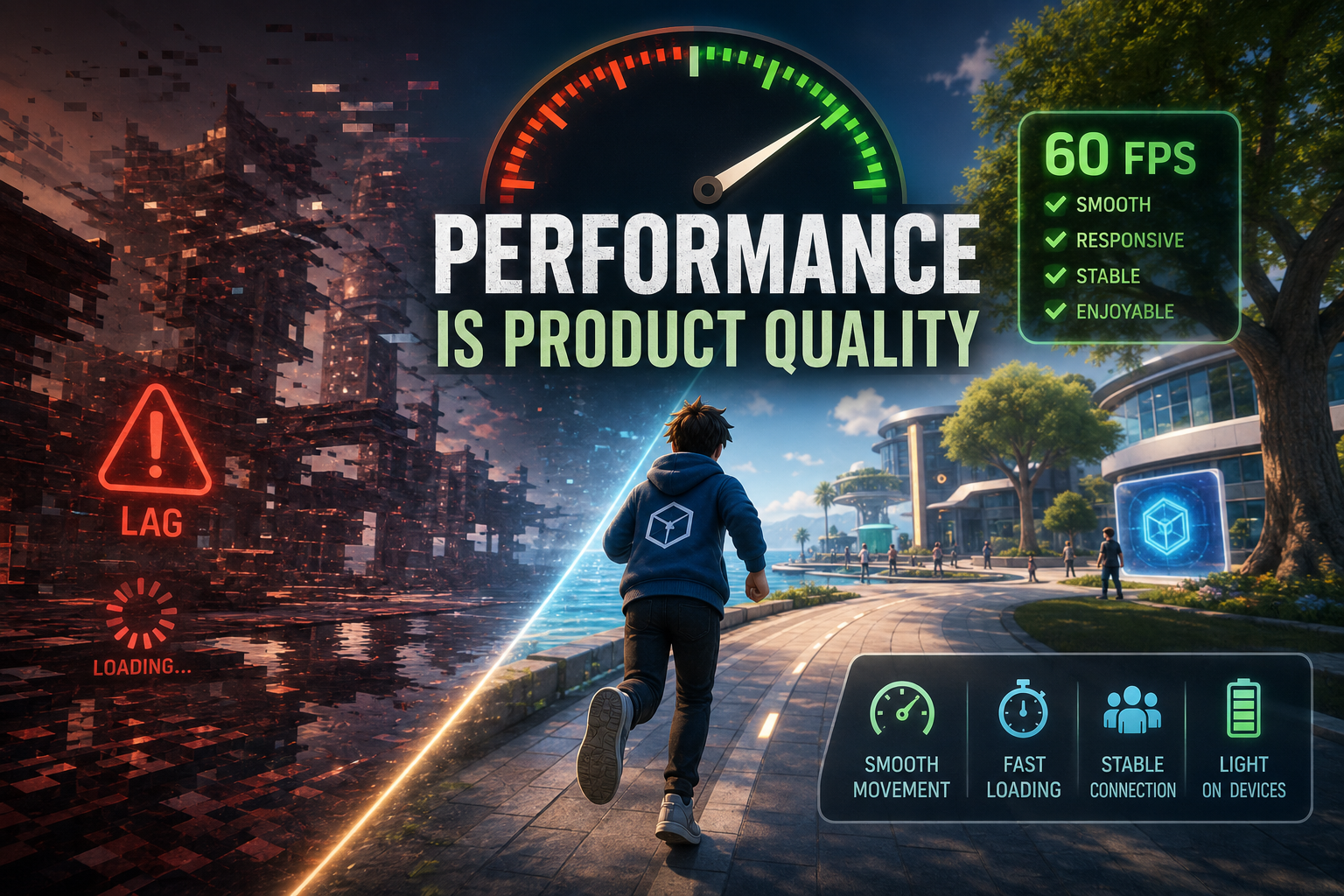
Performance is one of the clearest examples of the gap between developer language and user experience. Developers talk about frame rates, draw calls, triangle counts, texture sizes, memory usage, garbage collection, shader cost, network latency, and loading strategies. Users rarely use those words. They say the world feels slow, heavy, laggy, uncomfortable, or broken. To them, poor performance is not a technical issue. It is (bad) product quality.
This is especially true in virtual worlds because performance is not only visual. It affects comfort, orientation, communication, and trust. A stuttering world makes movement difficult. Low frame rates make camera control feel unpleasant. Long loading times create doubt before the experience begins. Audio or video problems make communication frustrating. Delayed avatar movement reduces social presence. Overheating or battery drain makes the platform feel impractical. Performance is not hidden in the background. It shapes the entire experience.
For CL2, this means optimization cannot be treated as a late-stage cleanup task. It must be part of the platform philosophy from the beginning. The architecture, world structure, model pipeline, rendering choices, communication strategy, and creator workflow all influence performance. If the platform allows creators to import anything without guidance, the result may look good in a single test and fail in real use. If optimization is postponed until after worlds are built, it becomes much harder and more expensive to fix.
The browser-first approach makes this even more important. Users may enter from different devices, browsers, graphics hardware, screen sizes, and network conditions. Some may use powerful desktops. Others may use ordinary laptops, school devices, office machines, or older hardware. If the platform is meant for practical use in education, business, training, communities, and public projects, it cannot assume high-end gaming equipment. It must be designed for the devices people actually have.
This does not mean every world must look simple or flat. Visual quality matters. Atmosphere matters. Models, lighting, sky, water, audio, and effects all contribute to presence. But visual richness must be balanced with performance discipline. A world that looks impressive in a screenshot but performs poorly in a live session is not a successful world. For real use, smooth enough usually beats spectacular but unstable.
Performance also affects operating cost. If the client is efficient, the platform can rely more on browser-side rendering and static delivery. If assets are optimized, bandwidth costs decrease and loading becomes faster. If synchronization is efficient, communication overhead remains manageable. If the backend is light, hosting becomes simpler. These technical choices support the broader goal of operating at around one US dollar or less per user per month. Performance is therefore connected not only to user comfort, but also to the business model.
The creator workflow is one of the most important performance levers. Creators need guidance before they publish worlds. They need to understand that model complexity, texture size, material count, lights, shadows, transparency, particles, and audio all have costs. They need feedback when a scene becomes too heavy. They need conventions for importing models and preparing assets. Without this, performance becomes a problem that appears late, when the world is already built and expectations are already set.
One practical consequence of treating performance as product quality is the decision to provide some optimization support directly inside the platform. In an ideal world, every imported model would already be perfectly prepared before it reaches the virtual world: clean geometry, reasonable polygon count, efficient materials, properly sized textures, and a structure that supports rendering performance. In reality, many creators are not 3D optimization specialists. They may download a model from an asset library, receive it from an external designer, export it from a construction tool, or create it in Blender with the main goal of making it look right. That is understandable. For many creators, the visual result is the first concern. Performance budgets, draw calls, material reuse, mesh merging, and runtime cost are usually not the first things they want to think about.
This is why a platform like Cybalounge 2 should not simply push all responsibility back to the creator. Creator guidelines are important, and professional world builders still need to understand the basics of optimization. But if the platform can reduce some common performance problems automatically, it should do so. A mesh optimizer can help by identifying static meshes with similar properties and merging them where this is safe and useful. In simple terms, the platform tries to reduce the number of separate objects the browser has to handle during rendering. This does not magically turn every heavy model into a perfect real-time asset, but it can make a meaningful difference, especially in worlds built from many repeated or fragmented static objects. It also lowers the entry barrier for creators, because they do not need to solve every optimization issue inside external tools before they can test an idea.
The trade-off is that automatic optimization must be honest about its limits. A platform-side mesh optimizer cannot replace good modeling practice. It cannot reliably fix every complicated asset, every animated model, every custom geometry structure, or every scene with many unique materials and material settings. It may help with static building elements, repeated structures, or models that are already reasonably clean. It may not help much with highly detailed characters, animated assets, or models that are visually beautiful but structurally unsuitable for real-time use. Still, this kind of optimizer fits the philosophy of the platform: keep the creator workflow forgiving without hiding reality. The goal is not to remove responsibility from creators completely, but to support them where the platform can reasonably do so. If CL2 can absorb some technical complexity internally, creators can focus more on designing useful worlds, and users receive the benefit where it matters most: smoother movement, faster loading, more stable frame rates, and a virtual world that feels professional on normal devices.
This can create tension because creators naturally want freedom. They want to use beautiful models, detailed environments, high-resolution textures, atmospheric effects, and interactive elements. That desire is valid. A platform should not feel like a list of restrictions. But unlimited freedom can harm users. If a world is too heavy, users suffer. If performance fails, the creator's intention is lost. Guidelines and limits are not there to reduce creativity. They are there to protect the experience.
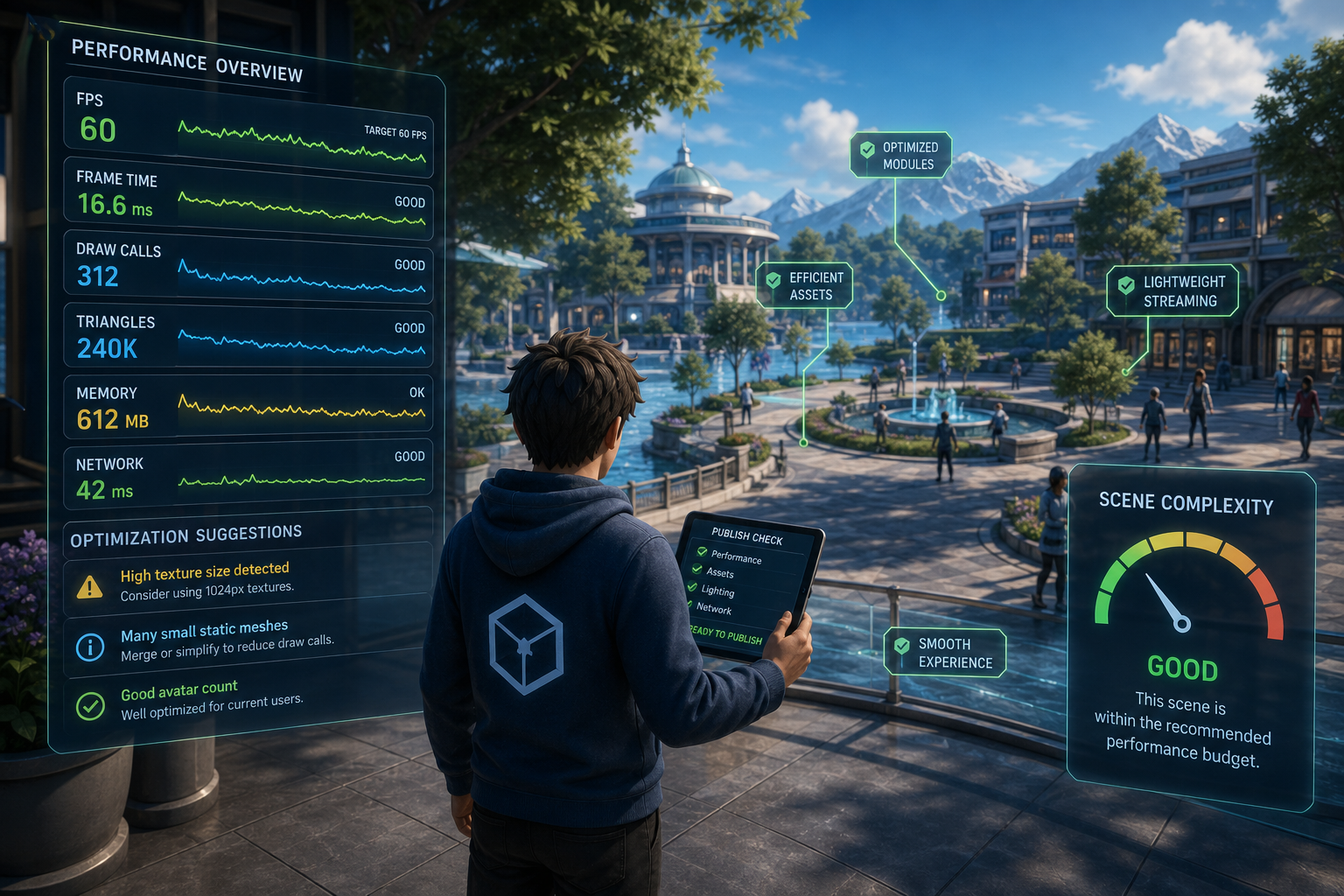
One useful way to frame this is performance budgeting. Just as a project has a financial budget, a virtual world has a performance budget. It can spend that budget on geometry, textures, lighting, effects, avatars, communication, and interaction. The question is not whether each element is good in isolation. The question is whether the whole world remains usable. A creator may choose to spend more budget on atmosphere and less on dense decoration, or more on model detail and less on heavy effects. But the budget must exist.
Performance is also closely tied to perception of professionalism. Users may forgive a missing advanced feature if the platform feels stable. They are less likely to forgive constant stutter, long delays, or unreliable movement. In business and education, reliability often matters more than novelty. A training session cannot pause because the world overloaded. A meeting cannot become awkward because avatars freeze. A classroom cannot depend on devices that only a few learners have. Smooth operation creates confidence.
There is also a maintenance side. Optimized worlds are easier to host, easier to update, and easier to scale. They reduce support requests. They make testing more predictable. They help identify problems earlier. A platform that treats performance as a shared responsibility between core system and creators can grow more sustainably. A platform that ignores performance until users complain will always be reacting too late.
For Cybalounge 2, performance is therefore not an afterthought and not a purely technical metric. It is part of the product promise. The platform should feel lightweight because it is lightweight in the right places. It should support atmosphere without becoming heavy. It should give creators expressive power while helping them stay within practical limits. A virtual world feels professional when it runs smoothly on real devices, in real sessions, with real users. Performance is product quality.
Performance should also be visible during creation. If creators only learn about problems after users complain, the workflow has failed. The platform should move toward practical feedback: asset warnings, scene complexity indicators, optimization suggestions, and simple publishing checks. These tools do not need to be perfect at the beginning, but they express an important principle: quality is built before publication, not repaired afterwards.
In the future, this can grow into a creator dashboard or publishing checklist. The purpose would not be to shame creators with technical numbers, but to translate performance into understandable guidance. If the platform can explain why something is heavy, creators can make better decisions.
Now available on Amazon!
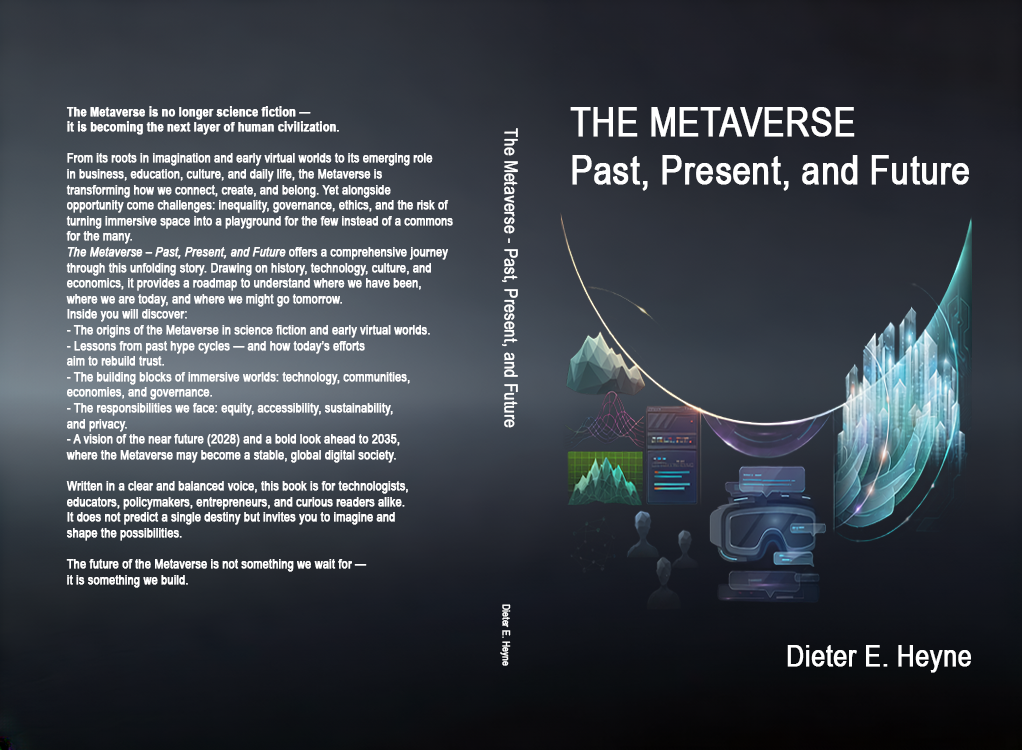
Discover the Metaverse Beyond the Hype
The Metaverse is no longer a futuristic fantasy, it is rapidly becoming a new layer of human society. But what is it really? Where did it come from? And what might it become over the next decade?
The Metaverse – Past, Present, and Future takes readers on a fascinating journey from the earliest virtual worlds and science-fiction visions to today’s emerging immersive platforms, digital economies, and online communities. Along the way, it explores the technologies powering the Metaverse, the opportunities it creates for education, work, and culture, and the challenges of governance, privacy, inclusion, and sustainability.
Looking beyond today's headlines, the book offers a balanced and inspiring vision of how immersive technologies could transform cities, learning, creativity, and daily life by 2035.
Whether you are a business leader, educator, technologist, policymaker, or simply curious about the future, this book provides the context, insight, and perspective needed to understand one of the most important technological and societal shifts of our time.
The future of the Metaverse is not something we await, it is something we create.
About the Author
Dieter E. Heyne is a Metaverse pioneer and lifelong technologist, born in Munich in 1966. With a master’s degree in applied computer science and over three decades of experience as an IT entrepreneur, software architect, and consultant, he has always been at the frontier of digital innovation. His journey into virtual worlds began in 2007 with Second Life and sparked a deep, ongoing exploration of the Metaverse as a space for education, collaboration, and immersive experiences.
Since 2012, Dieter has been developing and refining a web-based virtual world platform, driven by a vision to make the Metaverse accessible, meaningful, and transformative. As a frequent speaker and thought leader at Metaverse events, he shares his insights on how virtual environments can reshape human interaction, learning, and culture. He is the founder and CEO of Metaverse School GmbH, a company dedicated to promoting Metaverse literacy and helping people and organizations understand the power and promise of these emerging digital realms.
Besides talking and writing non-fiction about the Metaverse and Virtual Worlds, this vast knowledge now went into the creation of The Metaverse Enforcers, an ongoing series of high-tech science fiction novels, showcasing the potential development and dangers of the Metaverse in 2053.
About Metaverse School GmbH
Metaverse School GmbH was founded in 2017 by Dieter E. Heyne, who continues to lead the company as its CEO. The company emerged from decades of consulting experience in software architecture, project management, quality assurance, information security, and data protection. Building on this strong technological foundation, Metaverse School GmbH is dedicated to promoting the responsible and purposeful use of immersive 3D environments, for education, collaboration, training, and simulation.
A core mission of the company is to raise awareness of the Metaverse’s potential across business, education, and society. In support of this goal, Dieter Heyne regularly speaks at national and international conferences as well as Metaverse-focused events. Through real-world examples and deep expertise, he demonstrates how immersive technologies can already create meaningful value today.
Disclaimer
Some portions of this content were created or refined with the assistance of artificial intelligence (AI) using tools such as OpenAI’s ChatGPT. The ideas, structure, and editorial direction remain the responsibility of the author. While every effort has been made to ensure factual accuracy and original expression, readers are encouraged to approach speculative or future-facing statements with critical thought.
This series does not represent the views of any specific company or platform and is intended to inspire open discussion around the evolving concept of the Metaverse.
#Metaverse #VirtualWorlds #FutureOfTech #DigitalCommunity #CybaLounge #CL2