 METAVERSE BLOG
 Chapter 15: Accessibility Is Not Optional
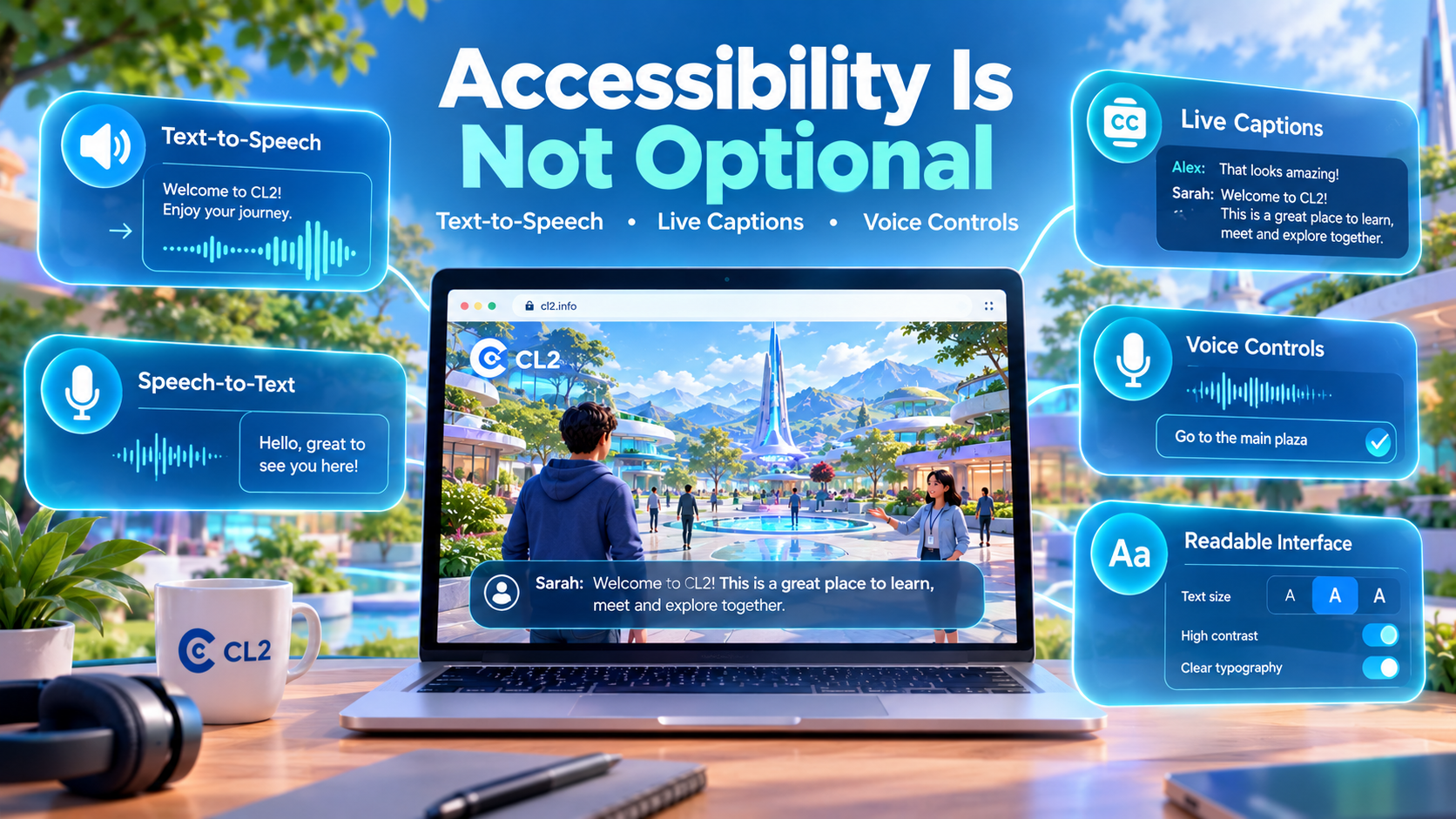
Virtual worlds often begin with a promise of freedom. Users can enter spaces, move through environments, meet others, explore objects and experience information spatially. But that promise can break quickly if the platform assumes that every user has perfect eyesight, perfect hearing, precise motor control, modern hardware, fast internet, gaming experience and a high tolerance for movement in 3D. When these assumptions are hidden inside the design, the world may be open in theory but exclusive in practice.
This is why accessibility must be considered from the beginning of a platform like Cybalounge 2. It is not a decorative checklist to be added at the end. It is not only a legal or compliance topic. It is a product-quality topic, a human topic and a practical adoption topic. A platform that wants to serve education, business, senior communities, public spaces and training environments cannot be designed only for technically confident users with ideal devices.
Accessibility starts with entry. A browser-based platform already lowers one barrier by avoiding installation, but access does not end there. The loading process must be understandable. Permission prompts for microphone or camera must be clear. Users should not be forced into audio or video without understanding what is happening. The first screen should not assume that the user knows how to navigate a virtual space. Text should be readable. Buttons should be large enough. Important controls should be visible enough. The user should not have to search for basic safety functions.
Controls are one of the most important accessibility areas. A virtual world that only works well with a specific keyboard layout, a gaming mouse or a controller excludes many users. A platform should support different input preferences where possible: keyboard and mouse, gamepad, touch and eventually VR controllers. But supporting devices is only the first layer. The controls must also be forgiving. Movement speed, camera behavior, turn sensitivity and interaction distance can all influence comfort. Some users prefer fast navigation; others need slower, more stable movement. A single control style rarely fits everyone.
Visual accessibility is just as important. Virtual worlds often rely on atmosphere: low light, fog, reflections, shadows, subtle color differences and cinematic effects. These can make a world beautiful, but they can also reduce readability. If labels, menus or important objects disappear into the background, the world becomes harder to use. Contrast matters. Text size matters. Icon clarity matters. Important states, such as microphone on or off, should not be communicated by color alone. A red or green indicator may be helpful, but it should be paired with text or shape so that the meaning remains clear.
Audio accessibility must also be considered. A world that depends entirely on voice can exclude users who are deaf, hard of hearing, in noisy environments or unable to use audio at that moment. Text chat, captions, visible speaking indicators and clear audio controls can help. Background audio should be controllable, not forced. Sound can enrich presence, but it should not become a barrier. In educational and business contexts, users may enter from offices, homes, classrooms or public spaces. The platform should respect these different situations.
Movement comfort is another area that is easy to underestimate. Some users experience discomfort, nausea or disorientation in 3D environments, especially when camera movement is too fast, too smooth in the wrong way, or too disconnected from the avatar. A third-person camera can help some users because it provides a visible anchor. Predictable movement helps. Sudden camera jumps should be avoided where possible. Options for sensitivity, speed and maybe simplified navigation can make the difference between a usable world and an uncomfortable one.
Accessibility also includes cognitive accessibility. A user should not need to remember too many controls, interpret unclear symbols, or understand technical language to participate. The platform should use plain wording, consistent interaction patterns and progressive disclosure. Show the next relevant action rather than everything at once. Use familiar concepts where possible. Make mistakes recoverable. Avoid making users feel embarrassed for not knowing something.
The trade-off is that accessibility creates constraints. Designers may want a very minimal interface, but some users need clearer controls. Developers may want fast camera movement, but some users need stability. Creators may want dark cinematic lighting, but visitors need readable paths and labels. A pure aesthetic decision may conflict with usability. Taking accessibility seriously means accepting that not every visual or technical choice is neutral. Some choices include people; others exclude them.
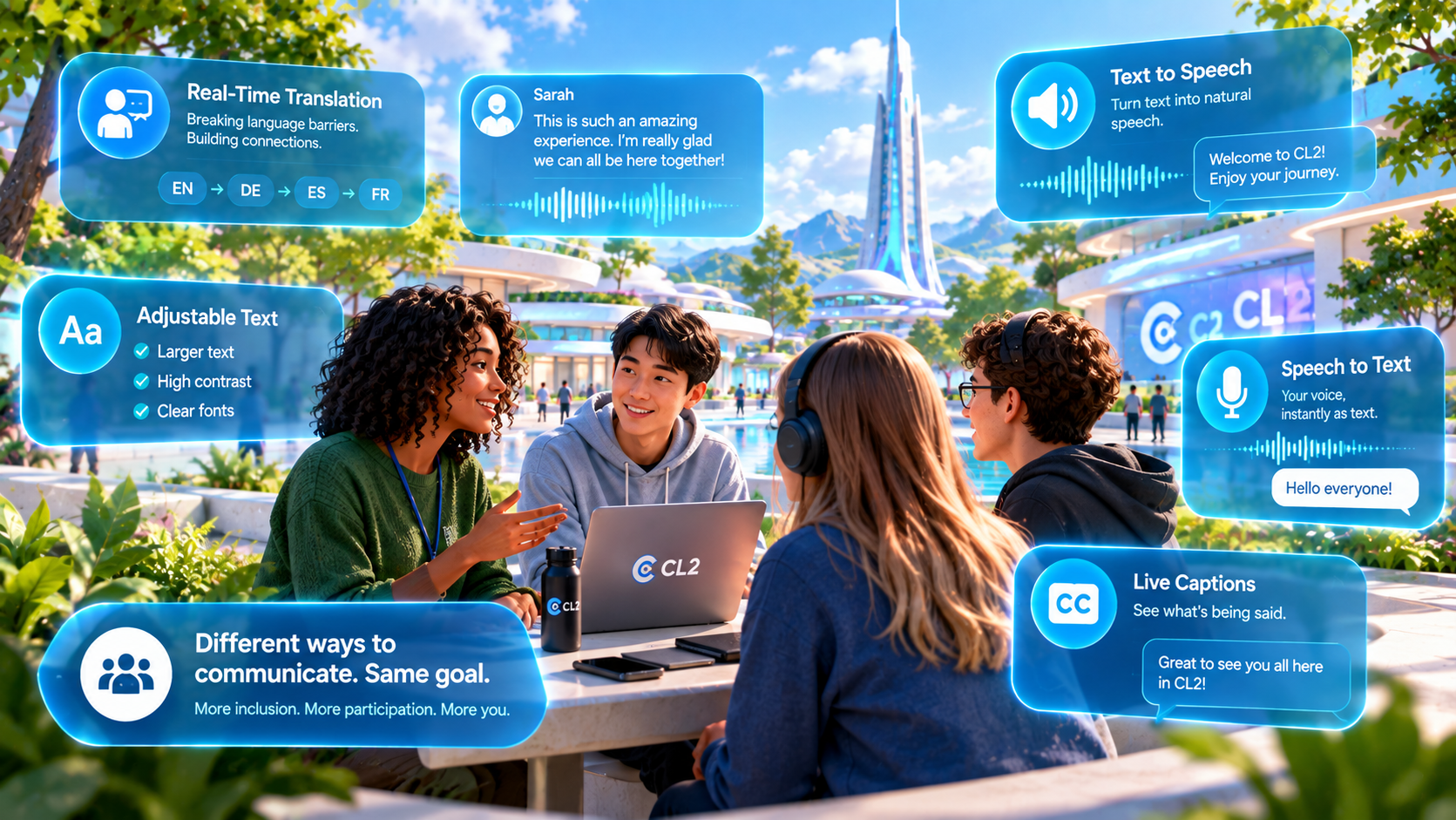
There is also a development trade-off. Accessibility features take time. They require testing, options, documentation and sometimes alternative interaction paths. In a lightweight platform, there is always the risk of postponing them in favor of more visible features. But this can become expensive later. If accessibility is ignored in the foundation, retrofitting it becomes harder. Control systems, UI patterns, color choices, audio states and onboarding flows should be designed with flexibility from the start.
For creators, accessibility must become part of world-building culture. A creator should ask: Can users read the signs? Is the path obvious? Are important objects visible? Is the environment too dark? Is there a non-audio way to receive information? Can a first-time user understand where to go? Does the world work on normal devices? Accessibility is not only a platform setting. It is a design habit.
The connection to simplicity is strong. A simpler platform is often a more accessible platform, as long as simplicity does not mean hiding essential functions. Clear controls, readable interface, forgiving movement, understandable onboarding and flexible devices help everyone, not only users with specific accessibility needs. The classic accessibility lesson applies here: features designed for inclusion usually improve the experience for a much wider audience.
In CL2, accessibility is not something to be solved once and forgotten. It is a direction. Each new feature should be examined through the question: who might this exclude, and how can we reduce that barrier without making the system unnecessarily complex? The answer will not always be perfect, especially in early versions. But the question must remain visible.
A virtual world becomes more meaningful when more people can enter it, understand it and participate with confidence. Accessibility is not optional because participation is the point.
Now available on Amazon!
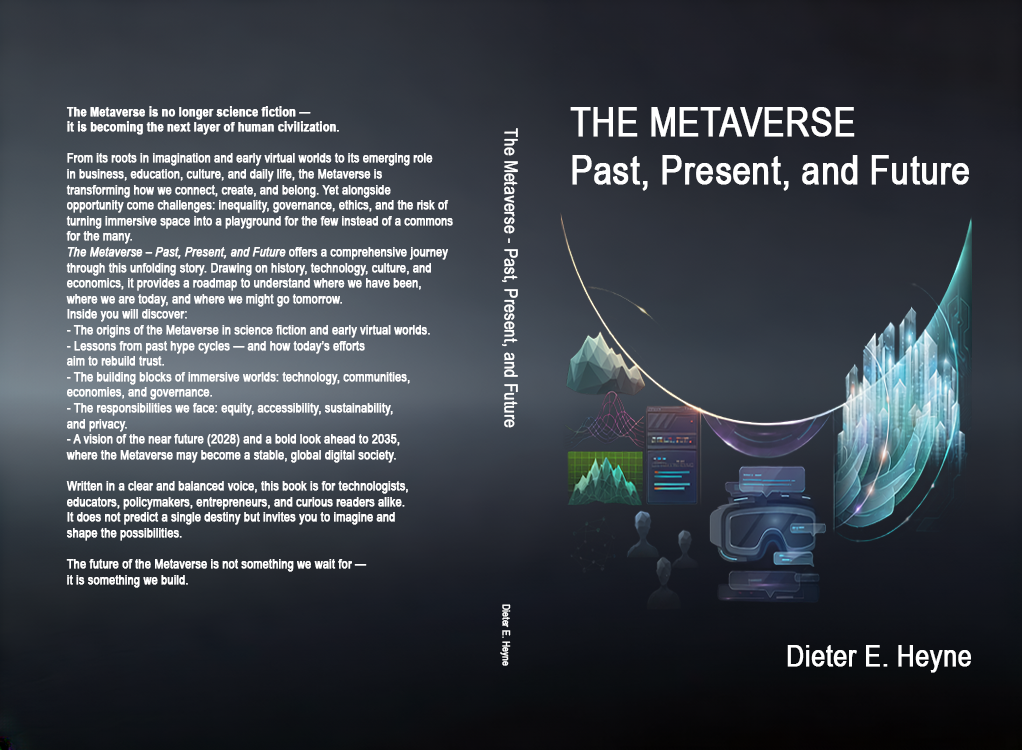
Discover the Metaverse Beyond the Hype
The Metaverse is no longer a futuristic fantasy, it is rapidly becoming a new layer of human society. But what is it really? Where did it come from? And what might it become over the next decade?
The Metaverse – Past, Present, and Future takes readers on a fascinating journey from the earliest virtual worlds and science-fiction visions to today’s emerging immersive platforms, digital economies, and online communities. Along the way, it explores the technologies powering the Metaverse, the opportunities it creates for education, work, and culture, and the challenges of governance, privacy, inclusion, and sustainability.
Looking beyond today's headlines, the book offers a balanced and inspiring vision of how immersive technologies could transform cities, learning, creativity, and daily life by 2035.
Whether you are a business leader, educator, technologist, policymaker, or simply curious about the future, this book provides the context, insight, and perspective needed to understand one of the most important technological and societal shifts of our time.
The future of the Metaverse is not something we await, it is something we create.
About the Author
Dieter E. Heyne is a Metaverse pioneer and lifelong technologist, born in Munich in 1966. With a master’s degree in applied computer science and over three decades of experience as an IT entrepreneur, software architect, and consultant, he has always been at the frontier of digital innovation. His journey into virtual worlds began in 2007 with Second Life and sparked a deep, ongoing exploration of the Metaverse as a space for education, collaboration, and immersive experiences.
Since 2012, Dieter has been developing and refining a web-based virtual world platform, driven by a vision to make the Metaverse accessible, meaningful, and transformative. As a frequent speaker and thought leader at Metaverse events, he shares his insights on how virtual environments can reshape human interaction, learning, and culture. He is the founder and CEO of Metaverse School GmbH, a company dedicated to promoting Metaverse literacy and helping people and organizations understand the power and promise of these emerging digital realms.
Besides talking and writing non-fiction about the Metaverse and Virtual Worlds, this vast knowledge now went into the creation of The Metaverse Enforcers, an ongoing series of high-tech science fiction novels, showcasing the potential development and dangers of the Metaverse in 2053.
About Metaverse School GmbH
Metaverse School GmbH was founded in 2017 by Dieter E. Heyne, who continues to lead the company as its CEO. The company emerged from decades of consulting experience in software architecture, project management, quality assurance, information security, and data protection. Building on this strong technological foundation, Metaverse School GmbH is dedicated to promoting the responsible and purposeful use of immersive 3D environments, for education, collaboration, training, and simulation.
A core mission of the company is to raise awareness of the Metaverse’s potential across business, education, and society. In support of this goal, Dieter Heyne regularly speaks at national and international conferences as well as Metaverse-focused events. Through real-world examples and deep expertise, he demonstrates how immersive technologies can already create meaningful value today.
Disclaimer
Some portions of this content were created or refined with the assistance of artificial intelligence (AI) using tools such as OpenAI’s ChatGPT. The ideas, structure, and editorial direction remain the responsibility of the author. While every effort has been made to ensure factual accuracy and original expression, readers are encouraged to approach speculative or future-facing statements with critical thought.
This series does not represent the views of any specific company or platform and is intended to inspire open discussion around the evolving concept of the Metaverse.
#Metaverse #VirtualWorlds #FutureOfTech #DigitalCommunity #CybaLounge #CL2